|

| 
|
page 52
January 1970, Musik
Express
page 53
page 50
page 51
|
|
January 3, 1970
Jackie Magazine

 For
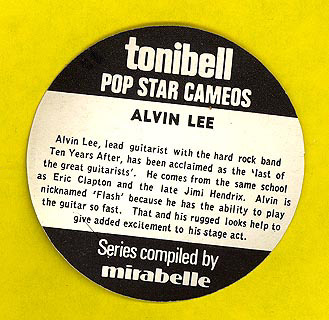
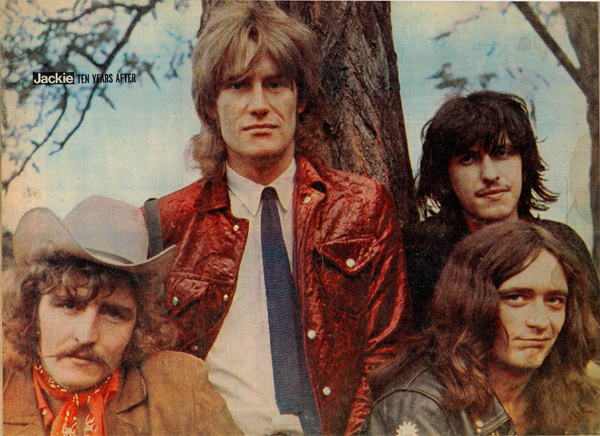
as far back as Alvin Lee can remember, there was music
in his home. His parents played and sang and had
countless discs. Their idol was the negro blues
“great” Bill Broonzy. For
as far back as Alvin Lee can remember, there was music
in his home. His parents played and sang and had
countless discs. Their idol was the negro blues
“great” Bill Broonzy.
On
his visits to Britain he became friendly with Alvin’s
parents and several times came to their home in
Nottingham. “I remember meeting Big Bill when I was a
little kid,” says Alvin. “I grew up with a great
love of his music. There was always a guitar lying
around our house.
When
I was twelve, I stopped just tinkering with it and got
down to serious attempts to play”.
Before
Alvin was sixteen, he was playing professionally with
local groups. Then he formed a trio with his mate Leo
Lyons on bass and a local drummer named Dave Quickmire.
Dave had to leave for personal reasons, but said he had
a friend who was a great drummer. The friends name was
Ric Lee. When he came in, the basis was laid of what
several years later was to become Ten Years After.
The
Jaybirds played in Germany for long spells. Also for
eighteen months, they backed the Ivy League. They worked
on “demo” discs for other peoples songs, played as
session men at recording studios and for a time based
themselves in Wales. Where they met with mixed fortunes.
Big breaks for the boys came early in 1967, when they
came to London and met their present manager, Chris
Wright. He introduced them to Chick Churchill, who came
in on organ. The group was renamed Ten Years After.
They
went down a storm at the Marquee Club in the West End
and were kept on there for a long spell. This led to an
appearance before 20,000 fans at the Windsor Jazz and
Blues Festival. Disc producer Mike Vernon was there to
see the standing ovation they received. He signed them
for the fast – rising Deram Label and Ten Years After
were well and truly in business.
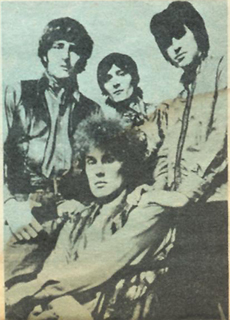
Today
– boosted by such great albums as “Ten Years
After,” – “Stonedhenge” – and “SSSssshhh”
they are big in Britain. They have also won an army of
fans in America through their disc and their exciting
live performances on major tours there. (The group have
wonderful souvenirs of their American trips, in colour
films taken by Alvin’s movie camera).
All
members of Ten Years After want to live in the country
just outside London. Ric Lee and his pretty wife – ex
dancer Ruthann – have already found a cottage retreat.
Alvin and Chick are searching for something similar. But
Leo, who’s visited America’s Wild West – says he
has become mad about horses and wants a big country
house with stables and large private grounds in which to
ride.
Alvin
says, that in his country cottage, he’ll do the same
as he does in London: practice guitar at every possible
moment. Many fans in Britain and America call him “the
fastest guitar alive”. Explains Alvin, “Practice has
a lot to do with my speed. So does the fact that I can
easily memorize long complicated passages”.
Leo
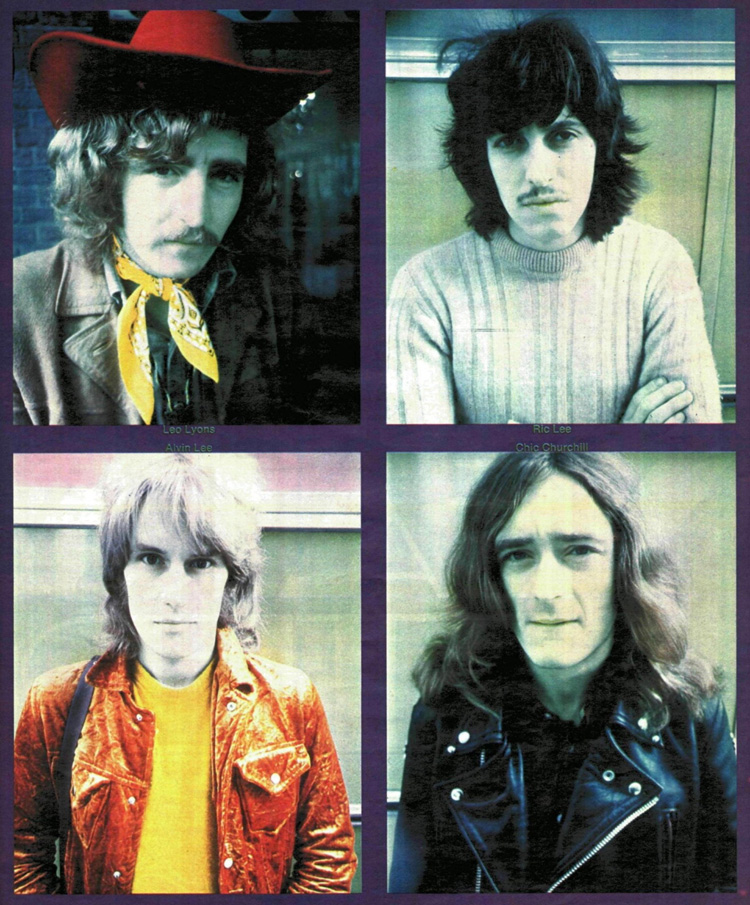
Lyons: Born November 30, 1944, in Standbridge, Beds, has
light brown hair, blue eyes and is five foot eleven
inches tall. Hobbies: Old cars, and wandering around
towns.
Alvin
Lee: Born December 19, 1944, in Nottingham, has fair
hair, green eyes and is five foot ten inches tall.
Hobbies: Photography and Tape Recording.
Ric
Lee: Born October 20, 1945, in Cannock, Staffs, has
black hair, brown eyes and is five foot nine inches tall.
Hobbies: Driving and Messing About
Chick Churchill: Born January 2, 1949, in Mold,
Flintshire, has light brown hair, blue eyes and is five foot eight
inches tall. Hobbies: Raving It Up.
|
February 1970
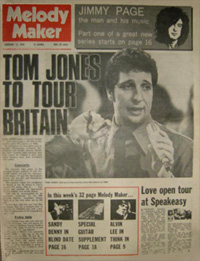
From Melody Maker, February 14,
1970
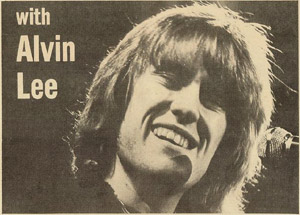

With Alvin Lee
THE JAYBIRDS:
It was me, Leo and a drummer called Dave Quickmore, (Quickmire)
who left the band just before we came to London and missed
out a bit. I think he’s still playing in Palais bands.
I’ve been thinking of reforming them for an album—we used to
specialize in Chuck Berry and Elvis Presley numbers—and in a
way it was one of my favourite little bands. I really
enjoyed playing with them. Now I’ve had the initial burst of
ideas, I would like to do something with them even if I have
to cut the tapes myself to see if we can recapture some of
those old things.
COUNTRY BLUES:
I immediately think of Big Bill Broonzy who was an early
influence of mine. I actually met him when I was a mere wisp
of a lad. My folks used to go to a jazz club in Nottingham
and they got him to come home one night. I was only about
10, I think, but I was most inspired to say the least, I
collected all his records and I’ve liked him ever since even
though I’ve moved away from that style. I still play Broonzy
occasionally, it’s very real music.
AMERICA:
I can never make up my mind up about America, I’m always
glad to leave but in a way I look forward to going. It’s an
adventure, you never know if you’re going to get back alive
or not.
It has a lot of good things going for it but it’s a country
of extremes—the good things are good, especially for
musicians, but the bad things are really bad. America seems
very wild and uncouth to me but it’s done us a lot of good.
THE IVY LEAGUE:
We got hung up with the Ivy League. When we left Nottingham
we were in “Saturday Night and Sunday Morning” at the Prince
of Wales Theatre—playing music in the wings and coming on
shouting—but that folded up quicker than we expected and
Leo, Ric and myself stayed on in London to seek our fame and
fortune.
We started doing the backing for the Ivy League and I think
they were quite an important little event in our careers
because we learnt a lot while we were with them. All we had
to do was to make noises behind them but it was very boring
musically and when we split from them it took about six
months to get our own things back again.
RADIO:
Apart from the Pete Drummond show, there’s more progressive
sounds played on BBC-2 than there is on the BBC steam radio.
I’ve several hundred pounds worth of fidelity tuner there
but I’ve never found anything worth tuning in. Their middle
of the road attitude towards music annoys me.
The radio only seems to appeal to Northern housewives,
teenyboppers and old cronies which leaves me right out and
there are quite a few people like me.
WOODY HERMAN:
All we’ve ever done is to do a version of one of his numbers—“Woodchoppers
Ball” –which is really a verse but people started making
arrangements for us to do a Carnegie Hall concert with
Woody. As we do it twelve times faster than he does, I
motioned (voted) against the motion.
JAZZ ROCK:
I suppose you mean Blood Sweat and Tears and Chicago. It’s
nice background music, it’s cocktail jazz, it’s eating your
dinner to jazz which just isn’t jazz to me. I’ve got
disenchanted with jazz especially the jazzman’s attitude. I
went to the Dave Goldberg thing at the Bull and it was
drowned by a display of noise. A lot of the things being put
down have no reason for being there, they’re just making
noise to play on a record player. As far as jazz-rock goes
there’ll be a barrier as long as we are using that term to
describe it. Why does everything have to be categorised?
SUPERSTARS:
Don’t believe in them. It’s categorisation of success for
commercial exploitation.
GUITAR SOLOS:
A subject near and dear to my heart. And they are handy when
you forget the words!
NOTTS – YMCA:
That was our fave - rave stamping ground. We had a good
thing going in Nottingham and we were making good bread too—about
fifty pounds on a Saturday night which we used to split
three ways on the night. It seemed a lot more then than what
we are getting now. That was a most enjoyable area of my
life.
POP PRESS:
I think the press itself does a pretty good service (lick-
lick – crawl- crawl) but I think sometimes it’s a little bit
too middle of the road as far as trends go. The press
doesn’t knock anything in case it snowballs and becomes the
big scene. I always get good ideas for what I should have
said about three hours after the interview has finished but
I don’t take it that seriously because I don’t like rambling
on and boring people.
|
Record Mirror – February
21, 1970
New York News – Cabled Direct From
America
Ten Years After In The Superstar Bracket
In America
Ten Years After are emerging into
super-status in America, at the start of their current tour.
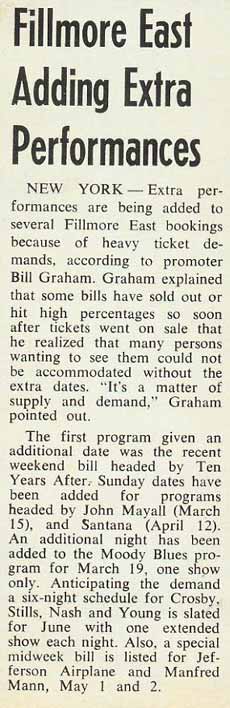
When tickets for their New York Fillmore East appearance
went on sale, the queue / line – started as early at 6:30
a.m. ! By the time the box office closed that day,
20,000 dollars worth of tickets had been sold, a record one
day sale for the Fillmore, announced boss Bill Graham. So to
cater for the incredible demand, the Fillmore has scheduled
an extra performance at the Fillmore.
|
|
|
Ten Years After Tour
Schedule For 1970 - February to July
February 8, 1970
– Lyceum Strand Theatre – London, England
February –
University of Hartford Connecticut – Hartford Connecticut
February 26, 1970 –
Fillmore East – New York City, New York – Featuring
Tommy Bolin with his band called Zephyr.
February 27 and 28th
1970 – Ten Years After at the Fillmore East New York, New
York
Also featured on the bill are, Doug Kershaw and John
Hammond
March 8, 1970 – At
The Garden P.N.E. in Vancouver, British Columbia
March 12 – 15th
1970 – Fillmore West in San Francisco, California.
The band plays songs from their new album called,
“Cricklewood Green”.
April 28, 1970 – Coliseum in Vancouver, British Columbia Canada
May 8, 1970 – Lyceum Strand Theatre London, England.
Ten Years After begin
a British Tour with
the supporting acts being, Mathews Southern Comfort and a
band called Writing On The Wall.
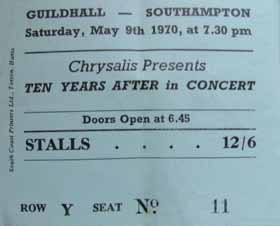
May 9, 1970 – Guildhall in Southampton, England
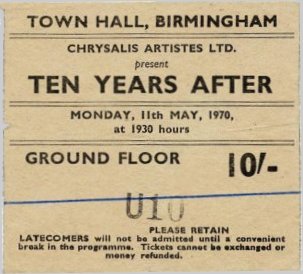
May 11, 1970 – Town Hall in Birmingham, England
May 13, 1970 – City Hall Newcastle, England
May 21, 1970 – Music Hall in Aberdeen, Scotland. With special guest
Mark Bolin and his band T. Rex.
May 22, 1970 – Green’s Playhouse in Glasgow, Scotland. With supporting act
Wilde Horse.
May 24, 1970
– Caird Hall in Dundee, Scotland. Again with Marc Bolan and T.
Rex supporting Ten Years After.
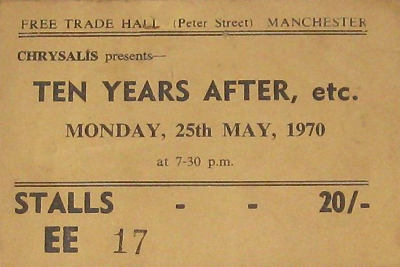
May 25, 1970 – Free Trade Hall in Manchester, England
May 26, 1970 – Aragon Ballroom in Chicago, Illinois, U.S.A. Also on the
bill are, B.B.King,
Brownsville Station and Mott The Hoople.
June 27 and 28th
1970 – Canadian National Exposition Grandstand in
Toronto, Canada
These dates are part
of the Trans Continental Pop Festival – with Ten Years
After, Janis Joplin The Grateful Dead, Delaney and Bonnie,
Traffic, Buddy Guy, Leslie West and Mountain, Tom Rush, Sea
Train and Melanie Safka.
July 2, 1970 – Playhouse in Westhampton Beach, in New York
July 3, 1970 – Stony Brook University in Stony Brook (upstate) New York
State
July 4, 1970 – Ten
Years After perform at the second Atlanta International Pop
Festival in Gainesville, Georgia. It was a three day
festival which also featured, Jimi Hendrix, The Allman
Brothers Band, Leslie West and Mountain, Procol Harum,
Ginger Baker’s Airforce, Jethro Tull, The
Chambers Brothers and many more artists.
July 1970 – Cincinnati Pop Festival
July 17, 1970 – Spectrum in Philadelphia, Pennsylvania
July 18, 1970 – Ten
Years After perform at Randall’s Island Pop Festival at
Downing Stadium in New York City.
July 1970
- San
Bernardino, California
July 22, 1970 – Los Angeles Forum in Los Angeles, California
July 23, 1970 – Tarrant County Convention Centre in Dallas, Texas
July 25, 1970 – Sam Houston Coliseum in Texas
July 28-30th
1970 – Fillmore West in San Francisco, California.
Also including supporting acts, Cactus and Toe Fat.
|
Impossible
Task For BBC Radio
Melody
Maker – February 28, 1970
Alvin
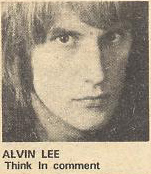
Lee – Think In Comment
BBC
SOUND radio has an impossible task to perform – to please
the whole nation all the time on a limited budget. Obviously
they must compromise. But Alvin Lee’s comments in Pop Think
In are none the less valid. There must be thousands of people
in the country who have bought expensive stereo tuners and who,
because their taste does not turn to Radio 3, will possibly
never even hear a stereo programme.
 People
who like pop yet have an ear for hi-fidelity, are very poorly
served. AM (short, medium and long waves) is just not capable
of producing hi-fidelity, yet hardly any pop is put out on the
vastly superior VHF. Could not for instance, the Saturday programs
on Radio 3 be broadcast on medium wave only, and Rosko, Peel
and Drummond be put out in its place on VHF alongside medium
wave 247? Why waste good VHF music time on the voices of
sports commentators? I would however, like to compliment the
BBC on the new Sunday John Peel Show, particularly the Keef
Hartley one, which was a knockout. The Pentangle and Moody
Blues shows were good too. This is the way to beat needle
time. There are a good many groups who are capable of
producing good live shows. People
who like pop yet have an ear for hi-fidelity, are very poorly
served. AM (short, medium and long waves) is just not capable
of producing hi-fidelity, yet hardly any pop is put out on the
vastly superior VHF. Could not for instance, the Saturday programs
on Radio 3 be broadcast on medium wave only, and Rosko, Peel
and Drummond be put out in its place on VHF alongside medium
wave 247? Why waste good VHF music time on the voices of
sports commentators? I would however, like to compliment the
BBC on the new Sunday John Peel Show, particularly the Keef
Hartley one, which was a knockout. The Pentangle and Moody
Blues shows were good too. This is the way to beat needle
time. There are a good many groups who are capable of
producing good live shows.
By G.K. Smith, Staines, Middlesex
|
|
March 2 - 4,
1970
The Boston Tea
Party, Boston
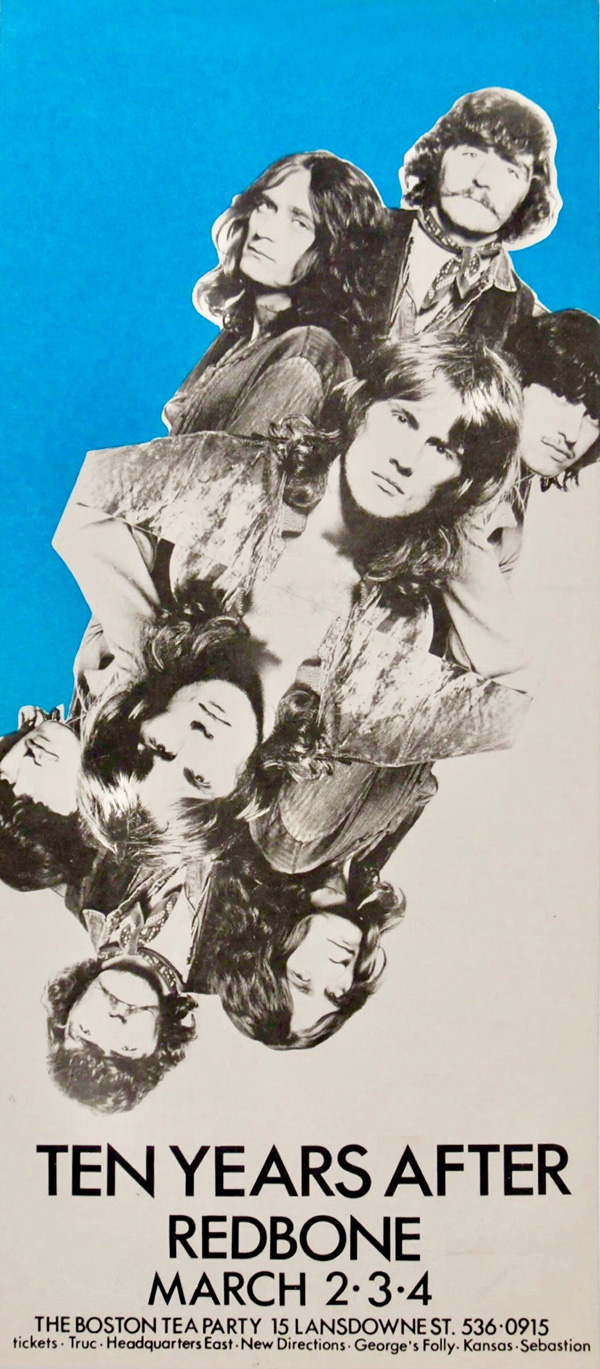
|
March 12 & 13, 1970 -
Fillmore West - Concert Poster, Artist: David Singer
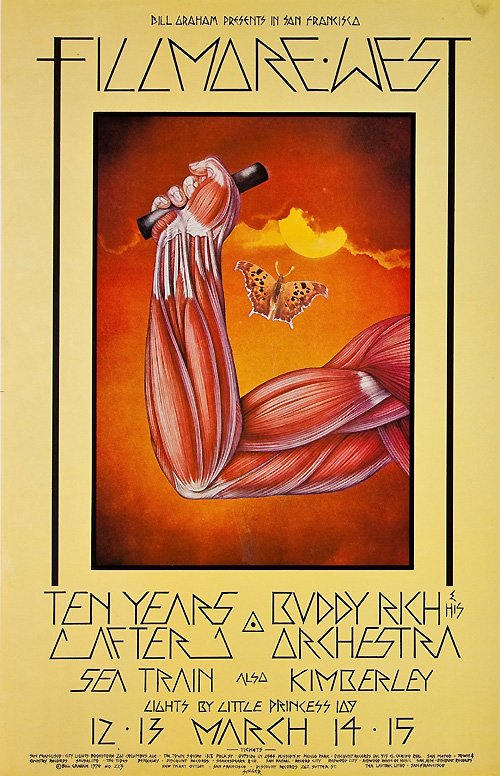
1.
2. 
Record Mirror
March 14, 1970
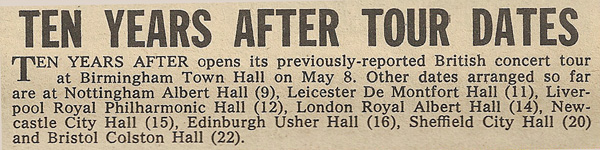
New Musical
Express March 14, 1970
|
March 28, 1970 - Ten Years
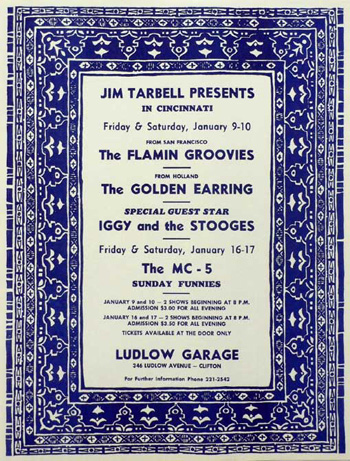
After at The Ludlow Garage – Cincinnati, Ohio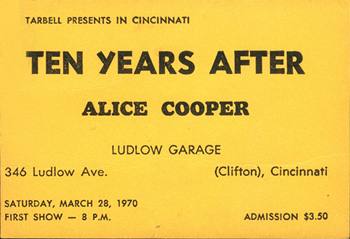
Ten Years After with
Alice Cooper, The New York Rock and Roll Ensemble and Mad
Lydia – Remembering the 1960’s Music Venue that put Ohio on
the map.
It was the summer
of Woodstock. A few weeks after the epic in 1969, its
counter culture musical vibe came to Cincinnati, Ohio with
the opening of the Ludlow Garage located at 346 Ludlow
Avenue, in Clifton. The club even had pieces of the original
Woodstock sound system. Cincinnati had never seen anything
like it and hasn’t since. It likely won’t again.
It was open for less
than two years, the concert hall brought to town the best of
the exploding rock scene that represented a creative burst
that has yet to be repeated in music history.
It earned the
reputation as the “Fillmore of the Midwest”. The opening
night at the Ludlow Garage featured: Grand Funk Railroad,
Lonnie Mack and Balderdash. This was on
September 19, 1969.
At the time, it was one of just a handful of “Hippie Rock”
palaces in the country that started springing up, mimicking
Bill Graham’s Fillmore East and West.
It’s thanks to the
Ludlow Garage, Cincinnati was at the heart of the day’s
alternative music world. A popular band that played there
was “The Goshorn” that became, “The Pure Prairie League”.
Two local psychedelic bands who played there were,
“Balderdash” and “Bitter Blood Street Theatre”. Later on, a
band called “No Saints – No Saviours” which was an Allman
Brothers Tribute Band, that featured guitarist Sonny Morman
and Bob Nave on keyboards. Bob played at the Ludlow Garage
when he was a member of “The Lemon Pipers”, who had a
million seller gold record with their hit, “Green
Tambourine”. It was released at the end of 1967 and it
peaked at number one on the Billboard Hot 100 for one week,
the first week of February 1968. Jerry Kasenetz and Jeff
Katz were also responsible for “The Ohio Express” and “The
1910 Fruitgum Company” all three bands were the best in
Bubble-Gum Music Business.
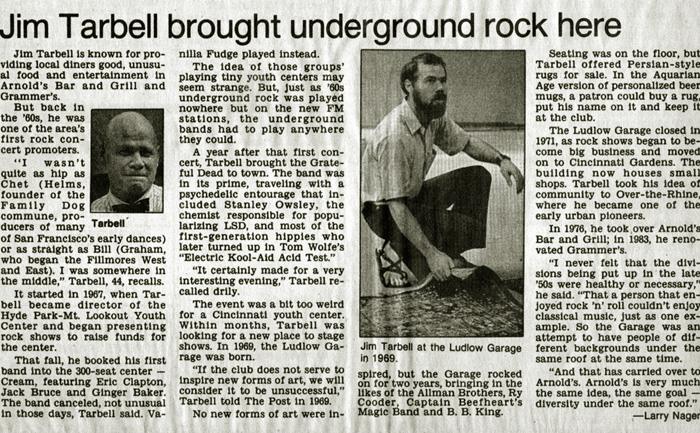
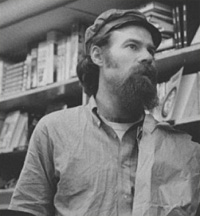 Jim Tarbell figured
that one way to keep the baby-boomer youth out of trouble
and off the streets was to put on a show, so he booked the
up and coming psychedelic group Vanilla Fudge and they
played in an old abandoned church in Hyde Park. Soon he
offered a steady diet of bands. He went to San Francisco to
explore the hippie scene and its music and then attended
shows at the Fillmore West and the Avalon Ballroom. He liked
one band so much that he booked them for his youth concerts,
they were called “The Grateful Dead”. Jim says, “It was
their first tour out east, I kind of thought these guys
might be big someday”. Jim Tarbell figured
that one way to keep the baby-boomer youth out of trouble
and off the streets was to put on a show, so he booked the
up and coming psychedelic group Vanilla Fudge and they
played in an old abandoned church in Hyde Park. Soon he
offered a steady diet of bands. He went to San Francisco to
explore the hippie scene and its music and then attended
shows at the Fillmore West and the Avalon Ballroom. He liked
one band so much that he booked them for his youth concerts,
they were called “The Grateful Dead”. Jim says, “It was
their first tour out east, I kind of thought these guys
might be big someday”.
The concert turned
out excellent. But, I then realized that because my youth
concerts were such a big hit, I would need a much bigger
place. I leased an abandoned auto repair shop in Clifton,
Ohio and began the task of cleaning up years of grease, oil
and grime. After all this was accomplished, it was a trip
just getting
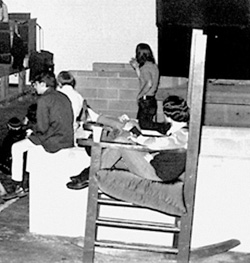 into the Garage, Jim says. You had to pass
through two 14 foot tall – 4 inches thick wooden doors with
4 foot high brass handles. You were put on notice right away
that you’re into something very different here. Then you had to walk
down these huge ramps that were used to get the cars in and
out of the main garage area. Once in the basement, there was
a huge subterranean room where our macrobiotic food booths
were located. Then you go up a winding staircase to the
upper level where the concert hall was. Once inside the
cavernous 10,000 square foot room, which was more than
capable of holding up to 1,200 people, there was an Alice In
Wonderland quality. into the Garage, Jim says. You had to pass
through two 14 foot tall – 4 inches thick wooden doors with
4 foot high brass handles. You were put on notice right away
that you’re into something very different here. Then you had to walk
down these huge ramps that were used to get the cars in and
out of the main garage area. Once in the basement, there was
a huge subterranean room where our macrobiotic food booths
were located. Then you go up a winding staircase to the
upper level where the concert hall was. Once inside the
cavernous 10,000 square foot room, which was more than
capable of holding up to 1,200 people, there was an Alice In
Wonderland quality.
Jim continues, “we
had 8 foot tall – high chairs that could hold up to four
people. Going to the toilets was also a treat because you
walked right into a gigantic Quaker State Oil Can. The
ladies room was a huge Pennzoil can. I also found these
reproduction oriental carpets for people to sit on”.
The Allman
Brothers Band:
There was the Allman
Brothers Band, who had a very special relationship with our
Ludlow Garage, this after playing its first show north of
the Mason Dixon Line, there on December 19, 1969. The band
returned two more times in what would prove to be a trial
run for the groups huge breakthrough concert and record
album, “Live At The Fillmore East”.
The Brothers were
also recorded at the Ludlow Garage a year before the famous
Fillmore set, but not released until 1991 by Polydor
Records. There’s a haunting version of “Dreams” with Duane
Allman flashing his finest otherworldly guitar licks.
Ten Years After
with Alice Cooper:
I have yet to find
any photos of Ten Years After or concert reviews of the
band. No set list or posters. I did find a little snippet
from Alice himself, where he reveals that he wrote his hit
song, “I’m Eighteen” backstage at the Garage late one night
after a concert.
Siereveld worked at
the Garage as what we might now call an intern / apprentice
position. He was a neighbour kid who hung out and did all
kinds of odd jobs, because “we just wanted to be a part of
the culture, and the Garage was where it was happening”. He
ended up running the sound-board many nights. He notes that
almost all the concerts played there were recorded on a then
state of the art eight track equipment. The tapes themselves
have been handed from person to person over the years. Some
have been lost, and B.B. Kings had been stolen the night he
played here, right out of the office, it wasn’t even cold
yet. It was never recovered.
Big Change Came:
By 1971, the scene
had drastically changed. The cultish hippie music had gone
main stream, and its artists started moving into the biggest
arenas. For example, Jim had booked “Cream” to play at the
Garage, but the band got so big – so fast, that they
cancelled the gig and moved right into the big concert
halls.
Tickets:
The average Garage
ticket cost around $3.00 and up to $5.00 for the big name
acts. Jim tells us, that to have kept booking, what the
bands were suddenly demanding, he would have had to charge
the “ridiculous” price of $20.00 per ticket. It all became
too commercial and I had no interest in that – I closed the
Garage.
Progressive Rock
Underground Scene:
The Bands I Booked
for the Ludlow Garage:
Ten Years After, The
Allman Brothers Band, Santana, Herbie Mann, The Staple
Singers, Spirit with Randy California, Elvin Bishop, Taj
Mahal, NRBQ, The Kinks, Ricky Nelson, Humble Pie, Sons of
Champlin, Cold Blood, Boz Skaggs, The James Gang, Bo Didley,
Iggy Pop and the Stooges, Alice Cooper, MC5, Fairport
Convention, The Grateful Dead, GlassHarp, Mother Earth,
Brute Force, The Incredible String Band, Bonzo Dog Doo Dah
Band. Mountain, The Edison Light House, The Lemon Pipers
with Bill Bartlett (now of Ram-Jam – Black Betty fame) The
Ohio Express , The 1910 Fruitgum Company, Barry Goldberg,
The Flock, Roland Kirk, Johnny Winter, Jerry Rubin, Phil
Ochs, Stone The Crows, Vanilla Fudge, Neil Young,
Renaissance, Savoy Brown, The James Cotton Band, Ted Nugent
and the Amboy Dukes, Golden Earring, Raven, Uncle Dirty, B.B.
King, Zepher with Tommy Bolin, Bitter Blood Street Theatre
(“Shock Rock”) Thomas Owen Knight (creator). Stone Fox, The Flaming Grooves,
Balderdash, The Flamin´ Groovies, Glass Wall with Don Yazell, East Orange Express,
Sound Museum, Johnny Schott, The Goshorn Brothers, The Blue
Birds,
Scared Mushroom, Ry Cooder, Captain Beefheart’s Magic Band.
 |
|
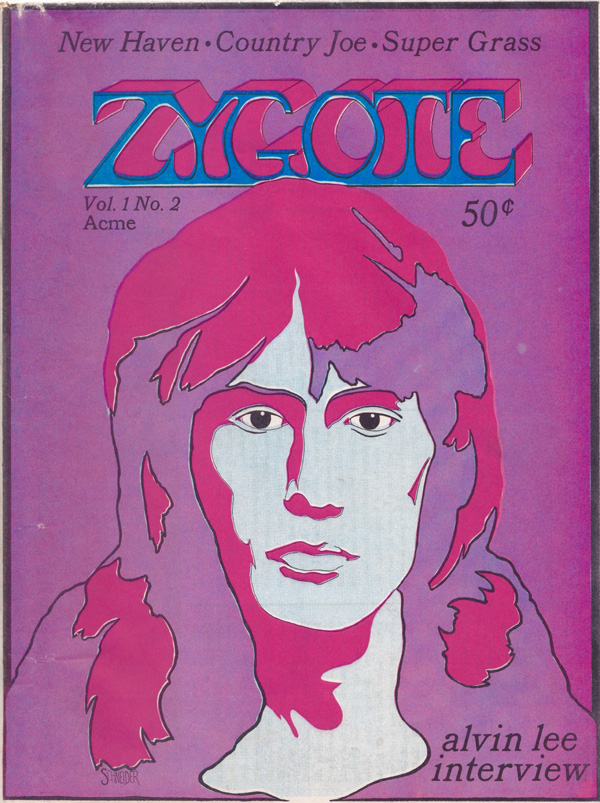
April 1970
- ZYGOTE Magazine, Vol. 1, No. 2 - Cover /
Artist: Frederick Schneider
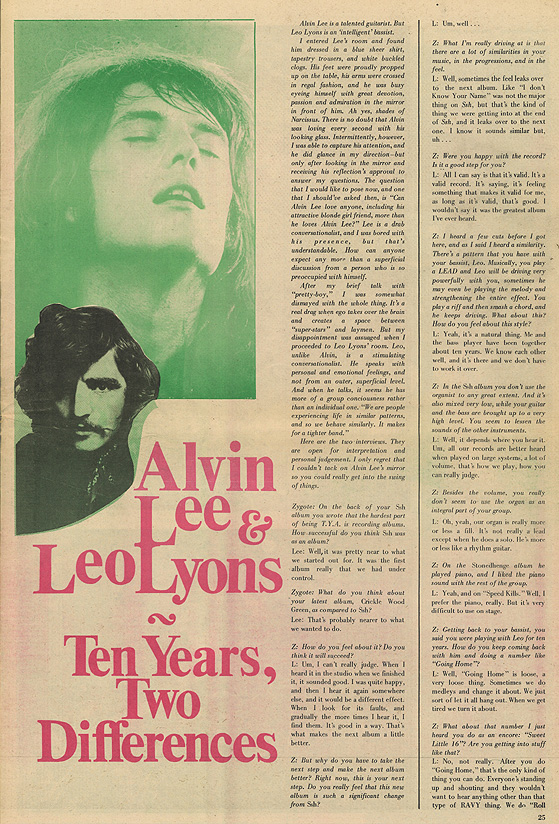
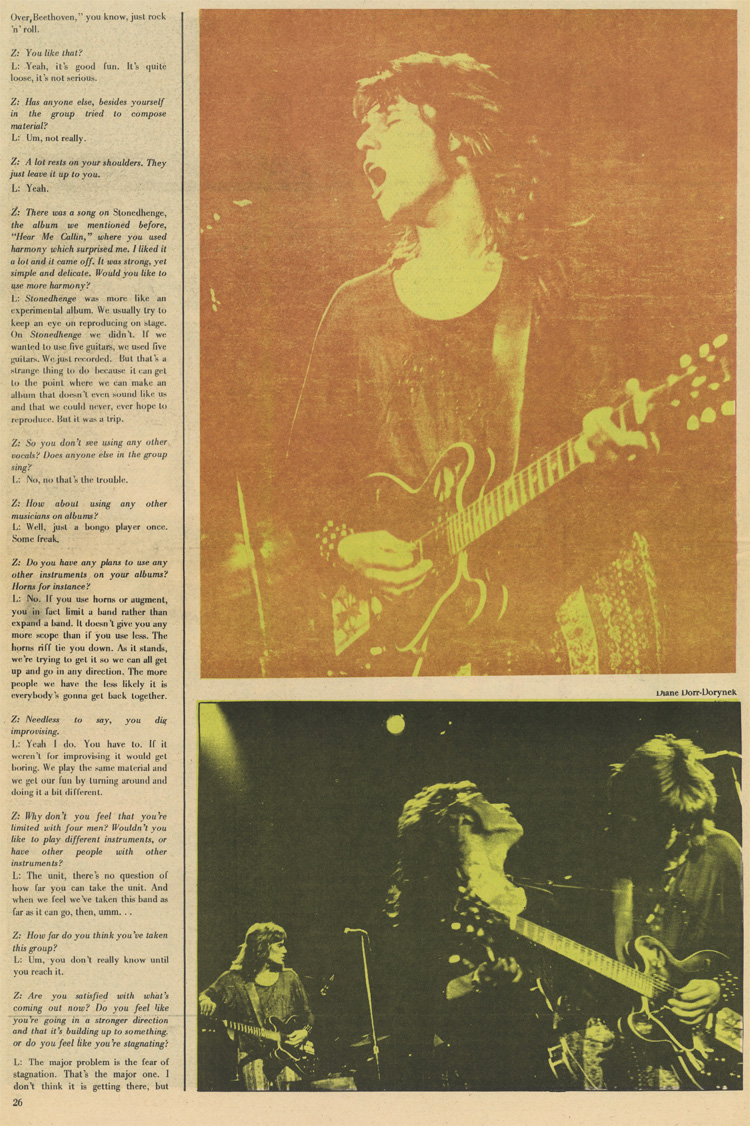
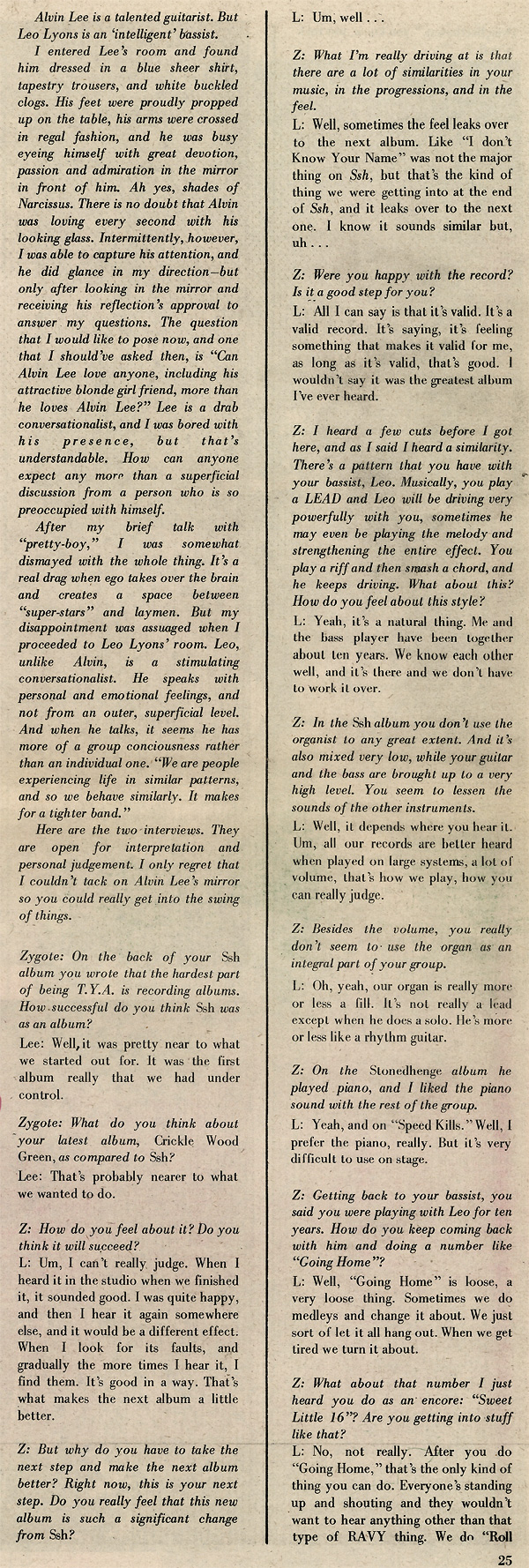
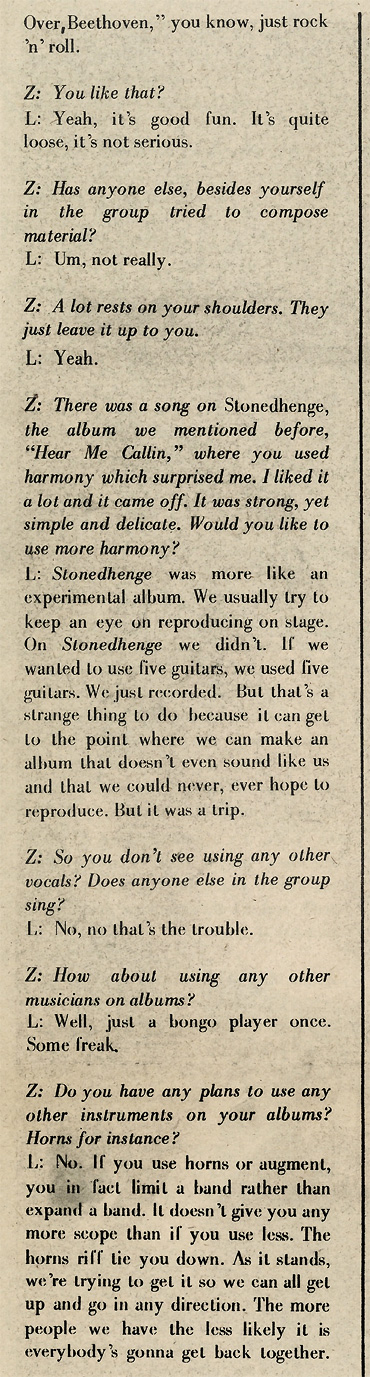
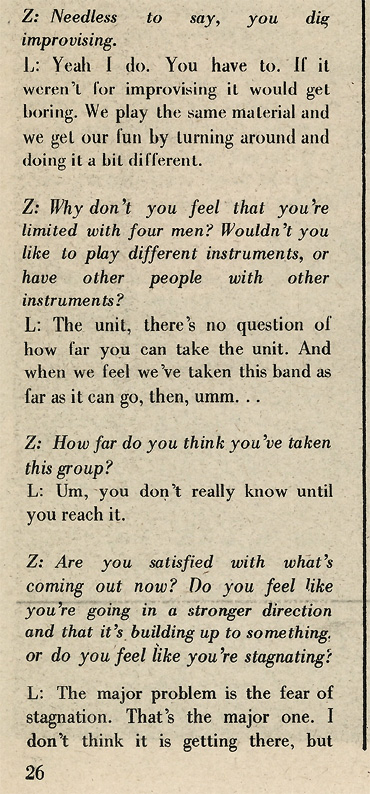
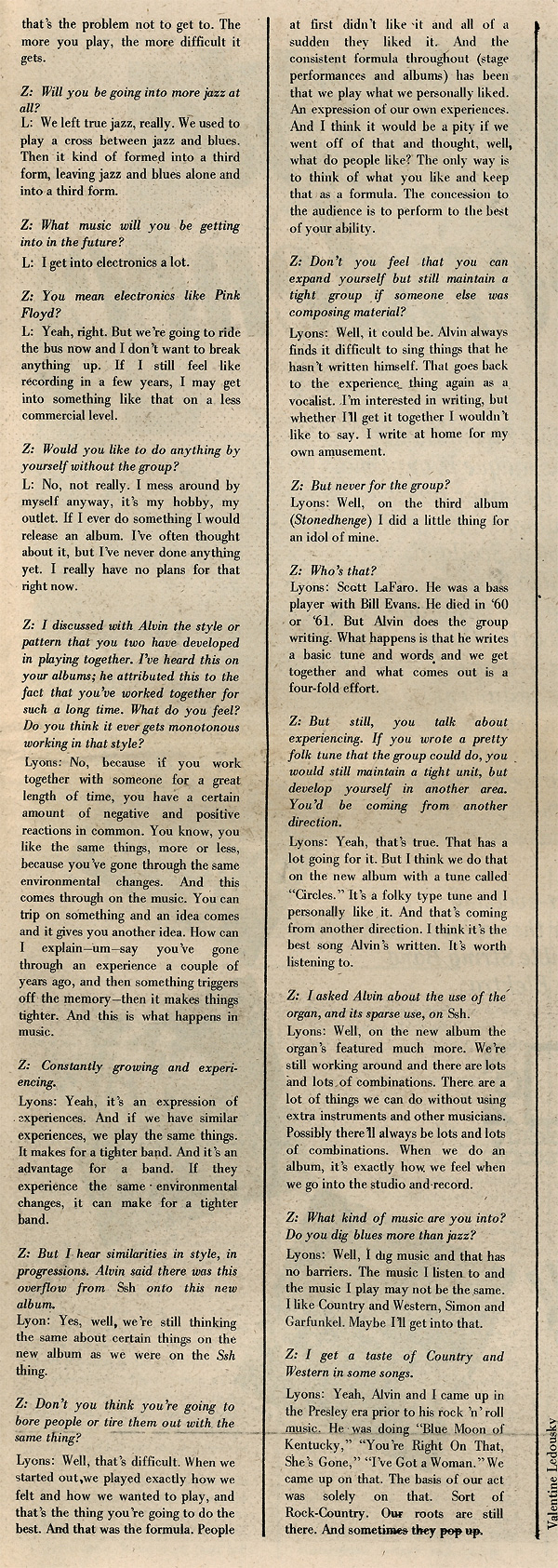
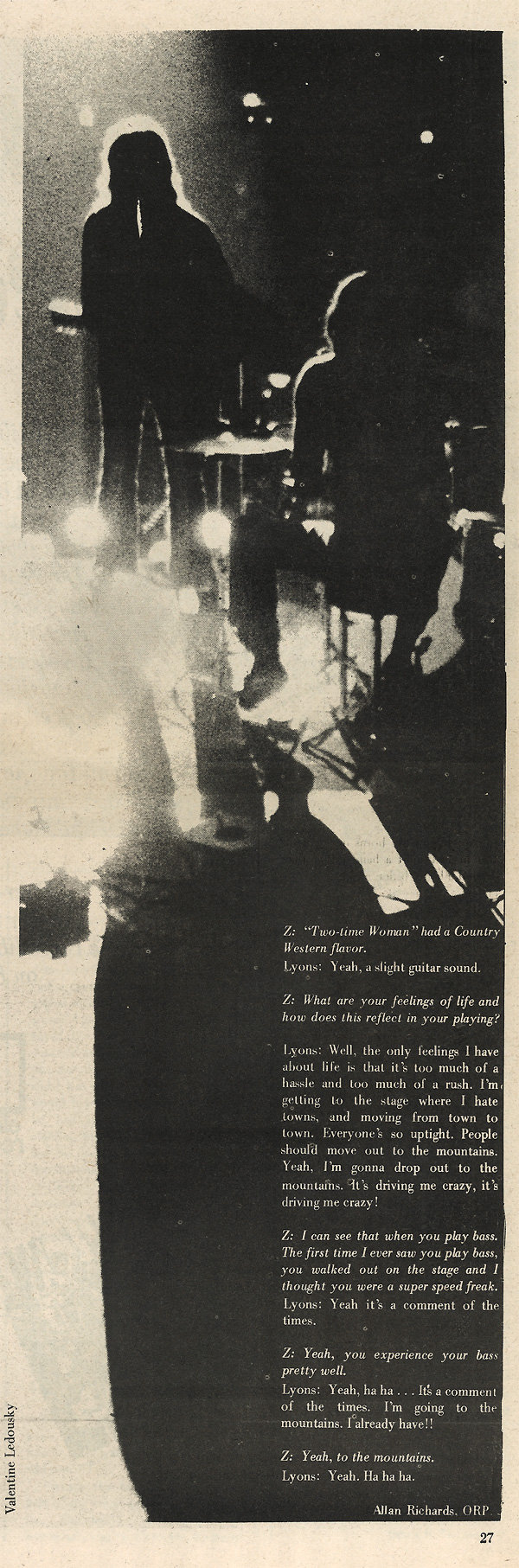
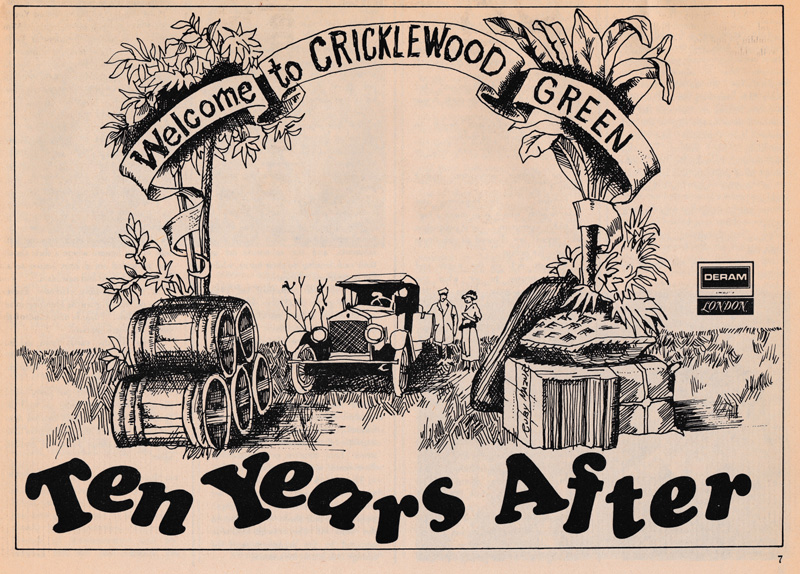
Contribution by Christoph Müller
|
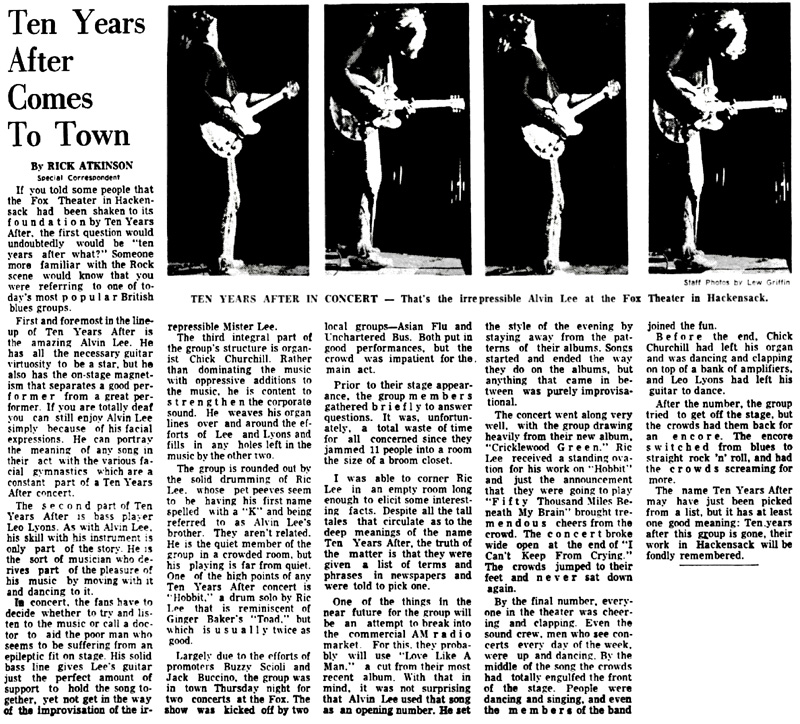
April 2, 1970 - Fox Theatre
Hackensack, New Jersey
Concert Review
|
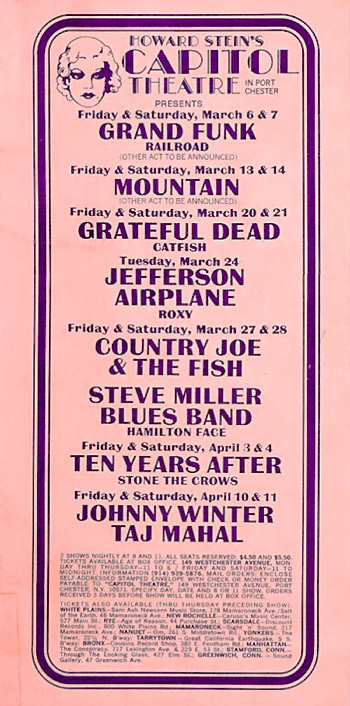
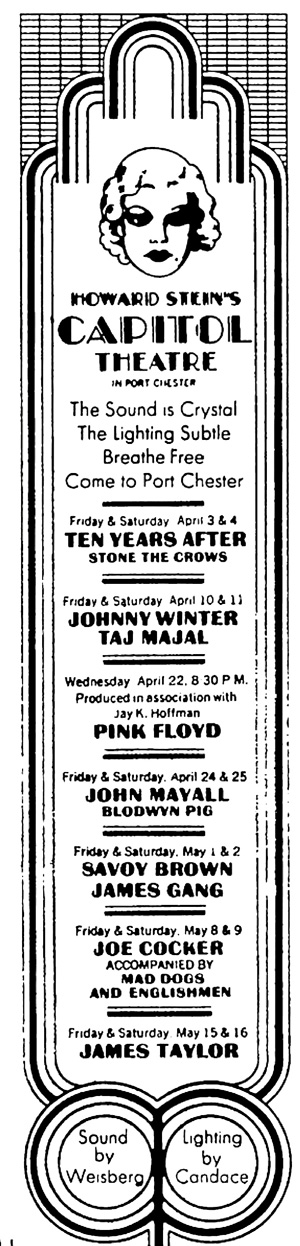
April 3 &
4 1970
TEN YEARS AFTER perform at
Capitol Theatre, Port Chester
 |
|
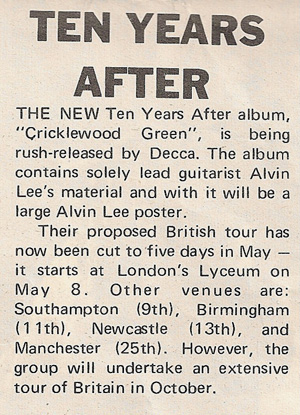
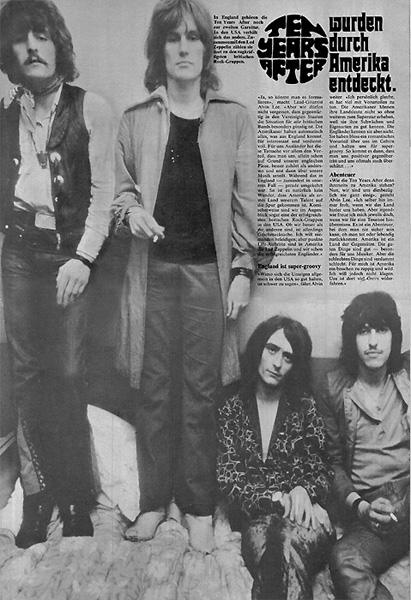
Record Mirror - April
4, 1970
|
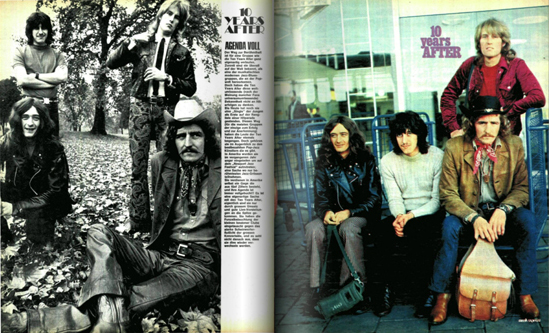
ME - MUSIK
EXPRESS 4 - 1970
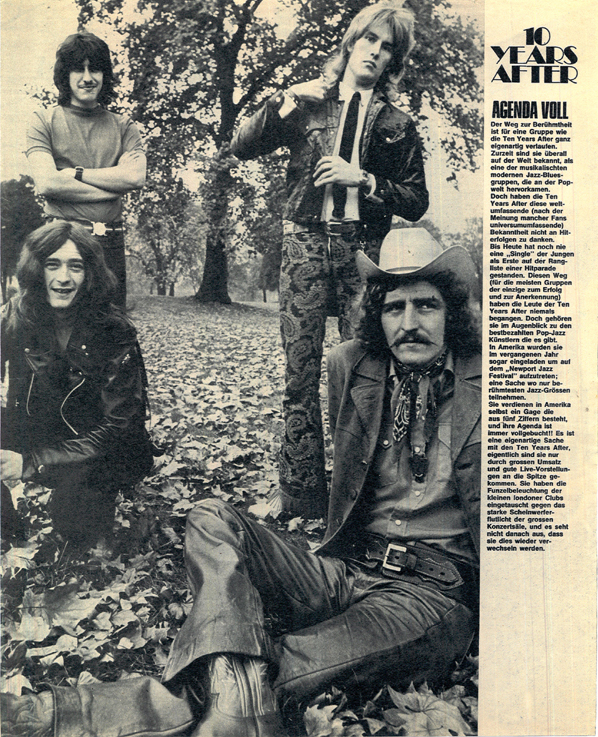
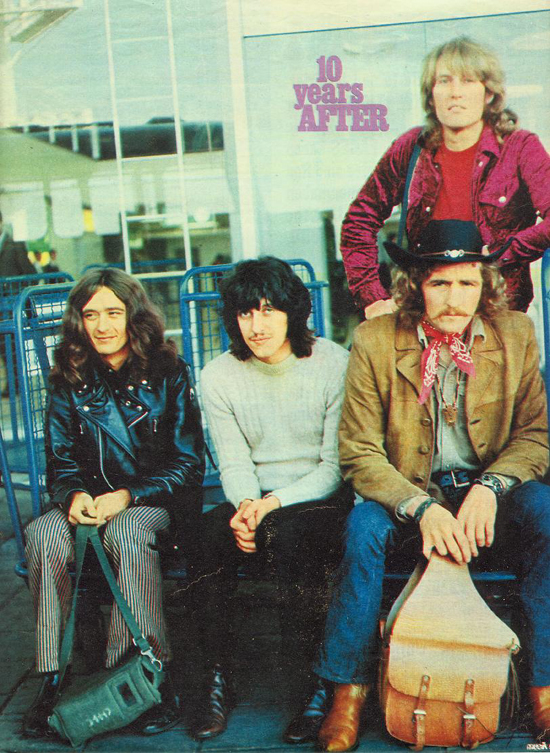
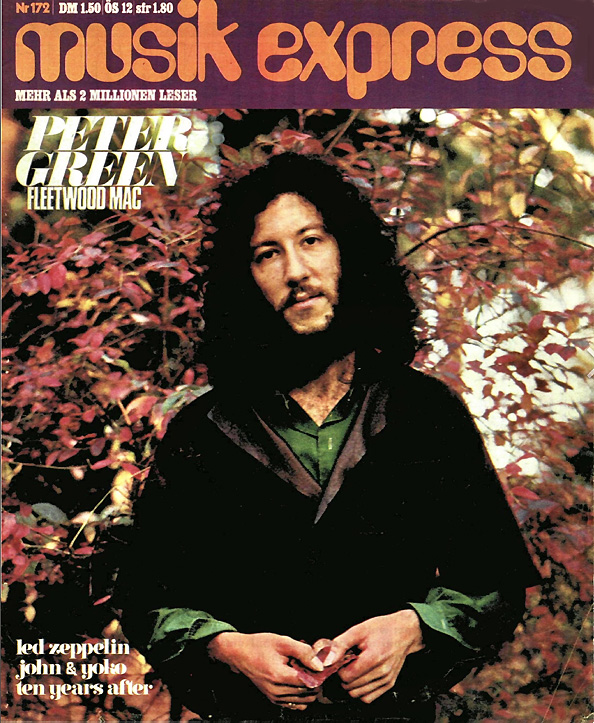
April 1970 - Musik
Express Magazine
|
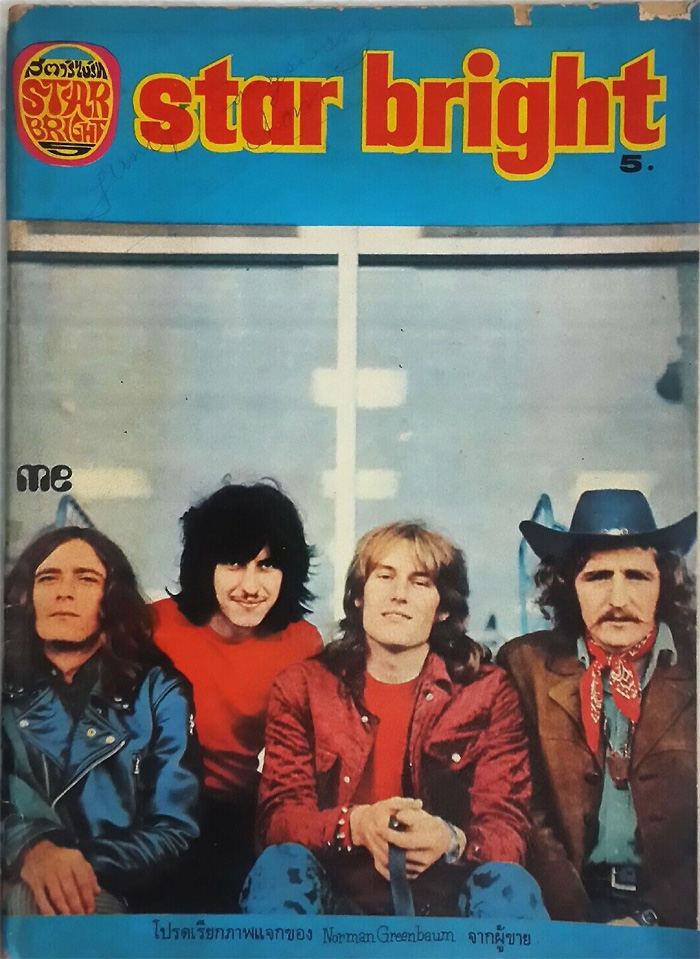
star bright, vol. 5 - Thailand,
1970
very rare find,
contributed by Christoph Müller

| April 4, 1970 New
Musical Expresss

Article By Richard
Green
Ten Years After –
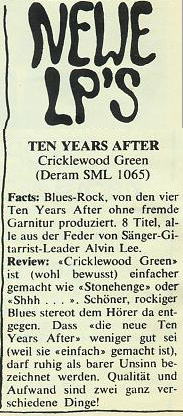
“Cricklewood Green”
Despite the rather
unattractive area of the title, this latest offering from
Ten Years After is Spot – On. Comprising solely of Alvin Lee
compositions, the album ranges over basic blues, out – and –
out rock, and even a bit of country and western. It’s almost
entirely very good, but with a couple of duff spots. The
best tracks are, without doubt: “Me And My Baby” and “50,000
Miles Beneath My Brain”. They out-shine the others by far.
Yet each track is, in its way, worthy of attention.
- Sugar The Road –
Fast and furious with some familiar riffs. The interplay
between Alvin Lee’s lead guitar and Leo Lyons bass is
good, and Alvin sings to a girl with a trace of venom in
his voice, while quite a pace is kept up by the other
three.
- Working On The
Road – Another up – tempo thing with Chick Churchill’s
organ playing a large part and lyrics sung so fast it’s
sometimes difficult to hear the words. The guitar break
has a high – pitched quality and is just what we’d expect
from Alvin Lee.
- 50,000 Miles
Beneath My Brain – All very ethereal with a soft whispery
voice, backed by ultra-soft music which, occasionally
increases in volume. It’s a very good track for the music,
in fact, as Alvin , Leo, Chick and drummer Ric Lee all
turn in commendable performances. As the tempo and volume
increases later on, so does the excitement and it seems as
though it’s going to get out of control, but it doesn’t.
- Year 3,000 Blues
– Jolly little country and western number, taken in a
light – hearted mood. It makes a change / chance to hear
something as amusing as this and it breaks up the album
nicely.
- Me And My Baby –
A light jazzy thing, far from the usual Ten Year After
freak – out routine. Alvin plays without recourse to
distortion and Chick, on organ and piano, is particularly
swinging. Leo’s bass provides some nice backing and Ric
has his cymbals well under control. Very, very good.
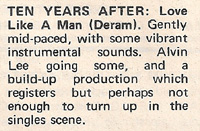
- Love Like A Man –
Starts off as a pretty heavy and ponderous number, in a
simple blues form. Little bass runs break up the general
monotony, which disappears half – way through, when Alvin
sets off on one of his whirlwind solos. Lots of frenzied
drumming helps the proceedings.
- Circles – Almost
folk, it reminds me of one of those Rolling Stone things,
like Lady Jane. Acoustic guitar, and what sounds like a
flute, add to the general effect, which is one of
despondency on a tale of a bloke alone asking: “does it
matter what I do? Does it matter if I die?” Oh woe !
- As The Sun Still
Burns Away – One of those numbers that starts off quietly
and gradually builds up to a leaping guitar solo. All
manner of weird sound effects a cacophony – but a nice
cacophony.
By Richard Green
|
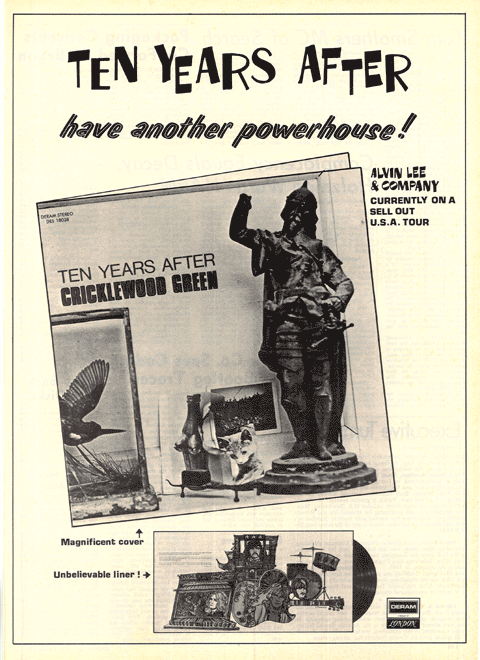
Released April 17, 1970
Ten Years After conclude their 5th tour
of America and begin a tour of Germany
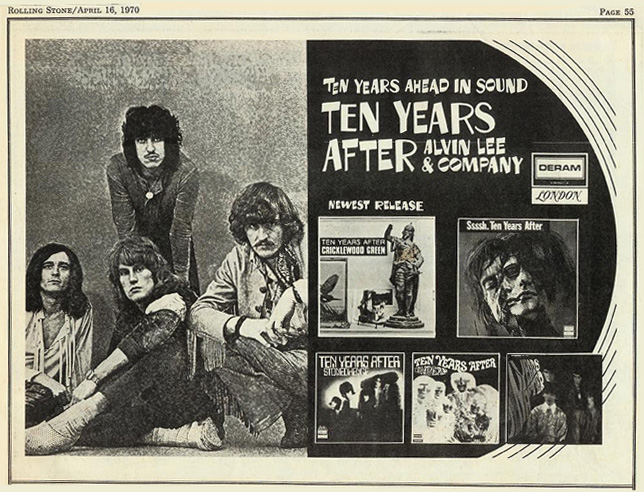
Rolling Stone Magazine - April 16, 1970
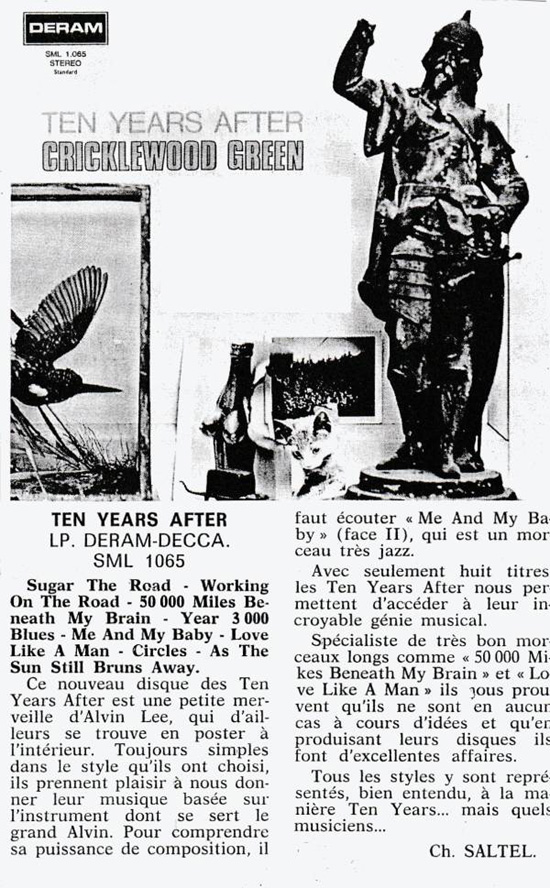
1970 - Pop Music, No. 8 -
French Review
|
From Melody Maker, April 21, 1970 
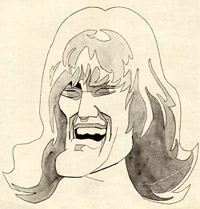
With Alvin Lee
Alvin Lee walked into the MM office wearing a pair of old
denims, a worn leather shoulder bag and a green tee-shirt
with Fillmore East etched across the front in white
lettering. He admitted right off that he had not listened to
many records for quite a while, so we ought not to be
surprised if he did not guess many.
MCDONALD AND GILES:
“Flight Of The Ibis” from the Island album “McDonald and
Giles.”
Alvin’s Comments:
Sounds like a fervent Paul McCartney fan, I’d say. It’s a
nice tune, quite pleasant, but the production sounds a bit
demolish. Could be your record player though! That’ll do for
that one, thanks.
(On being told the band) Alvin says, “Oh, is that who it
is?
I thought they’d get a better sound than that. It really
sounds like a demo record.
BURNING RED IVANHOE:
“Gong Gong—The Elephant Song,” from the Warner-Reprise album
“Burnin” Red Ivanhoe.”
Alvin’s Comments:
“Haven’t the faintest who this is. Sounds like Hollywood
music to me, has something of Zappa’s stuff about it, but I
don’t think it is him. Actually, I like it. It’s far out, in
fact. Oh, if they’re not American, they must have been
recorded in England. Not English? Mmm. Burnin´Red Ivanhoe,
you say. Are they Danish? Ah, they’re friends of our
photographer John Fowler. I had a record of theirs a year
ago, a double LP, and thought it was very good. Yes, they
seem to be reaching out for something. I don’t know what
they’ve got there, but they’re on the road to somewhere.
FAMILY:
“Holding The Compass” from the Warner-Reprise album “Anyway.”
Alvin Comments:
Oh, it’s a live recording, is it? (As soon as the voice
comes in). Ha Ha, it’s young Roger Chapman. Family are one
of my favourites. I was knocked out by that first record
they did—what was it? “Music In A Doll’s House.”
Actually, I
recorded them live in Copenhagen some time ago on me tape
recorder, but it wasn’t as good as this. They’re great in
stereo, they wipe me out. I’ve also got a film of them at
the Isle Of Wight, this year. In fact, I got thrown out of
the enclosure for doing it.
Family really are far out. Chris Wright, as well—you know,
at Chrysalis—has got a film of Roger Chapman smashing up his
mike.
JEAN LUC PONTY:
``King Kong´´ from the Liberty album ``King Kong.´´
cellPadding="6"
Alvin Comments:
Sounds like The Mothers again. Is that Ian Underwood? He’s
very far out. I don’t really know the names of the band.
It’s very advanced, isn’t it? It’s yer progressive jazz,
really, isn’t it? That stuffs all right, but they tend to
sound like screeching cats when they go too far out. This
doesn’t this doesn’t go too far. I can’t think of anything
concrete to say, it’s above my head. Shall we say, anything
over 12 bars, maybe 16, and I’m lost.
FRANK ZAPPA:
“Sharleena,” from the Bizarre album “Chunga`s Revenge.”
Alvin Comments:
Everything sounds like The Mothers today. Oh no, it’s not is
it? I played with them in the States, and they were just
fantastic; they just jammed and jammed, only it was the
tightest jamming I’ve ever heard. In fact, I can go so far
as to say it was all completely organized, note for note,
although it can’t be of course. All these albums you’ve
played today are influenced by Frank Zappa. He’s a very
together guy, a fantastic person. I met him at the Belgian
festival—you know, the one that was suppose to be in France
but was moved to Belgium—and we were stuck in a tent, eating
hot dogs and talking. I asked him why America was so
paranoid, was it paranoid because it smoked so much, or visa
versa. He said it was a bit of both, and that America was
freak-land.
What do I think of this record? Well, I’m sure there would
be something better than this on the album.
CACTUS:
“Let Me Swim,” from the Atlantic album “Cactus.”
Alvin Comments:
It’s American. You can tell that because all the Americans
copy Led Zeppelin. This is the equivalent to those Kathy
Kirby records of 10 years ago, although it’s a lot more hip
and beatty. It’s deliberately commercial in the same way.
It’s O.K., I suppose, but I can’t take it very seriously,
because it was made for a reason, and I don’t agree with
that reason. Who is it? Oh, yes, we’ve played with them in
the States. I like the bass player. That wasn’t very
special.
EDWIN HAWKINS SINGERS:
“When You Try,” from the Buddha album, “Live At The
Concertgebouw, Amsterdam.”
Alvin Comments:
Mum, it’s the Edwin Hawkins Singers versus the English
team.
They all sound the same to me. It’s pleasant, but they don’t
get me off, but then, not much does now. I’m getting very
cynical, and blasé even—shall we say, between cynical and
blasé. Even the musicians who are laying heavy things down,
it’s coming out like chewing gum. What can I say? It’s good
to tap your foot to.
|
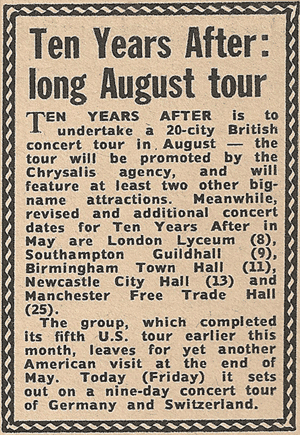
New Musical
Express April 25, 1970
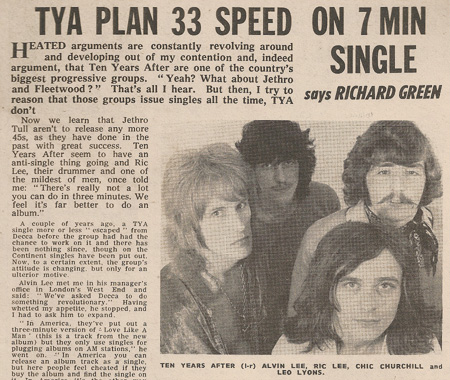
New Musical
Express April 25, 1970 - click on picture to read the article
|
Tour Dates 1970 - Germany |
|
25 April |
Würzburg |
Frankenhalle |
|
27 April |
München |
Circus Krone |
|
28 April |
Sindelfingen |
Sporthalle |
|
29 April |
Darmstadt |
Sporthalle am Böllenfalltor |
27 April 1970 - TYA at Cirkus Krone,
München, Germany
Photos: Rainer Schwanke
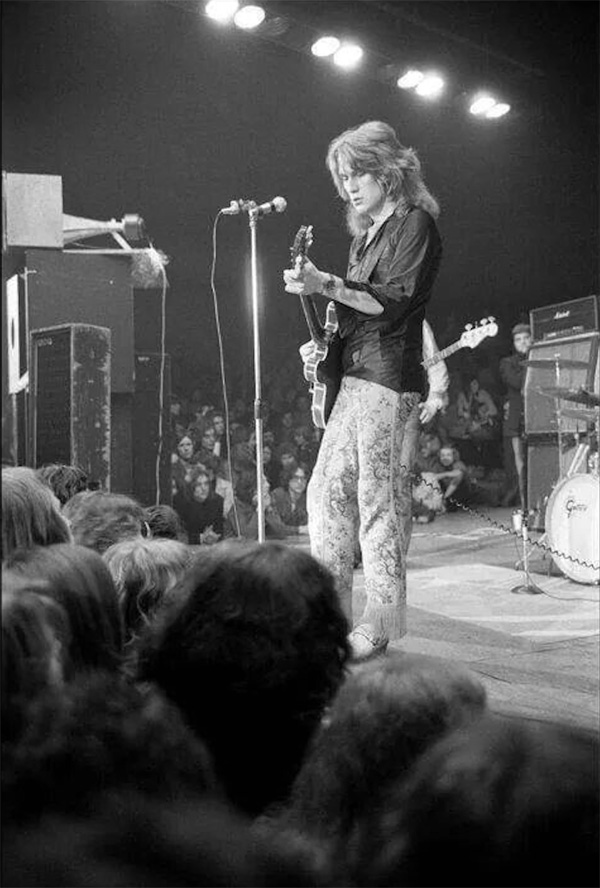
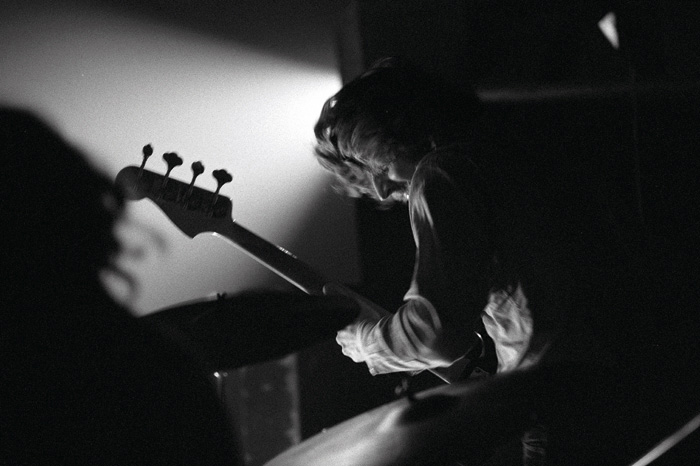
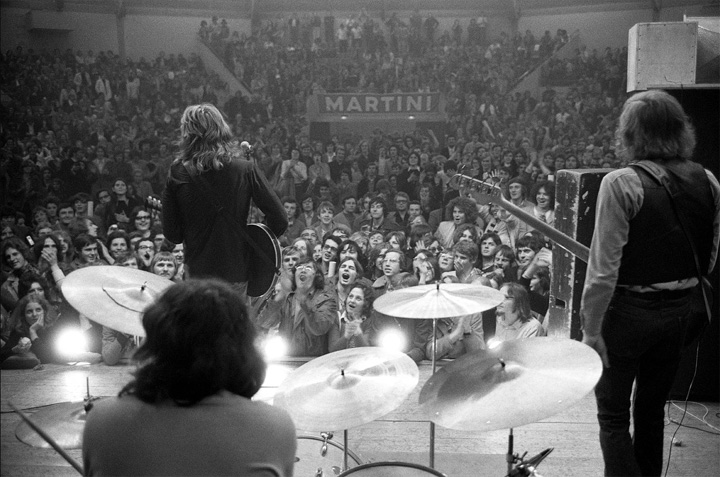
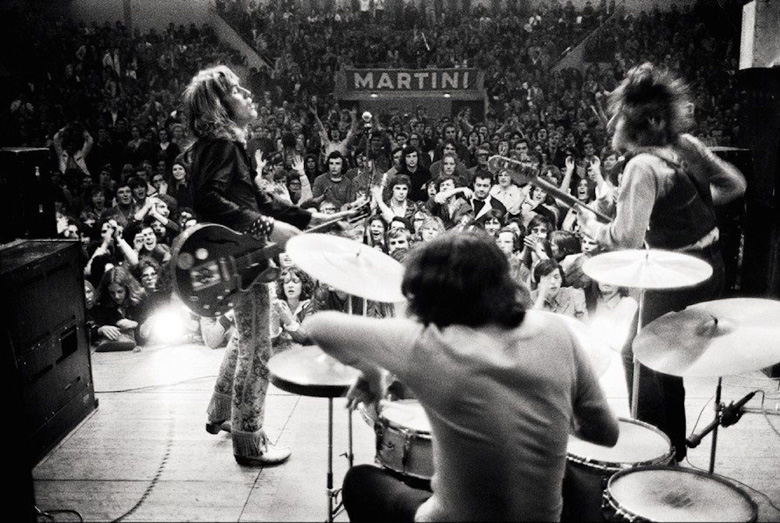
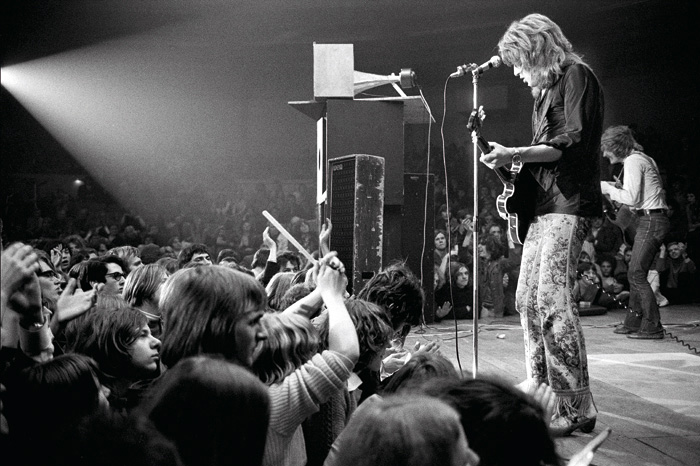
28 April 1970 - TYA at
Sporthalle, Sindelfingen, Germany - Photo: Martin Walter
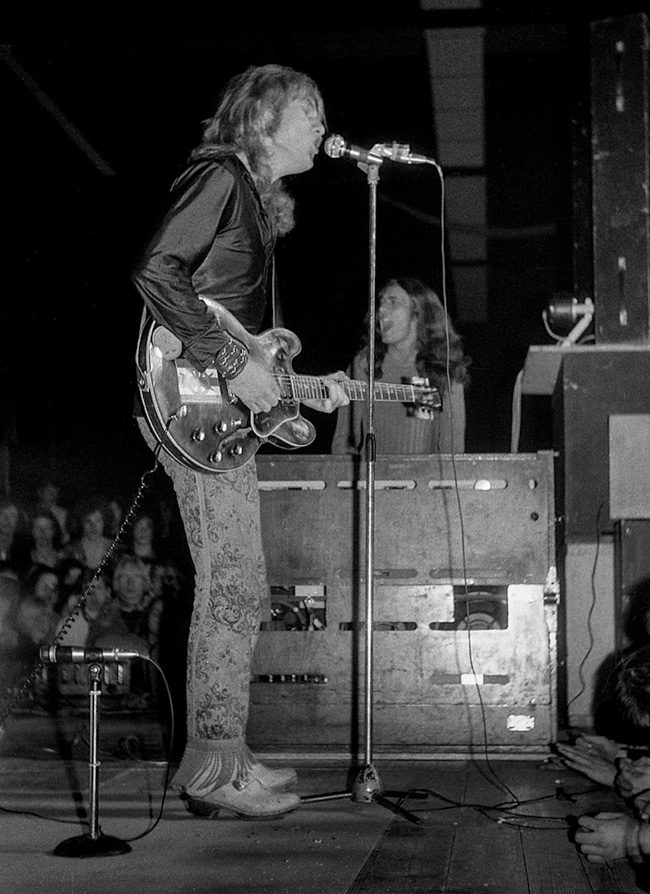
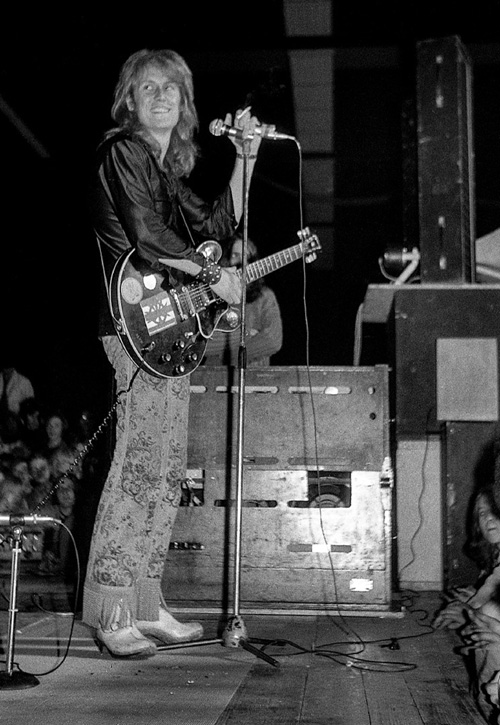
28 April 1970 - TYA at Sporthalle Sindelfingen
Photographer: Martin Walter / Contribution by Christoph Müller
Under the Influence,
this week:
The ALVIN LEE Interview
"Little Richard turned me on to
rock 'n' roll and others I like".
Elvis Presley
"Hound Dog"
This has to be
included simply because of its guitar sound. The
second guitar solo is completely amazing. It
comes in like somebody dropping about fifty
scaffold poles. It's always been a sound I've
tried to emulate but never got anywhere near,
and never met anybody who has.
John Lee Hooker
"Sugar Mama"
I think anything by
John Lee is good because he's got such a funky
style. There's nothing forced. It's just the way
he is, stomping and natural.
Big Bill Broonzy
"Hey Bud Blues"
Big Bill Broonzy has
always been one of my favourites. He's got an
unusual guitar style, almost playing rhythm and
picking at the same time. It's very earthy as
well, which I like.
Little Richard:
It's hard to think
of any one track. There are just so many
classics. Basically I admire him for his
original rock and roll. I mean he didn't invent
it but that's who I first heard it from and his
playing and style has always stuck with me a
lot.
Steve Miller Band
"Sailor"
It's an incredible
production and stands up as a whole album. Like,
side one is a complete entity by itself. I don't
think any track picked out would sound as good
as the whole side played through all at once.
You've got the fantastic start with foghorns
before it builds up and then comes down with the
rain and everything.
Steve Stills:
I also like Steve
Stills particularly for his country feel. He
plays good guitar and writes interesting songs.
His records have an unoffending atmosphere. It's
just natural music. He's also the first
guitarist who plays in open D a lot. It's a
different tuning with its own sound,and I think
he does more with it and has taken it further
than anybody else.
Otherwise I like the
album with Jack McDuff and George Benson. Simply
because it's good playing.
|
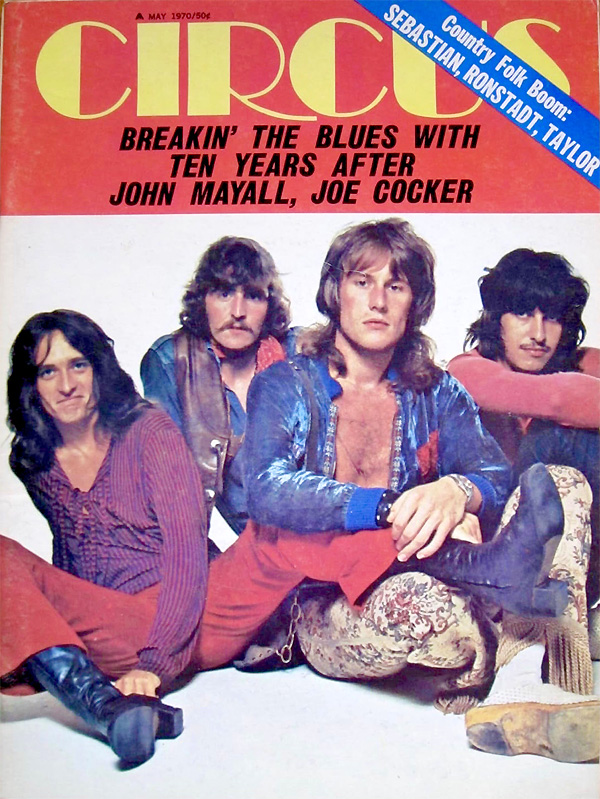
Circus Magazine, May 1970
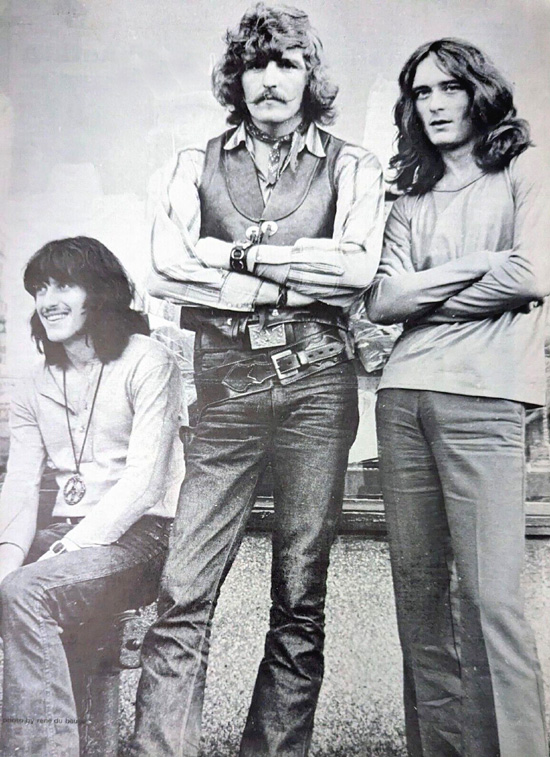
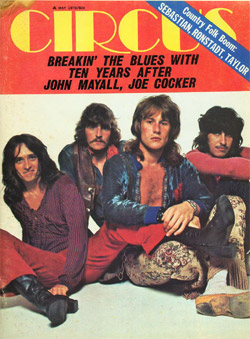
CIRCUS
MAGAZINE
From
May 1970
Breakin´
The Blues With Ten Years After
Big
things are happening for Ten Years After. They’ve released a
new album, “Cricklewood Green”, (London) and dominate the
Warner Brothers film “Woodstock”, in which Alvin Lee lets
loose for a good twenty minutes of cinematic assault.
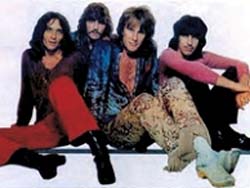
When
the announcement was made that the group would be appearing at
the Fillmore East, there was a rush on the box office that
within one day pressed the management to provide two extra
shows to accommodate the hordes of fans.
The
new album is similar to the last one, said Alvin Lee.
“We’ve concentrated on improving the quality, though,”
he emphasized. Everyone seems to agree. A photographer who
travelled with the group on this recent tour ( Joe Sia / Rene
Du Bauge) said
they’ve cut all the speed trip stuff and have become one of
the more tasteful bands to come from England.
Their
fifth album is a natural musical progression. “We don’t
sit down and think, “Now we’ve got to sit down and show a
progression” he said. “We just get together and do what we
feel at the moment. It usually turns out best that way. A
natural approach usually brings out the best.”
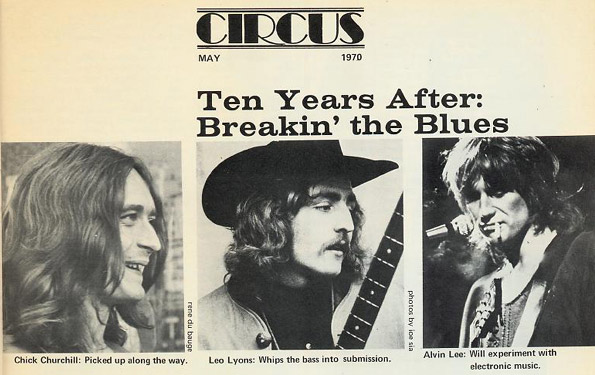
“We’re
now playing to a new generation of audience than that of two
or three years ago,” he philosophized. Three years ago we
were playing to the twenty to twenty five age bracket. Now we
find we’re getting a lot of young kids-like seventeen to
twenty. Our audience is constantly changing. They’re not
going to get fed up with what we do because a lot of them are
new to it all the time.”
Even
though Ten Years After has almost a fanatic following no
matter what age, Lee wants to experiment with the group’s
music. Expressing great interest in electronic composer Tod
Dockstader, he said new directions for the group might come
from the field of electronics. Dockstader is a native of St.
Paul Minnesota, whose past includes jobs as a painter, film
editor, production designer, writer and cartoonist. He calls
his music “organized sound.”
This
is what interests me, the electronic sounds, as opposed to
music,” the guitarist said. “It still is music, but it’s
just taking another step. It could be the wrong direction, I
don’t know, but I’m interested in finding out. I hope to
do a few experimental gigs with it and see what happens.”
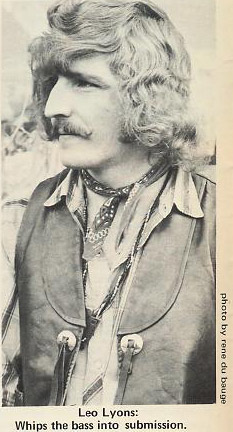
In
the light of superstardom, many groups have broken up because
of ego hassles, musical differences and general discontent
with the group scene. Ten Years After have been together for
three years and have put out five albums, a considerable track
record. “Leo Lyons and I had been playing since we left
school,” Lee recalled. “We played in different bands. Then
we were in Nottingham and our drummer left and we got Ric Lee
to take his place. Then just before we moved up to London we
got Chick Churchill to take his place. Chick in fact, was
originally our road manager. We gave him that job so we could
keep in bread (money) and until we could work him into the
whole thing.
“The
early days were in Nottingham, which is in the midlands of
England, and we moved up to London interested in whatever work
we could get. So we could play what we wanted to at a later
time, we did session and back-up work for others and finally
made a bit of a bank balance that put us a few weeks ahead and
we organized our own thing.
“We’d
been practicing and playing our own kind of music, but the
only kind of gigs we could get in those days were like pop
stuff where we backed singers and things. Then we started off
playing blues. It wasn’t getting accepted very much until we
played the Marquee in London, which was like the center of new
happenings in London. We built up a following there.
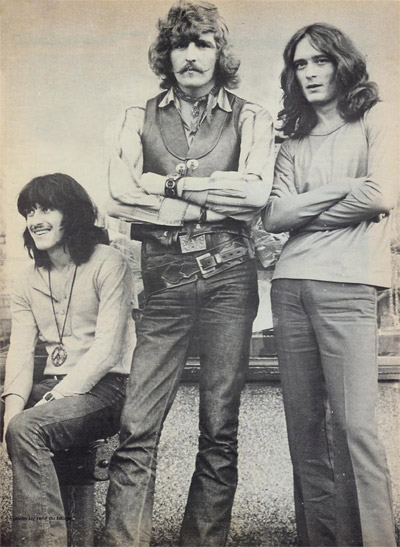
“We
never actually called ourselves a blues band,” he confessed,
“although I’ll admit that to many that’s basically what
we are. In England, it’s called jazz blues, here it’s
called rock blues – but these categorizations are not very
relative to what it really is. But call it rock, blues or
whatever you will, it’s definitely something that stands on
its own.
“We
started playing basic blues and it built up into our own
interpretation of it, which deserves another name. Of course
the name might be irrelevant – you could even call it
“Brand X” really. “It’s like people asking, ”What do
you play?” In America, I’ll answer “rock” because
that’s the term that’s used over here. In England, I’ll
say “blues based” but it’s all relative to what people
think it is – “And we leave that up to the listeners. For
example, when I write a number, I give it a basic format, then
we throw it around and it comes out however it comes out. I
can never foresee how its going to come out – it might come
out completely different than I first envisioned.”
What
about the difference in British and American rock bands?
“I’m
not that much in tune with the happening bands at the moment
– any – where.” Lee said. “I only see the bands we
play with. But I’d say the American bands are less
disciplined than English musicians.
“English
musicians have a tendency to discipline themselves and create
with an objectiveness while with the American bands, it’s
kind of “get together and see what comes out.” Now this is
very fine, but it’s leaving a lot to chance. The English
bands hear something they want to create and strive towards it
rather than just seeing what happens.
“There’s
a big opening for something very new in England now.
Unfortunately, the bands that are now forming are basing
themselves on successful bands that are already going. In
England, the majority of the bands that just go around gigging
are like juke box bands that play everybody else’s hits…obviously
they’ve got to be more original to make any kind of impact.”
His
personal background, even though he is English, led him to the
blues. “My parents were musical,” he said. “They were
musical on a hobby basis. We had a guitar around the house and
we used to play a lot of records, collecting Negro blues and
jazz records. “My father collected some of those farm,
working-on-a-chain-gang, penitentiary type records and they
were always interesting. “Then I got into Negro philosophy
– I really got into that before I got into the music, but I
started to realize the two were connected. I was very young; I
was doing it more as a project than anything else. But I think
when rock music first started, I was then able to see the
blues and Negro roots more easily than most people…
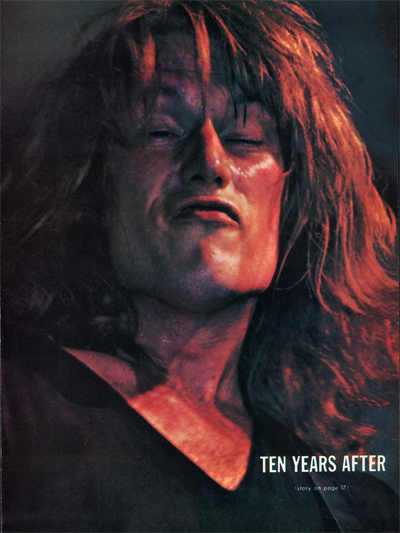
“I
never really remember when I first started to play the guitar.
I always kind of plucked on it. I thought I could get it
together properly and I got a guy to show me the chords and
chord changes, that was all it was.
“Then I played rhythm in a little combo in Nottingham
and I picked up lead work from a guy who was playing in a band
at the time. Then I worked on that. “It was always a hobby.
I never really thought I’d be able to get on stage and play
when I was young, but it came naturally after awhile. I went
from Elvis Presley (who I got very hung up on as I used to dig
his guitarist Scotty Moore) which lead me into Chet Atkins and
Merle Travis. “Then I got into finger style and classical
finger-style then into jazz. I listened to Barney Kessel; I
listened a lot to Charlie Christian. I kind of went my way
through all the different musical scenes of the guitar so I
had a kind of basic background of the guitar and all its
elements. This has helped a lot.”
Blues
always has been American to the English,” Lee answered.
“The English form of folk is like the actual folklore from
Wales, Scotland, the ballads of the time. There’s nothing as
funky as American blues…
“This
kind of music is such a good thing because it’s got no
limits whatsoever. You can actually make it-you can turn a
number into something entirely different by the artists
approach to the number rather than the number itself. I prefer
music which gives the artistry to the performer rather than
the actual music being the art.
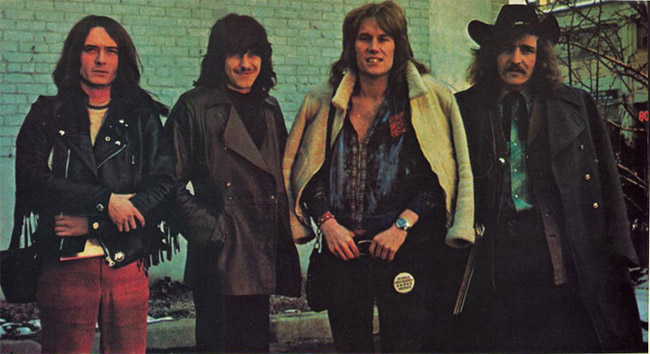
“Also,
when we play now-as opposed to three years ago, people are
more attentive before we start. When we walk up to the stage
they’re ready to listen, whereas before we had to sort of
hit them with something to make them listen!”
The
group has been criticized for many reasons, among them,
beating a good thing to death.
“I’ve
read a lot of good things, I’ve read a lot of bad things,”
Lee answered. “The only conclusion I’ve ever come to is
that I’m not going to please all the people all the time. I
know some people are really down on my guitar style…
“Personally, I’m happy with what I do. I’m still
striving. I realize I’m moving in the right direction and
the fact that direction has proved to be a successful one is a
matter of chance more than anything else. That is, I mean what
I happen to like to play, people happen to like to listen to,
That in a way – is luck.”
When
asked if he personally feels he is as excellent a guitarist as
his fans have described him as being, he replied with a grin,
“It’s difficult to say, I believe I’m good. You know it
goes against the grain to say such a thing. But obviously I do
believe that because I take the music I like and play it the
way I prefer to hear it. Obviously the music I make is my
favorite music even though it’s very difficult for me to
listen to it as objectively as I can listen to the music of
other musicians. “I don’t think my music has a message,
but it reflects me and life itself.
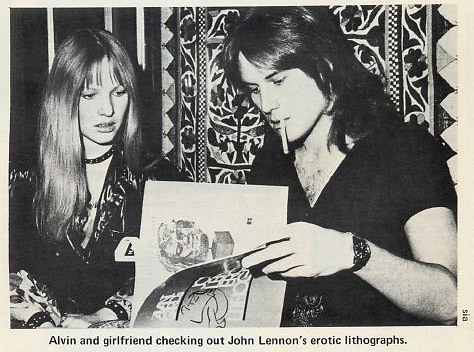
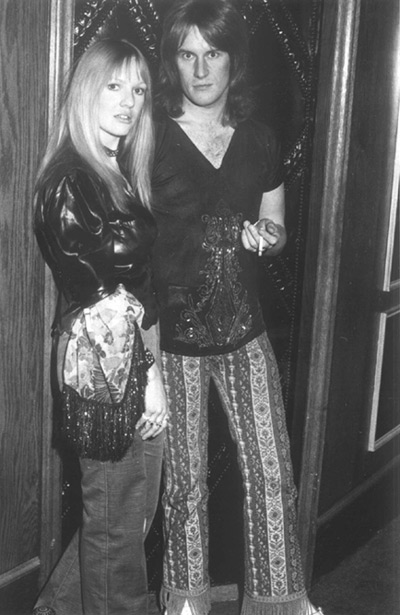
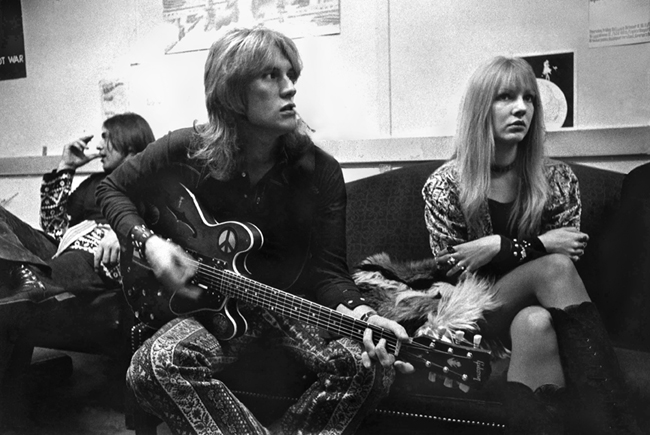
Alvin Lee and Lorraine Burgon
Music,
or being an artist of any form, is a reflection of being part
of a society and life.
My
life, my likes and dislikes, the experiences I go through (consciously
or not), they come out in my music.
Although
he’s the star of the Woodstock film, Alvin Lee has his
doubts about festivals.
“I’m
a bit of a fatalist about all that,” he answered. “I mean
it’s nice all this talk about Woodstock and it’s been
built up to be a happening of the century. But if fate had
dealt with it another way, Woodstock could have been as much
of a disaster as the Rolling Stones Altamont concert. “Then
again, just a quirk of fate and the Stones concert could have
been fantastically peaceful as well. There’s always a
possibility of something going astray whenever you get a lot
of people together. “Surely Woodstock was a step in the
right direction. I think it was really cool. Then again,
there’s nothing to say if it was organised again exactly the
same way it would go as well. Something could go wrong.
Nothing will ever be idealistic. One hundred percent peaceful
concerts will never be peaceful every time, or all the time.
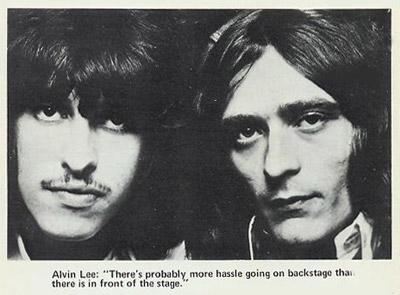 “We
played Dallas, Woodstock…for the musician, festivals are
very difficult. “When you get 16 or 17 bands in one day,
there’s probably more hassle going on backstage than there
is in front of the stage. There’s always some band that
wants to go on before another or some band that doesn’t want
to follow another or somebody that wants to get off quick
because he won’t be there the next day…these kind of
situations you know, which are inevitable. “We
played Dallas, Woodstock…for the musician, festivals are
very difficult. “When you get 16 or 17 bands in one day,
there’s probably more hassle going on backstage than there
is in front of the stage. There’s always some band that
wants to go on before another or some band that doesn’t want
to follow another or somebody that wants to get off quick
because he won’t be there the next day…these kind of
situations you know, which are inevitable.
“Personally,
I get away from it. I ask somebody what time we’re on and
like at Woodstock – I wander off and enjoy the scene.
Article
written by David Harris
|
|
May 2, 1970 – Record Mirror
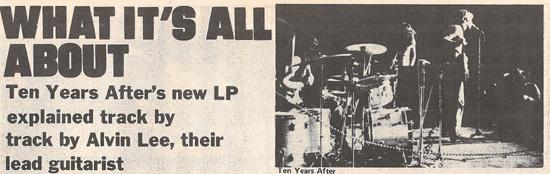
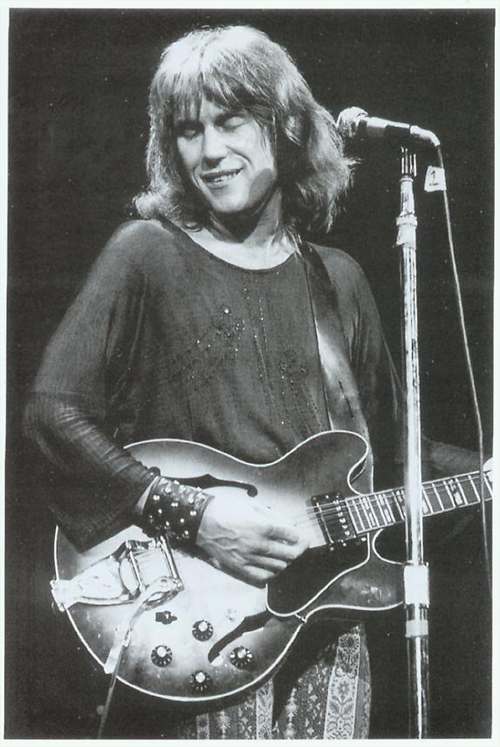
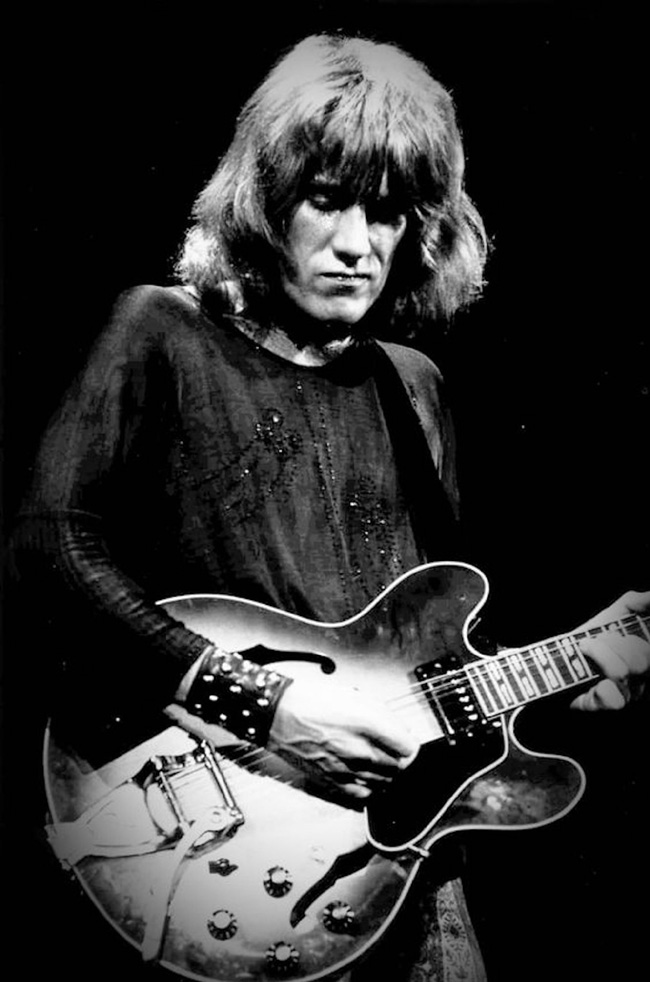
“The venues in England are
looking up,” exclaimed legendary Alvin Lee of Ten
Years After. “We’re off to Germany soon and then
it’s back home for a British tour. We have come to
the point where we can do everything ourselves and
be sure all the dates are well organized. You could
say we’re Americanising English gigs a little”.
Until the tour, citizens will
have the new Ten Years After LP “Cricklewood Green”
to tide them over. From the Chrysalis offices, I
went over the tracks piece by piece with Alvin,
beginning with the first number, “Sugar The Road”.
“This was written as straight music at first, with
that phrase running throughout. I kept the title,
but changed the lyric. It’s a straightforward rock
thing, with extra production things for hi-fi
freaks.
A lot of this is in the stereo
effects. “Working On The Road” was written during
one of my grim periods. I thought I was working too
hard. I get these depressions at times, but I always
get out again. It’s a stroll along sound with no
real musical strife. Again, suited more for stereo
headphones. “50,000 Miles Beneath My Brain” is
almost a mantra of sounds verging on hypnotism. A
song to induce a trance on such occasions. This one
needs the proper equipment”. “We slipped in “Year
3,000 Blues” for special private reasons in the
States. It’s about a person who is heading for
extinction because he doesn’t measure up to the
required social standards of the year 3,000. A
country number for Midwest ears, perhaps to make
them see another frame of mind. It does have hidden
meanings, although I don’t know whether they’ll see
it or not. What we associate with jazz-blues is
demonstrated on, “Me And My Baby”. We could write 50
LP’s on this type of thing, and a lot of press
picked it as their favourite. I consider it about 50
years behind the times, but still valid. Very
sentimental, “Love Like A Man” was a stage number
that never came out the same way twice, so we put it
down once and for all. It gives us a chance to
explode into who knows where on the middle break.
It’s also a where-its-at-number,
for us now. What are we really doing.

“Circles” is another downer. It’s the trip of does
anything really matter when it comes to the crunch;
something we all feel from time to time. If you can
say it’s acidy without being arrested , then it is.
Influenced by Van Morrison. Last song on the album
is: “As The Sun Still Burns Away” and it’s a journey
into the surrealistic, if you can explain that at
all. We drop out of the basic riff occasionally and
replace it with noises, yet the riff continues in
your head. More special effects and you need
headphones for the real thing”.
|
|
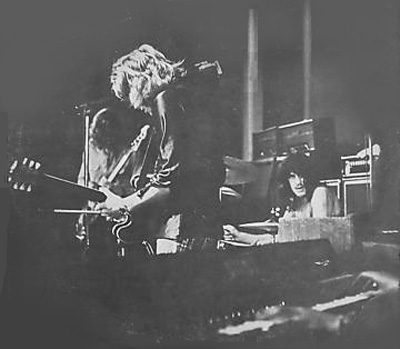
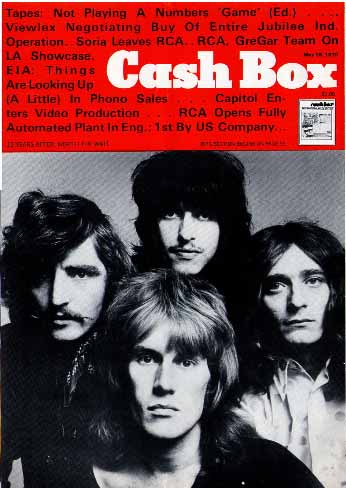
Someone was
using this photo as the background on an album cover -
we saved the photo - concert unknown. |
|
Melody
Maker – May 2, 1970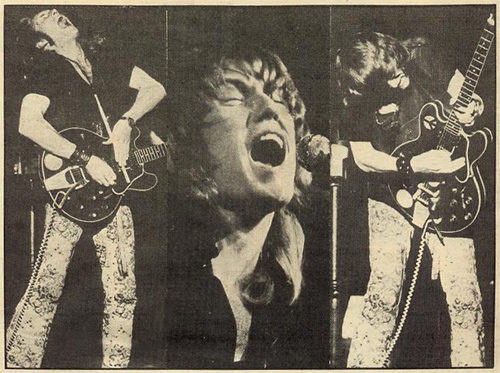
Ten
Years After Are Just Starting
Alvin
Lee Talks To Royston Eldridge
During
the past few years, rock music has ceased to be regarded as
mere entertainment for the young of the day. As the name of
the music has changed, from the big beat days of the early
Sixties through to the rock generation of the Seventies, so
has the attention paid to it. Among the British bands who’ve
done much to increase the stature of the music are “Ten
Years After” who recently returned home from their fifth
American tour. It was a tour which gave the group further
evidence of the importance of rock, regarded by many now as a
culture.
Film:
“We
did Woodstock the tour before this one and we thought then it
was a mind blowing festival…a very big scene. But on this
trip we were invited to the premiere of the film, and you
realize just how big the whole thing was. “The bands are
very good in it, but it’s not just the music, the film
itself is tremendous. It’s the little events connected with
it, the interviews with the people. It’s a film that shows
what’s really happening there, what American people are
really like. I didn’t know where those Bermuda- Shorted
camera carrying tourists came from. It must be from the
mid-west somewhere, because I’ve never seen anyone like that
while I’ve been in the States. This film is about what young
people over there are really like. I’m hoping it’s going
to be released in England, it’s important”.
Free:
During
their tour, Ten Years After came across, Joe Cocker whose new
band “Mad Dogs and Englishmen” is currently one of the
hottest rock properties in the States. It’s an outfit that
involves over twenty people
and one that is rapidly acquiring over superstar status.
It’s really weird, the whole thing about Joe Cocker is
amazing. In the States Joe’s playing to like 20,000 people,
while back here he’s nowhere like as big. In view of the
success of the bigger rock bands, and the growing practice of
musicians moving outside of their usual groupings to play
together, I asked Alvin if he’d like to play with other
people, or increase the instrumentation of Ten Years After?
No, we haven’t gone as far as we can go with Ten
Years After. It’s changing all the while and that’s why
we’re not controlling the direction of the group at all…it’s
far, from stagnated…in fact it’s just starting. “We’re
very free musically, there’s very little format involved
with the four of us. If we had a brass or a horn section, they
would tie down the bass and the drums for a start, and the
brass sections that I’ve heard, usually stick to little
riffs anyway. “I stared using a little electronics, for
special effects on the new album “Cricklewood Green” which
is moving well up the Billboard American Chart. The last
number on the second side has a home made sound on it, but
I’ve still got to feel my way in on that. As far as pure
electronic sound is concerned, that will be something I’ll
do for my own personal thing”.
This
week, Ten Years After drummer – Ric Lee, bassist Leo Lyons,
organist Chick Churchill and guitarist Alvin Lee are all in
Germany, where they will be testing out a new sound system,
which they bought in America.
Tour:
“The
next thing we plan to do, is a short English concert tour
which will be our own promotion again. It will be in about two
or three weeks from now, taking in Glasgow, Edinburgh and the
Royal Albert Hall as well”.
Like most rock bands, Ten Years After are hardened
critics of the BBC’s policy towards music. But Alvin
believes that it is improving.
Underground:
“I heard the David Symonds show between six and
seven the other night and he was playing some good things, I
even made a note to get several of the things he played. If
only they’d put the so called “Underground Music” –
what was originally turned on music, rather than straight
music, but has now reached such a wide audience, that it can
no longer be called “Underground” – on the FM wavebands.
It shouldn’t cause any cross-over trouble, look how many FM
stations there are in New York, and there are no problems
there".
|
MELODY MAKER, May 2, 1970
|
|
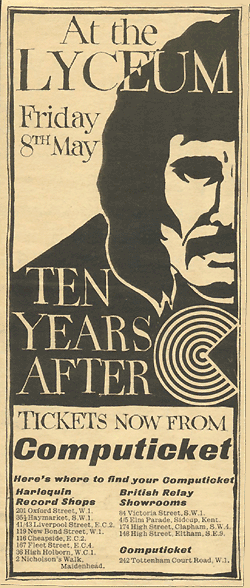
Melody Maker, May 2, 1970
|
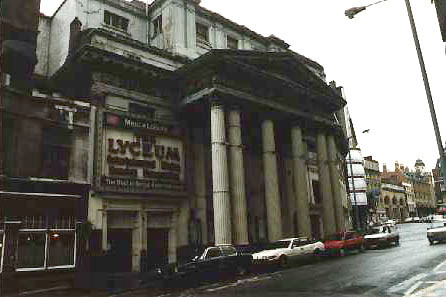
London’s West End – The Lyceum Theatre – Wellington
Street
From 1765 to 2010
Also
Known As:
“The
Theatre Royal” – “The English Opera House” –
“The Royal Lyceum Theatre” – “The Palais de Danse”
- “The
Mecca Ballroom”.
Rock
Bands Who Played There:
“Ten
Years After” -“The Grateful Dead” – “Led
Zeppelin” – “The Who” – “Emerson, Lake and
Palmer”
“Colosseum”
- “U2”
– “The Smiths” – “Bob Marley and the Wailers”
– “Genesis” who performed their broadcast from
here in 1980 for the “Old Grey Whistle Test” show
– “Electric Light Orchestra” -
Simply
Red” November 30, 1969 “Pink Floyd” did an
historic performance here. “The Plastic Ono Band”
1969 played their only concert at this venue.
It’s
a 2,000 seat venue that can rightly boast superior sound
and creature comfort.
From
Shakespeare’s “Hamlet” to Johann Wolfgang
Goethe’s “Doctor Faustus” to a 1937 “Cinema” to featuring
modern “Rock Concerts” the Lyceum has hosted them
all and much more throughout the century’s.
Sarah
Bernhardt – Cyrano de Bergerac – Sir John Gielgud
– to an elaborate exhibition of wax-works by Madame
Tussaud.
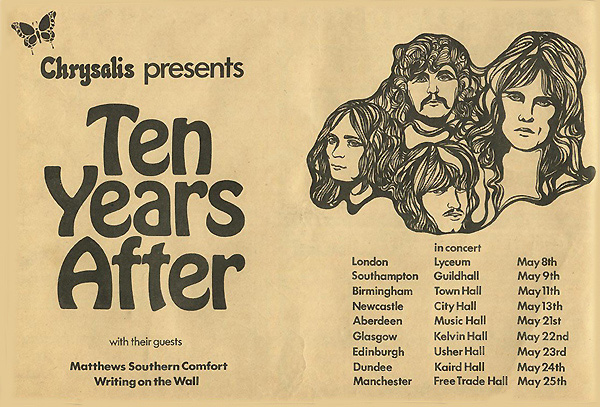
Ten
Years After played here on May 8, 1970. This was the
start of their British Tour. Also included were
supporting acts, Mathews Southern Comfort and Writing On
The Wall.
|
|
|
|
Disc and Music Echo - May
9, 1970
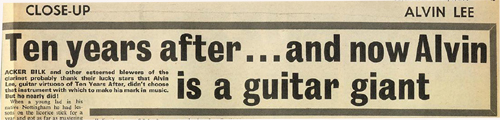
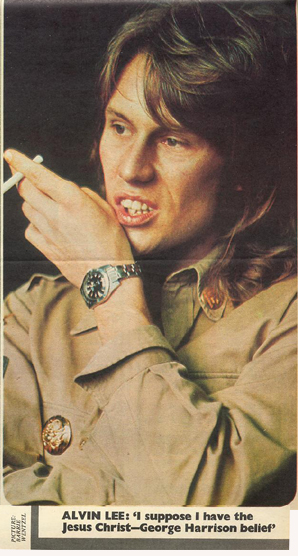
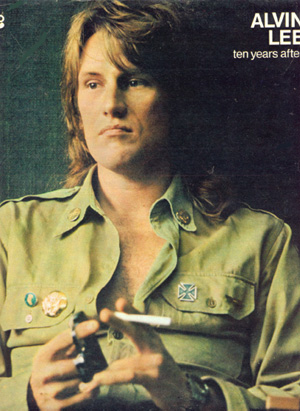
Acker Bilk and other
esteemed blowers of the clarinet probably thank their lucky
stars that Alvin Lee, guitar virtuoso of Ten Years After,
didn’t choose that instrument with which to make his mark in
music. But he nearly did!
When a young lad in
his native Nottingham he had lessons on the licorice stick
for a year and got as far as mastering such musical epics
as, “In A Little Spanish Town.” But young Nottingham lads,
with heroes like Robin Hood to live up to, would rather be
out in the open leaping about in trees, picking off the
nasty Sherriff and his men with mighty bows and arrows at
three miles range. Still, from an early age music was a part
of his life, and as he grew up music became more important.
“My parents were both blues fans “Working On The Farm” blues
and prison blues, particularly Big Bill Broonzy, and they
inspired me into scene.
I became interested
in the negro philosophy and there was always a guitar around
the house.
“Then the rock and
roll thing came along and I got really hung up on Elvis. I
thought he was really groovy. “I suppose Elvis’s guitarist
Scottie Moore was my first influence on that scene.
I was one of those
freaks who listened to the guitar solos,” Now people listen
to Alvin’s solos.” After five, big-selling LP’s and five
incredibly successful tours of the States, Alvin is firmly
entrenched in the guitar-“big – league.”
His first public
appearance was in a Country and Western group with his
parents, playing clubs at his home town. “My parents were
into traditional jazz, blues and skiffle, which was all the
same trip in those days. As far as parents go, they’re very
groovy. There were never any hang-ups about me going out to
work to bring bread in. They encouraged me to do what I
wanted to. “I consider myself quite close to my parents,
which seems to be quite a rare thing these days. I suppose
it’s the age difference and every kid is bound to shock his
parents. But, if your parents can’t understand you, nobody
will.” It certainly appears that the people who had the task
of educating Alvin didn’t understand him. He viewed school
as a side-line and “never really took much interest. I just
looked forward to getting out – which I did at the earliest
opportunity. “It seemed totally unrelated to anything that I
had ambitions for. Approved education had nothing to do with
what I wanted to do. I was just interested in playing the
guitar.” The schoolboy Alvin was always in trouble. “If ever
a day passed when I didn’t get told off, I felt that was
quite an achievement. I made a pocket guitar at school, just
five frets with the strings nailed on it I just used it to
practice chords. And I even got told off for that. Whereas I
always had understanding parents, the teachers to me were
obscene, I yearned for freedom of expression. “My school
philosophy was that anyone with any intelligence refused to
listen to the teachers. The ones who listened and won the
awards, were what I called the “goody-goodies.” I never one
any awards. I was interested in science, though, making
electric fires and things.” Today, Alvin Lee, 25 next
December 19, is a person who seems to have his life very
well organized. He is now without the oppressions of
teachers and things like that. In fact, he is virtually his
own boss. You get the impression that he has everything
worked out just right. Even tiny details, like carrying an
expensive camera around so that it is easier to get taxis to
stop. “They are more willing to stop if they think you’ve
got a bit of money.” He seems very self-assured and
content.
He lives in the mews
off Baker Street, London – for which he pays 25 pounds a
week rent.
Alvin says he
doesn’t know how much he earns. He dresses casually, but
expensively, and he admits he spends a lot on toys for my
hobbies.” This means equipment for the “bodged-up studio”
at his home, where he spends a lot of time making tape
recordings. He experiments a lot with electronic sounds.
“One would hope, as I get wealthier, that I’ll get a better
studio. The thing about making electronic sounds is that it
has an ultra-minority appeal. It’s something for doing
rather than listening – and anybody can do it.”
He likes living in
London, but a quiet, sedate mews home is not really suitable
for him. “I enjoy London but,
I like to make a lot of noise. I can’t have a large band in
my front room.
“I’ll probably do
the “cottage in Berkshire” bit.” Apart from recording, he
list his hobbies as photography, writing songs and prose.
“But playing is still my greatest hobby – although
sometimes, it appears to be hard work.” Whether it is hard
or not, playing guitar is his work, and probably always will
be.
He played in a
group called Alan Upton and the Jail Breakers when he was
13. “It didn’t last long. I don’t know what happened.” He
then played in a group called The Jay Birds, and there were
a few other bands before Ten Years After “ but they didn’t
really mean anything.”
“I got on to an
R-n-B kick through Elvis and Chuck Berry records. That was
when nobody had heard of it. You had to pay three pounds and
wait six months for Chuck Berry records.
It was like an
underground scene. There was a minority of us, a little
clique, and we liked to freak about to the music.”
Four
times Alvin made the trip to London to seek gold. Three
times he had to give up and go home. The break came,
surprisingly, through acting.
“Leo, Ric
and I got a part in a play. “Saturday Night and Sunday
Morning,” at the Prince of Whales. It was suppose to be set
in Nottingham and the people doing it were up there getting
the atmosphere”. We persuaded them it would be more
authentic to have real live Nottingham lads in it – so we
got walk-on parts. It was just a meal ticket back to London
really, but we were earning bread. We were also doing
session work, backing people and awful things like that, and
we felt quite rich.” Then the group started doing their own
gigs, but without much success. “We were doing our old Chuck
Berry numbers. Club promoters used to say, “I like what
you’re playing boys, but the kids don’t. If I put you back
on, they’ll smash my place up.” For a time they played at a
club in Leeds – getting twelve pounds for four hours, and
attracted a small following.
“A minority
group came along and dug what we were doing.” One night they
tried an experiment. They played their first set in their
yellow shirts and red trousers, bashing out the popular
Motown stuff. For the second half they put on dirty overalls
and played the blues. “It went down well. The only
difference was, that instead of girls cluttering round the
stage, all the guys did. “We didn’t take it as the big
message from the sky or anything, but it helped. We got
people not to look at what clothes we were wearing, but to
listen to the music. From then on we started playing what we
wanted, and it really kind of blossomed.”
Ten Years
After formed in May 1967, although Alvin had been playing
with bassist Leo Lyons for seven years by then. It really
did blossom, as Alvin says. Two years later they were doing
their third tour of America. They built up a reputation
playing at London’s Marquee and the extinct Klooks Kleek,
where their second album, “Undead” was recorded. They were
the hit of the 7th National Jazz and Blues
festival at Windsor.
Later, an
unknown Alvin took on the famous Fillmore West, on a night
when Peter Green and Buzzy Freeden of the Butterfield Blues
Band were also appearing.
In the
audience were many distinguished guitarist, including Mike
Bloomfield, Elvin Bishop, Jerry Garcia and Charlie
Musselwhite. But Alvin stole the limelight.
“After Alvin
played, anything else was meaningless,” said one reviewer.
“He plays the blues like B.B. King, with the intensity of
Eric Clapton and the explosiveness of Jimi Hendrix, or in
the unadorned tradition of Barney Kessel.” Now Alvin had
reached a very successful point in his life. But even though
he is paid phenomenal amounts for playing the guitar, he
still plays for fun. It’s as essential to him as eating. If
there is a guitar handy, wherever he is, he is likely to
grab it and plunk away. But he has time for other things in
life. And life itself is his main interest. “I like to be in
control of my own life – you have to keep your eye on it.
Ten Years After has almost become an industry and you just
have to watch that you don’t get hyped. It is important to
see that you don’t turn into something you don’t like, or
loose something like artistic integrity.
“I’m a kind
of amateur sociologist. My chick is into astrology and now
I’m generally getting into the stars. “The philosophy thing
used to be childish. I used to have selfish philosophies,
relevant to the time and solely concerned with me. But with
all ideals you find little problems, tiny faults, and
realize that nothing can be 100% right for everybody. “I
suppose I have the Jesus Christ – George Harrison belief
about putting your own house right. If everybody did that,
then the world should be cool.
“I’m not one
of those active freaks. I write observations occasionally
and show them to people but I don’t think activist do any
good in the long run. You get these activist who fight all
their lives for a good cause and then 60 or 100 years later
the thing that they fought and perhaps died for comes about.
People eventually get together and say, “let’s change this”.
“I suppose
travelling has changed my ideas a lot. England used to be
the whole world to me – but when you see America! It’s one
of the most advanced places for personal freedom. Denmark is
probably the most advanced, but America really is the of
opportunity. People there speak the same language, and for
awhile you think you’re still in England. Then you suddenly
realize it’s a completely foreign country. Their
philosophies are totally different. “Take one example –
radio, which is one of my pet topics. Here the radio is
owned by the Government, and you have to pay for a license
to hear it. Americans think that is a joke. And it is a
joke; it is a ludicrous situation.”
Now Alvin Lee
has more time to enjoy life. He has passed the demanding
where he was fighting to establish himself. And for this, he
can partly thank one Norman Barnacle – who gave him a few
basic chord lessons on guitar at an early age.
Article by Roy
Shipston
|
|
|
|
|
 |
|
Record Mirror - May 16, 1970
- Vol. 17 No. 19
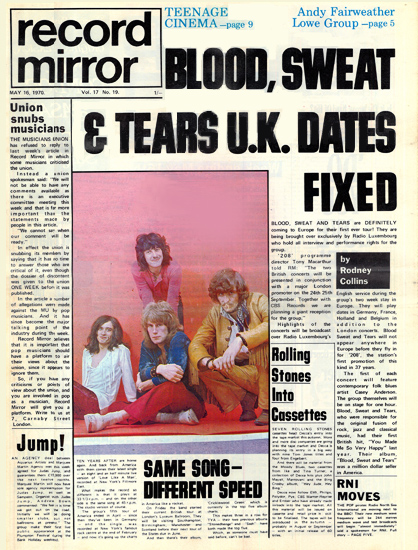
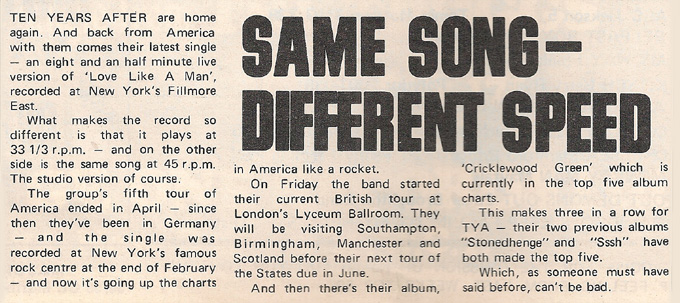
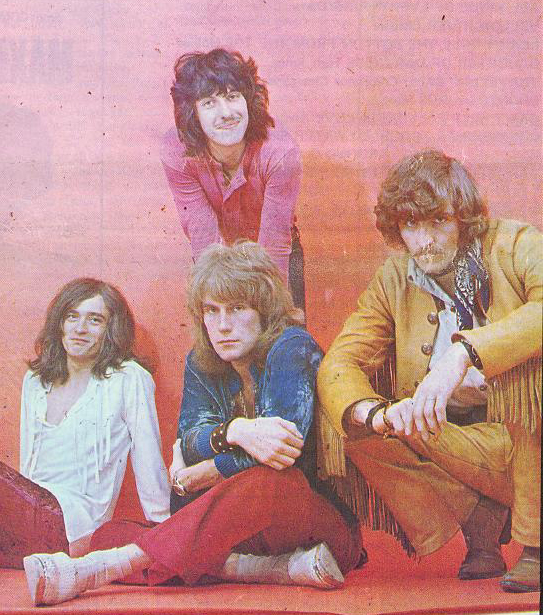
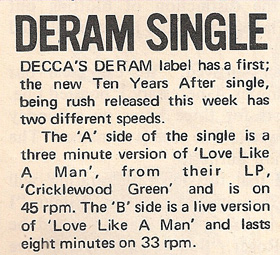
Record Mirror
May 9, 1970
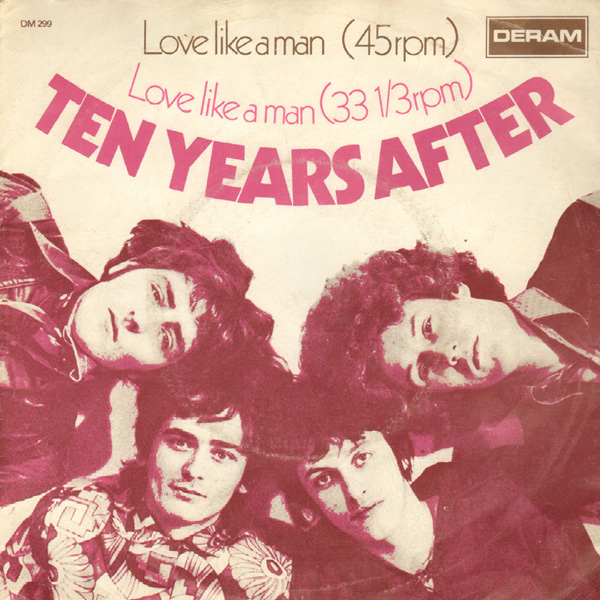
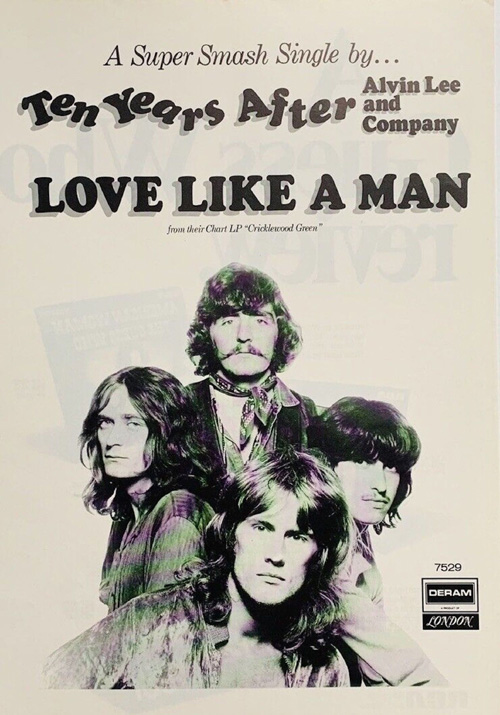
Love
Like A Man - Studio & Live Version
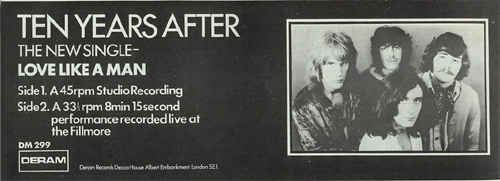
New Musical Express May 30, 1970 and also
found in the Record Mirror
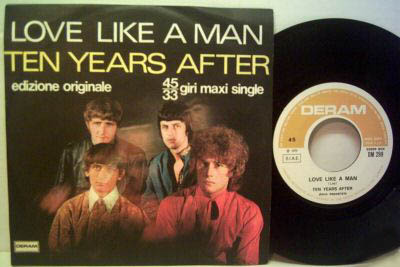
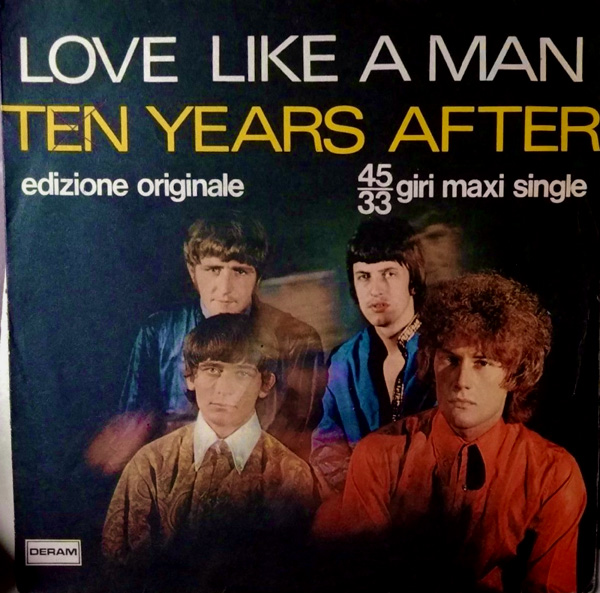
Love Like
A Man - published in Italy
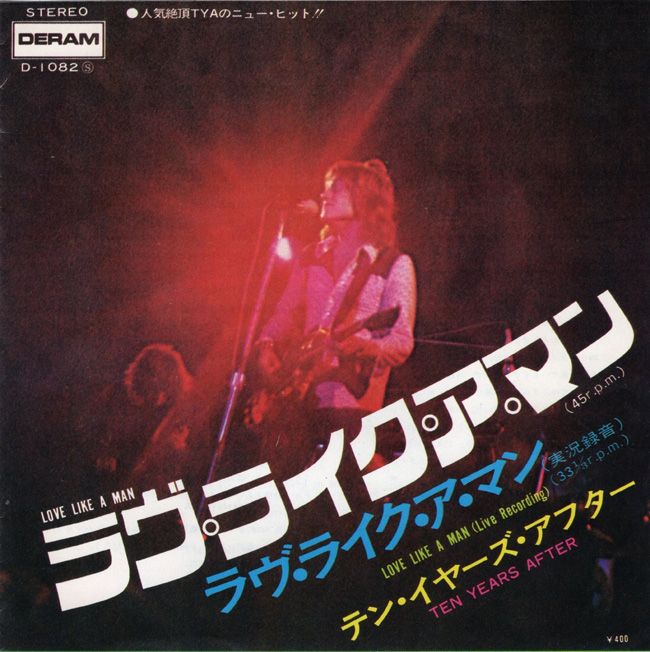
Love Like A Man
(45r.pm. / 33 -1/3.r.p.m.) published in Japan 1970
|
|
|
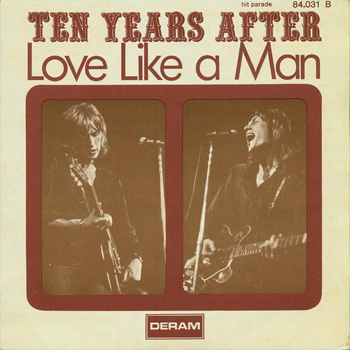
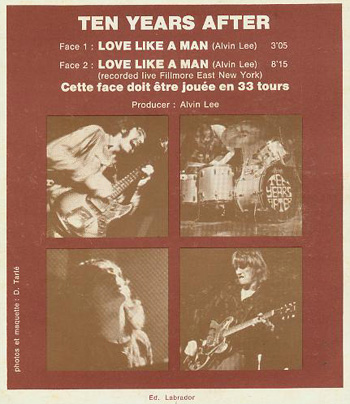
|
Many
Thanks to Wolfgang Cramer for this rare single
"Love Like a Man"
|
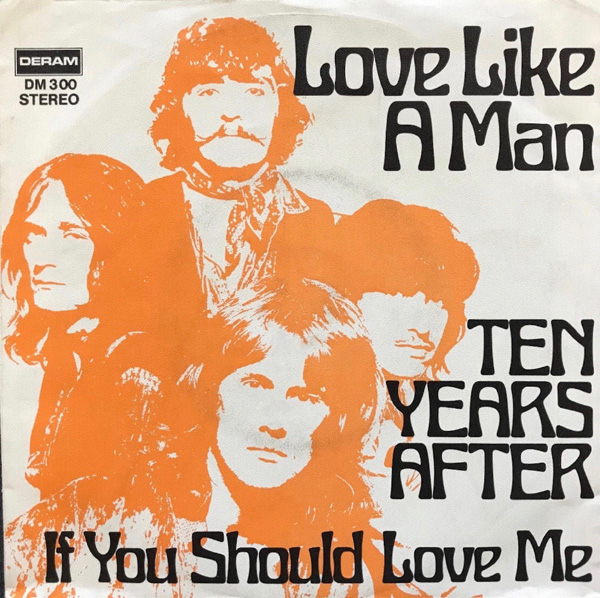
Love
Like A Man / If You Should Love Me - published in
Germany
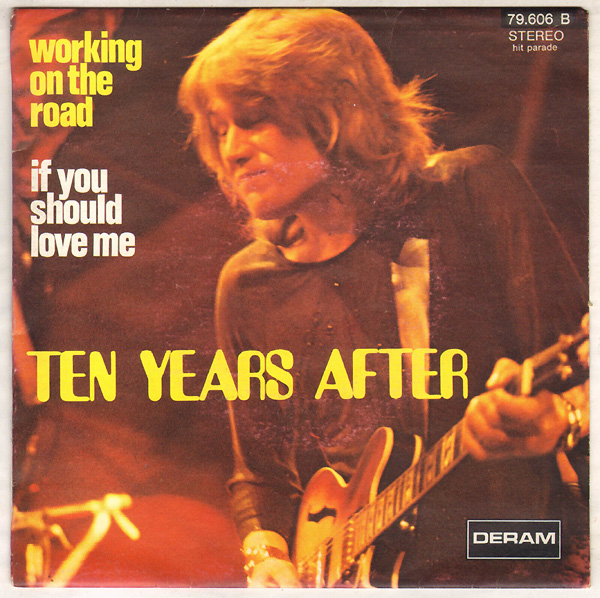
Working
On The Road / If You Should Love Me -
published in France, 1970
|
|
Record Mirror – Volume 17 Number 19:
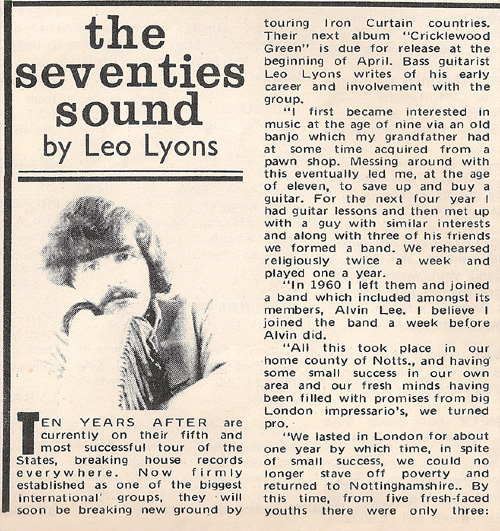
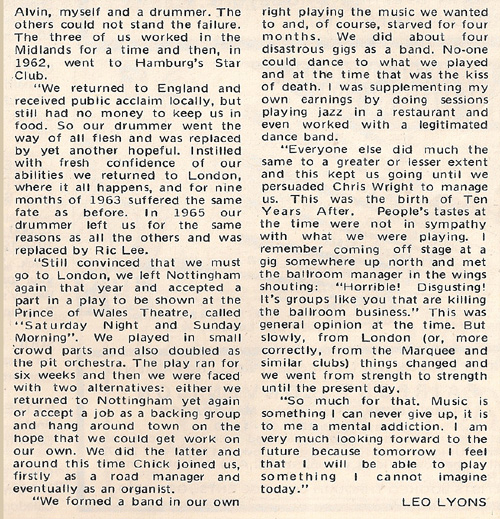
May 16, 1970 – The
Seventies Sound – By Chick Churchill - Ten Years After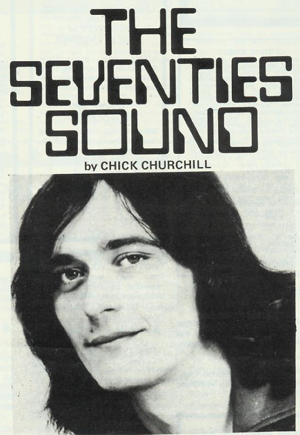
Chick Churchill is
organist with Ten Years After, and is our cover star this
week, and is a highly respected musician throughout the
world. Largely unpublicised because of his introvert
nature, he is nevertheless very outspoken when
interviewed. The group began their Nationwide British tour
last week and embark on their sixth U.S. tour on July 11th
in Cincinnati, Ohio. “We’re now at a stage in our career,
when we have a reasonably firm control of our recording
career. It’s enviable position to be in, and it took some
time to achieve. We record in which-ever studios we
choose, produce our records ourselves and even have a say
in choosing the presentation of the final product, meaning
the recode sleeves, advertising etc”. “Alvin writes all
the material for the album and we all get together and
work on the final results. We wouldn’t have it any other
way. Our success or failure rests directly on our
shoulders, but fortunately, people seem to like what we’re
doing”. “We’ve had a lot of pressure put on us over the
past few years, to issue a single, but we didn’t want to
compromise our own policy and must release the average
three minute disc. After some thought, we decided to issue
“Love Like A Man,” which is on our “Cricklewood Green”
album. However, we wanted to give the people who buy our
records, more value for their money, and also express what
we feel about music. So we decided on using an eight and a
half minute version of “Love Like A Man” which was
recorded during a stage performance in America, at the
Fillmore. It will also be in stereo. “We appear a great
deal in America these days, because of the very large
venues and the sheer vastness of the country. We are able
to make a comfortable living, but it hasn’t come easy. For
over five years we virtually starved because we wanted to
stick by the music we created and were not interested
whether there were financial gains to be earned at the
end. But, at every opportunity, we play in Britain.
We’re currently on
a tour covering most of the country, and we are very
pleased of the reception we received when we opened at the
Lyceum Theatre last week. When we return from our next
American tour, we will be travelling more extensively
around Britain”.
“Whenever we travel we find that people respect British
music and the musicians, particularly on the continent.
Our records sell quite well behind the Iron Curtain and we
hope to tour there one day”. “Earning money is only a
means to an end, it enables us to rent studios over a
longer period of time, and it gives us the opportunity of
having more freedom in producing our record albums”. |
|
Record
Mirror – May 30, 1970
Volume
17 Number 21
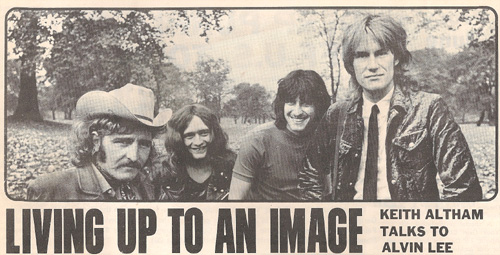
About
The Just Released “Cricklewood Green” Album
I
feel a certain sympathy for Alvin Lee who is currently
competing with an image which has been bloated for him
by those who should at least by now be aware that he
could wear a paper bag over his head and still win
appreciation as a guitarist.
During
the press preview of the “Woodstock” film last week
it was significant that Ten Years After received the
loudest round of applause for their sequence which
featured some vintage Alvin Lee.
Happy
at the success of “Cricklewood Green,” the group’s
latest album, I found Lee smiling and signing some of
his money away on blank cheques while Simon and
Garfunkel emoted from the record player.
In
spite of the fact that someone, somewhere – there bout
for the Grace of Terry Ellis – has been building Alvin
into a solo cult figure, I found the man himself to be
“anti-flash” and quietly concerned with the problem
of living with his face.
“I
was very paranoid about it at first,” admitted Lee –
somehow I cannot bring myself to call such a talent
“Alvin” which is no doubt a post-Freudian problem I
have relating to Chipmunks – “It started in America
where the business like publicist we had over there
found people were picking up on me and decided to
exploit the situation.
“There
was a weird feeling in the band about it at the time and
I kept saying “It’s nothing to do with me men” and
it really wasn’t. Finally, we all sat down together
and discussed it and it was decided that if it was going
to help the band we would let it go, but I’ve never
really liked to think of the band as anything other than
a band.
“It’s
weird just how it happens. Someone starts an underground
rumbling that someone is a super-star and then the
knockers move in. Jimi Hendrix was reported recently as
saying, I was the Gene Vincent of the 1970’s which I
can’t quite work out but it doesn’t sound too
cool”.
Mr.
Lee treated himself to a quietly reflective laugh at
that and would not be provoked into any retaliation,
when I enquired what he thought of Hendrix. “I like
him,” he laughed. “He’s never really received
the recognition he deserves for that
“surrealistic-guitar thing which he started and people
like me latched on to. No one has really critically
assessed Hendrix for his musical contributions as a
composer.
In
the face of such magnanimous praise I had to own up as
being the reporter of Hendrix frivolous rather than
malicious comment on Lee, but his reply certainly makes
him a points winner on that on that long distance verbal
bout. At the present time, the topic of conversation is
the group’s decision to release a single (Shudders
from the Movement) albeit that one side is a
revolutionary version of the A side “Love Like A
Man” recorded live at 33 and a third, which last
nearly eight minutes. Why a single, and could it do the
group any harm, if it became, if you will pardon
sacrilege, a hit.
“It’s
really the result of pressure from friends and the
record company,” said Lee. “Everyone was saying it
would do us no harm, and Jonathan King came down with a
long list of pros and cons. “Eventually we agreed
because we got a bit of a bargain.
Some time ago we wanted to release
“Woodchoppers Ball” as a B-side at 33 and a third,
and got a flat no, but this time we got them to agree to
a stereo cut at the A side which last eight and a half
minutes.
The
A side is a shortened version of the album track which
always seems a bit of a cheat to me. “It’s possible
that if the single became a hit in England, it could do
us some harm. Our concerts in this country are at a very
nice stage and the vibes are just right. We’ve never
thought of ourselves as a pop band in that sense, and we
were worried in case we drew the very young people who
come for the occasion, rather than the music”. “Love
Like A Man” was our decision as a single because it
was the one track on the album which seemed
representative of what we are as a group on stage. If we
had been going for a commercial single – yuk-yuk –
it would have been something like “Circles”.
That’s the kind of thing to get played on “Family
Favourites” – I think it is in fact!
“That
kind of single would be no relationship to what we do as
a group. We can afford to do things out of context on an
album, because the overall effect would keep it in
perspective as a side-trip, but I wouldn’t like anyone
to get the impression that was us”.
On
the group’s aforementioned album named incidentally
after one of their roadies “Horticultural Splendours”
(Cricklewood Green – grass – pot) a rare species of
rose he has produced – there are a number of
electronic effects over and above those feed-backs we
have come to expect. Is there any point when the
musicians leaves off, and the electrician takes over?
“There
is a lot of artistic control that goes into electronics.
Most people know that for track tape, you play it back
with eight instruments on separate tracks and mix it.
When we put the electronic effects over we might have
three more machines running with everyone having a
finger on the fader.
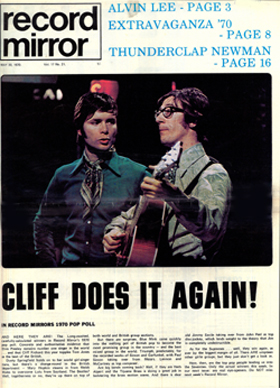
“On
our “Sun Still Burns Away” track, which was our
attempt at the nouveau electronic that was what we did.
It wasn’t just noise bunged on top. A lot of hard work
went into it. A lot of thought and timing and work went
into it”.
Finally, we sat around in the afternoon’s
warmth with the front door open upon the living room,
and talked of many things….mourned the death of the
word “Underground” when it was synonymous with
“Truth”…discussed a few of the happening groups in
the U.S. amongst whom were “Quicksilver Messenger
Service” and “Alice Cooper” who have an
interesting act climaxed by blowing chicken feathers
over the audience…expressed hope for the pirate T.V.
plane and wondered whether anyone could get something as
together as “POW” the San Francisco’s retort to
pop T.V.
Finally,
I returned home with a courtesy copy of “Cricklewood
Green” under my arm as I went to place it on my record
player, out fell a large poster of Alvin courtesy of
Deram. It is good to find the man himself is not being
buried by his own promotion – he does not need it,
neither do the group – they are by their own merit.
|
|
Groupies Movie –
Directed by Ron Dorfman and Peter Nevard 1970 Production:
All the parts with
Alvin Lee from Ten Years After, seem like he’s so stoned
that he’s about to pass out. He rambles on about something,
but you can’t really understand him, which is all right with
me. The footage of them playing live is great. They do an
awesome version of “Good Morning Little
School Girl” that’s about as heavy as any rock music that
had been made by anyone at that point. They’re totally the
highlight of this movie. You get the vibe that they were the
band that all kids who were really into rock music really
liked at that time.
It’s not hard to see why, and Alvin Lee might have been one
of the most severely underrated guitarist of the 70’s.
"Groupies" sets the pace for the other rock `n´ roll excess
documentaries that would follow. Like “Groupie Girl” another
1970 British Drama Film about the music scene.
Also features backstage and concert
footage of Ten Years After, Terry Reid, Spooky Tooth and Joe
Cocker and The Grease Band. The appearance of Ten Years
After is only about ten minutes long (total), and used for
the audio soundtrack and less for visual footage.
|
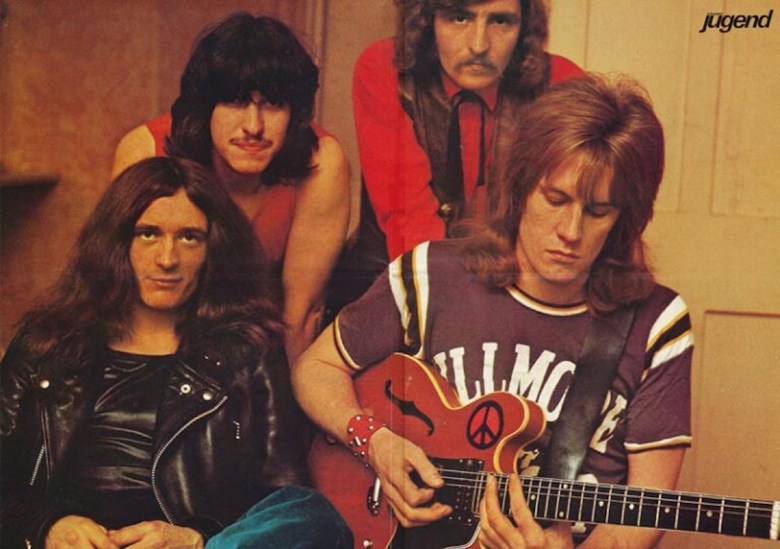
Swiss Magazine "Schweizer Jugend"
(Photo is probably from January / February 1970)
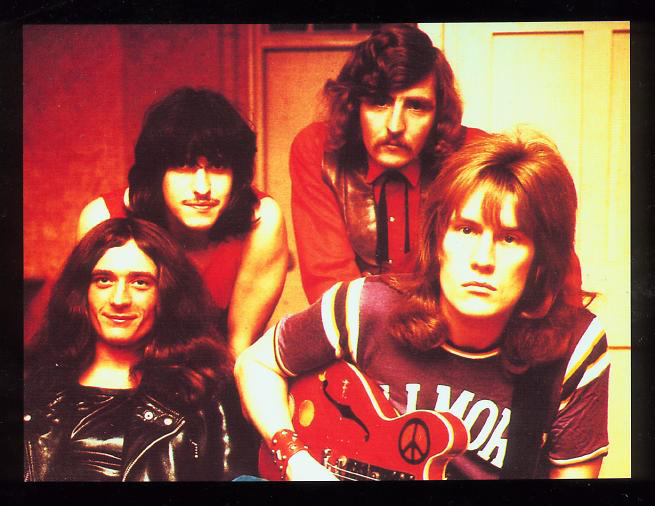

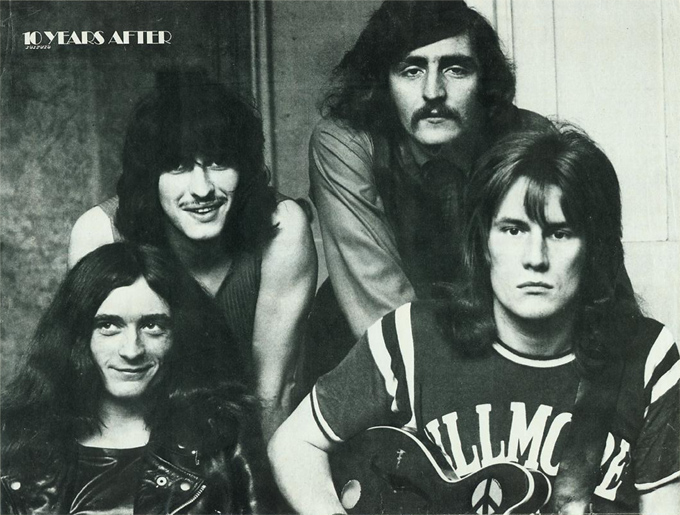
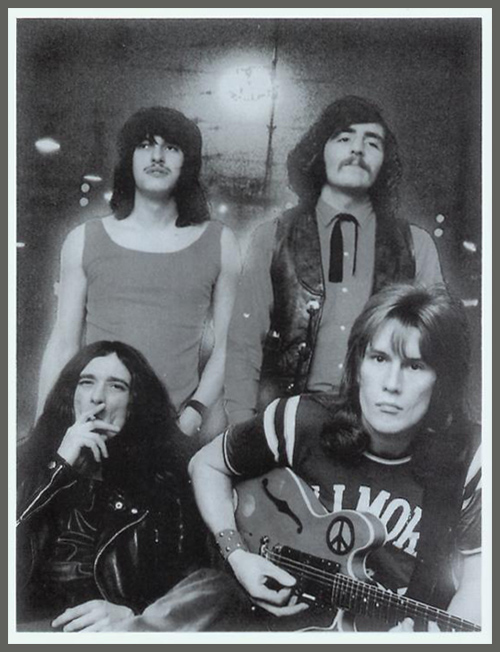
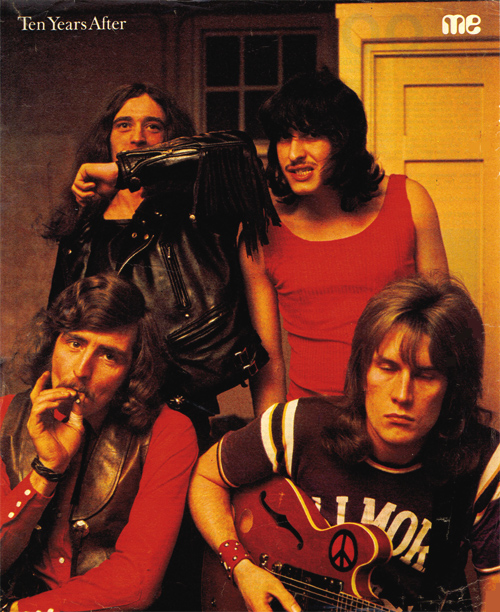
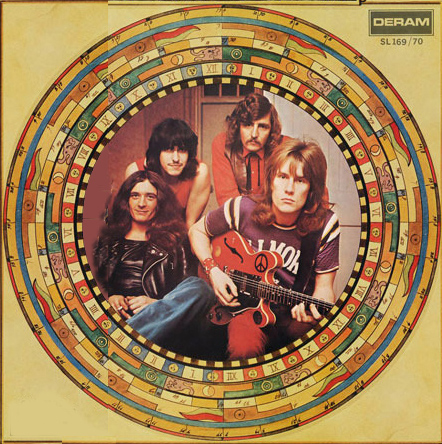
|
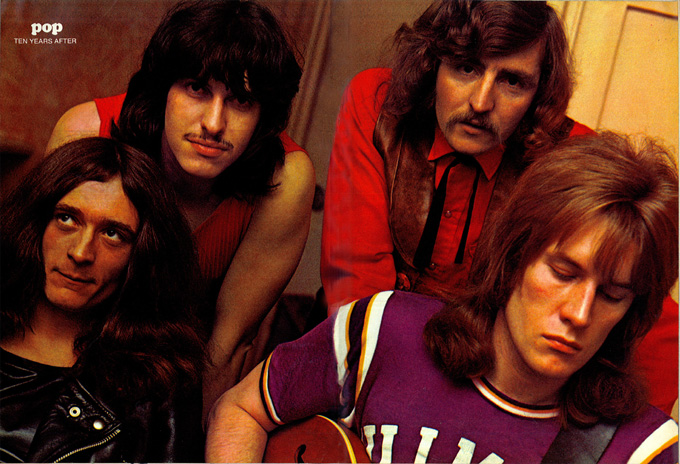
Pop
Magazine – June 1970
Ten Years After – Wurden Durch
Amerika Entdeckt.
In England gehören Ten Years After
noch zur zweiten Garnitur. In den USA verhält sich das
anders. Zusammen mit den Led Zeppelin zählen sie dort zu den
zugkräftigsten britischen Rock Gruppen.
 „Ja, so könnte man es formulieren“,
macht Lead-Gitarrist Alvin Lee. „Aber wir dürfen nicht
vergessen, dass gegenwärtig in den Vereinigten Staaten die
Situation für alle britischen Bands besonders günstig ist.
Die Amerikaner halten automatisch alles, was aus England
kommt, für interessant und
verdienstvoll. Für uns Ausländer hat diese Tatsache
vor allem den Vorteil, dass man uns, allein schon auf Grund
unserer englischen Pässe, besser zuhört als anderswo und
erst dann über unsere Musik urteilt. Während das in England
– zumindest in unserem Fall – gerade umgekehrt war. So ist
es natürlich kein Wunder, dass Amerika als erstes Land
unserem Talent auf die Spur gekommen ist. Komischerweise
sind wir im Augenblick sogar eine der erfolgreichsten
britischen Rock Gruppen in den USA. Ob wir besser als die
anderen sind, ist allerdings Geschmacksache. Ich will
niemanden beleidigen; aber punkto Live–Auftritte sind in
Amerika die Led Zeppelin und wir schon die erfolgreichsten
Engländer.“ „Ja, so könnte man es formulieren“,
macht Lead-Gitarrist Alvin Lee. „Aber wir dürfen nicht
vergessen, dass gegenwärtig in den Vereinigten Staaten die
Situation für alle britischen Bands besonders günstig ist.
Die Amerikaner halten automatisch alles, was aus England
kommt, für interessant und
verdienstvoll. Für uns Ausländer hat diese Tatsache
vor allem den Vorteil, dass man uns, allein schon auf Grund
unserer englischen Pässe, besser zuhört als anderswo und
erst dann über unsere Musik urteilt. Während das in England
– zumindest in unserem Fall – gerade umgekehrt war. So ist
es natürlich kein Wunder, dass Amerika als erstes Land
unserem Talent auf die Spur gekommen ist. Komischerweise
sind wir im Augenblick sogar eine der erfolgreichsten
britischen Rock Gruppen in den USA. Ob wir besser als die
anderen sind, ist allerdings Geschmacksache. Ich will
niemanden beleidigen; aber punkto Live–Auftritte sind in
Amerika die Led Zeppelin und wir schon die erfolgreichsten
Engländer.“
England ist super – groovy:
Wieso sich die Unsrigen allgemein in
den USA so gut halten, ist schwer zu sagen, fährt Alvin
weiter. „Ich persönlich glaube, es hat viel mit Vorurteilen
zu tun. Die Amerikaner können ihre Landsleute nicht so ohne
weiteres zum Superstar erheben, weil sie ihre Schwächen und
Eigenarten zu gut kennen. Die Engländer kennen sie aber
nicht. Sie haben bloß ein romantisches Vorurteil über uns im
Gehirn und halten uns für super–groovy. So kommt es dann,
dass man uns positiver gegenübertritt und uns oftmals auch
überschätzt...“
Abenteuer:
„Wie die Ten Years After denn ihrerseits zu Amerika stehen?
Nun, wir sind uns diesbezüglich nie ganz einig“ gesteht
Alvin Lee. „Ich selber bin immer froh, wenn wir das Land
hinter uns haben. Aber irgendwie freue ich mich jeweils
doch, wenn wir für eine Tournee hinüberreisen. Es ist ein
Abenteuer, bei dem man nie sicher sein kann, ob man tot oder
lebendig zurückkommt. Amerika ist ein Land der Gegensätze.
Die guten Dinge sind gut – besonders für uns Musiker. Aber
die schlechten Dinge sind verdammt schlecht. Für mich ist
Amerika ein bisschen zu ruppig und wild. Ich will jedoch
nicht klagen. Uns ist dort viel Gutes widerfahren „.
|
|
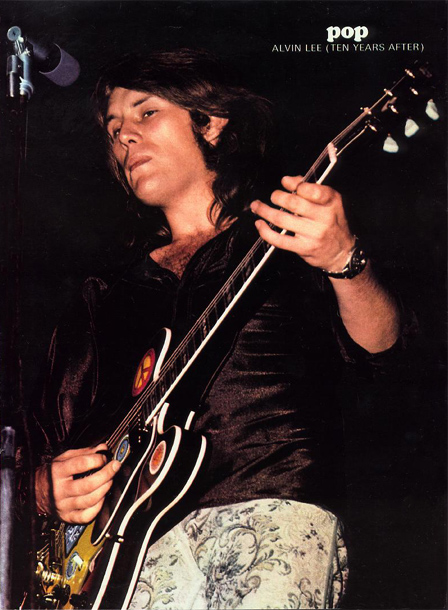
A Very
Rare Photo of Alvin Lee from 1970 |
Record Mirror June 6, 1970
|
Beat
Instrumental – June 1970
|
|
One
interesting feature of group music over the past three
years is that musicians have taken an increasing
interest in record production, and spent quite a bit of
their free time playing around with home studio set ups.
Alvin
Lee of Ten Years After, is one such case.
Alvin is
credited with responsibility for “links and
electronics” on the group’s latest album,
“Cricklewood Green, which they produced themselves.
Alvin
writes in a sleeve note, “Together with Andy Johns,
engineer and together head, we have recorded this album
in layers of sound, rather than absolute separations.
Thus, giving separation to the varying frequencies,
|
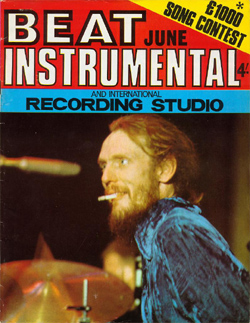 |
As
opposed to each instrument”. When asked to amplify (elaborate)
on that note, Alvin said, “There’s nothing to add
really. We’ve just tried to fill in gaps in the
frequency range.
I’ve always wanted to record at
Olympic Studios, where we did “Cricklewood Green,”
because about three years ago, all the sounds I was
digging were coming from there. The album has been made
with those who’ve got good sound systems in mind. Yes,
you really need stereo for it, preferably headphones.
“I’ve not much else to say about it, because it
should speak for itself. As far as I’m concerned, once
it’s in the can it’s dead. I’ve learned from
experience that once I’ve heard it in the reduction
room, it might not sound so good if I hear it on a
different system”. Alvin is also working at home when
he gets the time: “I’ve got a couple of Revoxes and
various gadgets, but I really need an eight track to put
it all together. I do it for pleasure, just as a hobby,
although I suppose some of it might be used if it was
good enough, but I’m limited because I can’t record
drums properly, for instance, at the moment.
During
Ten Years After’s last U.S.A. tour, I wonder how many
they’ve done now? Alvin visited the legendary Les Paul
at his studio-home, fifteen miles south of New York.
“It’s a fantastic studio,” said Alvin “much
better than most professional ones. He was the guy that
really got recording on tape together. He’s still got
his original eight track with a Cadillac fly-wheel as
the drive unit”. Also while in the States, Alvin got
to see the film of the “Woodstock” festival: “It
last for about three hours, and has got four-track
stereo, split screens and so on. It really brings out
the atmosphere of the festival, so that you almost
relive the experience? The pattern of Ten Years
After’s State-Side-Visits is changing now:
“They’re getting shorter and more frequent,”
said Alvin, “we’re doing four a year now.
“It’s hard to gauge our popularity in the States,
although we are really popular there, because it’s so
big. But we are also big on the Continent. For instance,
our last album did better in Germany than it did here,
(England) and it went to number one in Spain of all
places. We’ve never even been to Spain”. Although
Alvin would never settle in the States, he likes a
number of things about the country, including the radio
and the way concerts are organized. “It would be great
if in England you could sit in a place like the Fillmore
East with its really comfortable seats and
back-projected lights and one of the best sound systems
I’ve ever heard. The Fillmore’s have set the basic
requirements for rock clubs over there, whereas in
Britain you can still book a town hall, hire a group and
get people paying to come and see them. It shouldn’t
be like that because it’s not good for performers or
audiences. “We have been accused of over-quoting, but
there are some places that we would just rather not play
and that’s why we do it. “In the position we’ve
obtained, our concern is not for more bread (money), and
so we do things ourselves. We can put clauses in
contracts, have a say in the record sleeve, and so on.
We now hire our own studio, and hand over the tapes to
Decca, and even watch how they press the records. But we
had to get this far to do it, and unfortunately
there’s a definite dividing line between groups who
can do this sort, of thing, and those who can’t.
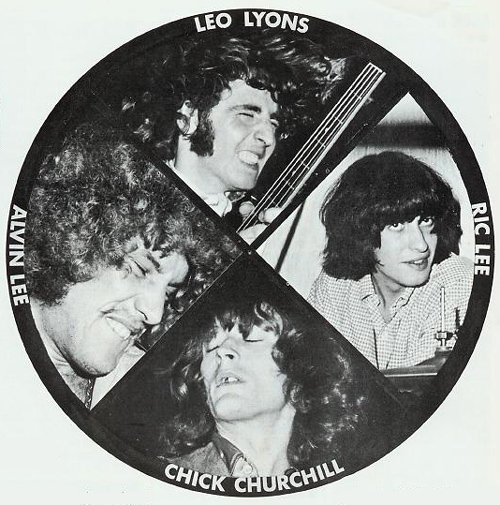
A magazine very hard to find these days, and if
you do manage to find a copy, that is in good
condition, it will cost you. |
|
Rolling Stone Magazine –
Ten Years After – Album Review
Cricklewood Green – From June 11, 1970 – Deram 18038
It wasn’t more than
six months ago that I happened by chance to come across a
certain record review in a rock and roll magazine, and a
magazine of little repute, I might add, and that review
concerned a very old and dear friend of mine, a very wise
young lad who had been a class-mate of mine in Junior High,
three years ago. Where he went to school now, if he even
did, or what he was up to in general, I had no idea. From
what I had read, however, I gleaned that, yes, he was still
the same wise kid I had known, and that he was at the time
of the review a great, great admirer of Ten Years After and
Alvin Lee. It also seemed that people had taken a paternal
interest in him and in his musical tastes, and that they
were willing to listen to what he had to say, and so I
thought to myself, I thought, “Why not, yes why not me”. Why
shouldn’t I get first crack at him this time for a brief
interview about what he thought about Ten Years After’s new
album. If I didn’t do it, someone else surely would, and so
strapping my trusty tape recorder to my side, I went in
search of him. After perhaps five phone calls to old
girl-friends, and such, I finally located him in a small
California deli having a pork sandwich. He recognized me
immediately, and after cordialities, a few more cokes and
French fries, I finally brought the conversation around to
Alvin Lee and Ten Years After and Cricklewood Green. This is
what went down: Did you really mean what you said about
Alvin Lee in the November 15th Rolling Stone
review of “Sssh” and I believe I’m quoting you correctly, “I
think perhaps he is God”? Sure, sure. I said it, didn’t I
? And not only that, but I said that Alvin was “the pure
water and pure fire of a black mountain stream”. But they
didn’t print that. I never did know what that writing cat
had on his mind. But back to the question, yes I said what I
felt. Sure.
How did you handle
the usual criticism that followed “Sssh” in which most
critics felt that Lee played with speed, just to be playing
with speed? What I mean to say is that his solos are fast
for no apparent reason, other than to show how clever he is.
Oh that. Well, man, I mean even God shows off, too.
Sometimes. Have you ever been to the Grand Canyon or Crater
Lake? Talk about a show, man. Shit, what do you want to do,
hold somebody back who can really go, really get it on?
That’s a heavy notion. Is that what you think now? Oh, now.
You want to know
what I think now. Oh, no. No? No, man. No, what? No, I
don’t think that now. No, I mean, yes, that I don’t think
that now. Right. Forget all that shit I just said.
(there’s a very long
pause). Yes, I don’t believe that any-more. (he sits and
smiles).
Well, what do you
think now? A lot of things, but specifically about what?
Specifically about Ten Years After. Oh, them. Cricklewood
Green – that? Yes. Well, first of all, the cover and inside
spread is a crock of Hallmark Postcard Shit. That’s first.
And the album itself?
The album itself.
Humm. It’s crazy. It’s just crazy, man. Crazy. It’s Alvin
Lee on the trip of, “On The Trail of the Big Hit Single”.
Roy Rodgers and Dale Evans. For what reasons, God only
knows, meaning, of course, him up there. Alvin may even have
a bundle of them in Cricklewood Green. I’m happy for him.
But, even Johnny Rivers had some big ones, man. Big Hits.
Even Walter Brennan. I mean, have you heard, “Working On
The Road” ?
Alvin even sounds
like Johnny Rivers. Like I said, it’s crazy. I mean, I know
a lot of shit goes down after each album, but this is just
weird. It’s like you can enjoy it, but it still fucks you
up. I mean, I hate to say this, with all the strange
connotations and everything, but it’s like Chinese food, you
know? It fills you up, but like “ten minutes later you’re
hungry” routine.
But back to the
record, yeh, it’s a real Chun King Trip. But then, most
albums today are like that. I mean, why the fuck should
Alvin Lee do an imitation, “Sympathy For The Devil”?
It’s been done, for
Christ’s sake. It’s like some kind of old “Guess Who Trip”
riding around on somebody else’s coat-tail. Then you’re
disappointed with “Cricklewood Green”?
Yeh, you can say
that. I really expected more from it, more of Alvin’s head
than his fingers, but I guess it’s like Clapton said, “You
don’t have to be intelligent to play music”. And you know
what the cat down the street said. What? Never trust a Rock
and Roll Star.
Now, I can really
dig that.
Article by J.R.
Young
Our
Comment: Another negative
opinion from "Rolling Stone Magazine" |
|
New
Musical Express -
June 13, 1970
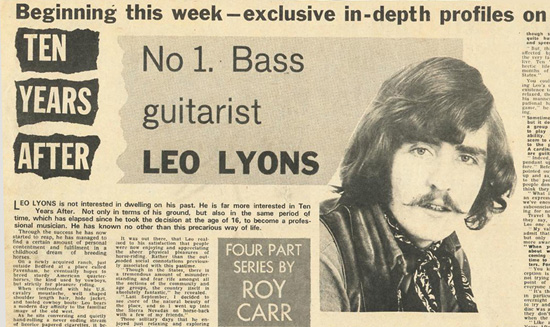
Leo Lyons is not
interested in dwelling on his past. He is far more
interested in Ten Years After. Not only in terms of his
ground, but also in the same period of time, which has
elapsed since he took the decision at the age of 16, to
become a professional musician. He has known no other than
this precarious way of life.
Through the success
he has now started to reap, he has managed to find a certain
amount of personal contentment and fulfilment in a childhood
dream of breeding horses. In a newly acquired ranch, just
outside Bedford at a place called Pavenham, he eventually
hopes to breed sturdy American quarter horses, the kind used
by “cowboys,” but strictly for pleasure riding.
When confronted with
his U.S. cavalry moustache, well shaped shoulder length
hair, hide jacket and tooled cowboy boots: Leo bears a
modern day affinity to the familiar image of the old west.
As he sits conversing and quietly hand-rolling a never
ending stream of liquorice papered cigarettes, it becomes
quite apparent that this image is not an affected one. More
a natural progression, formulated from his life-long
ambition and his numerous horse-riding expeditions
undertaken during the group’s many stateside trips. Above
all, his is a likeable personality. Besides living out of
suitcases for a good part of each year, Ten Years After have
always managed to spend some free time on the West Coast of
America, in order to follow their individual pursuits. It
was out there, that Leo realised to his satisfaction that
people were now enjoying and appreciating the sheer physical
pleasures of horse-riding. Rather than the outmoded social
connotations previously associated with this pastime.
“Though in the States, there is a tremendous amount of
misunderstanding and fear rife amongst all the sections of
the community and age groups, the country itself is
absolutely fantastic,” he revealed. “Last September, I
decided to see more of the natural beauty of the place, and
so I went up into the Sierra Nevada’s on horse-back with a
few of my friends”. Those sultry days that he enjoyed just
relaxing and exploring the terrain had very alarming
repercussions on him. “During that time, I managed to get
society in general right out of my system. When I finally
got back to civilisation, I was so utterly disillusioned for
about three whole weeks,” he sadly reflected. “At first I
just wanted to scream, it was that bad. Why, I asked myself,
did people run around so much, or for that matter even want
to make a name for themselves. But after those three weeks
had passed, I found that I had been brainwashed again,” he
frankly admitted. “If I had to do it again? I’m quite sure
that the same that the same progression of mental reaction
would repeat itself. When I went to see Antonioni’s
“Zabriski Point,” it really mirrored just how I felt at that
time. It was frightening”. The pop world in general, be it
the media of sound or vision is beset with symbolism and
images. Unless you’ve got one, you’re as good as dead.
Even a non-image,
has been used more than once as a short term
means-to-an-end.
Though perhaps Alvin
Lee has become the recognized face and virtuoso with Ten
Years After, the other three members are by no stretch of
the imagination just back-up musicians.
In the early days of
their acceptance in America, Leo was constantly singled out
for special mention in all the reviews of their concerts.
Fast guitarist, they’d seen them before------but a dexterous
bass player who appeared to be playing second lead with just
as much speed----NEVER. – However, success not only brought
recognition, accolades and monetary rewards, but also the
“knockers”. Most groups have to contend with them at one
time in their career.
With vitriolic
fervour, they singled out Ten Years After’s precision and
fleetness for their mindless scrutiny. “Sure we’re always
getting knocked, simply because it seems as though some
people are getting quite hung-up on our technique and speed.
“But this is just because we are affected by our
environment, and the very face pace with which we all live.
Ten Years After lead a very hectic life, spending up to six
months of each year touring the States”. You could be
excused for doubting Leo’s confession of a jet-paced
existence to the fact that he is very relaxed, thoughtful
and articulate in his manner. Summing-up occupational hazard
of the “Knocking Game” he dismissed it by concluding.
“Sometimes this can be upsetting, but it doesn’t really
bother us. As a group we play to the very best of our
ability. The majority of people seem to enjoy it, as we
never play to the point of self indulgence”. A cardinal sin
of which many acts are guilty. “Indeed, we are now more
dependent upon one another than before”. Referring to the
knockers, he pointed out, “These people set you up and say
that you are preaching to the people. Then if these same
people don’t like what they hear, or think they hear, they
knock you. “What in fact we play, is really an expression of
all the experiences we’ve encountered. It all comes out
subconsciously in the music. Making for new ideas, I hope”.
Travel broadens the mind, or so they say, and its certainly
made Leo one of the observers of life. “My values are still
the same. I admit that success has changed me, but only in
that it has made me more aware of people. “When you don’t
have to worry about where your next meal is coming from, it
gives you more to concentrate on other matters. For I’ve
experienced this. ”You know everyone without exception is
guilty to some extent of not trying to see the other
person’s point of view. Unfortunately, not everyone sees
this. “It’s the same when people, and in particular a group
become an overnight success. They then have to try and
figure out why their last disc was a hit. And most of the
time, they don’t know the answer, that’s when paranoia sets
in. “Like a number of groups, Ten Years After had
involuntary success. We came from what people term the
“Underground”. This doesn’t really exist anymore, it’s now
just a handy label for success, which was originally
intended for groups who were musically creative, but
commercially unsuccessful”. Almost apologetic Leo then took
pains to stress. “The things what I play on bass are more
truthful than what I’m inclined to say. For I have
inhibitions as to what people may think”. Frankly, I’d argue
the point.
|
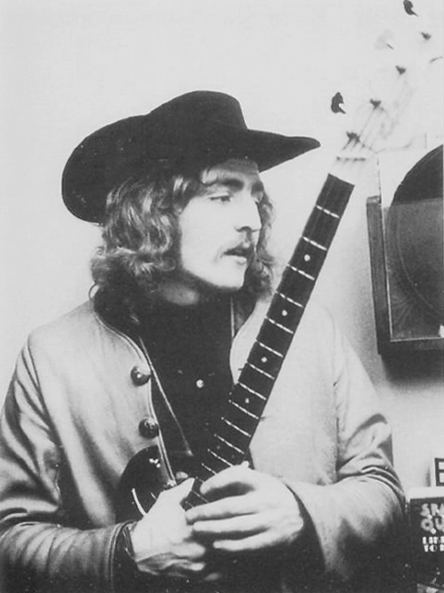
June 13th 1970, TEN
YEARS AFTER perform at "Cincinnati Summer Festival"
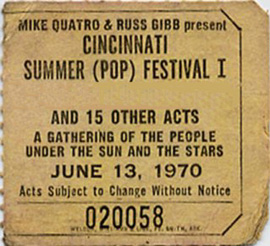
|
June 13, 1970 - The
“Cosmic Carnival Festival”
at Braves
Stadium, Atlanta, Georgia -
A Gigantic Rip Off !
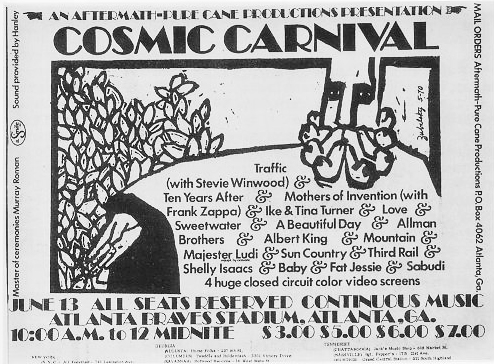
A one day event – A
very obscure concert – “It was a hell-of-a-show” says a fan.
When the Cosmic
Carnival advertisements began appearing, we took the
promoters at their word and we printed a positive article
that stressed the very low ticket price. The T.V. light
show, the quality of the performers, and the no hassle
promise of Aftermath Pure Cane Productions. Don’t forget,
Woodstock was free because we refused to pay for it. Just
walking around inside the Atlanta Braves Baseball Stadium,
the center of Atlanta machismo, the scene was like a free
zone liberated by freaks. Dope was found everywhere,
mescaline, grass. acid and nobody seemed uptight about it.
Long hair, tie-dyed clothes, lots of bare skin, love and
more dope.
I suppose, that in
order to make any money on something as over-blown as the
Cosmic Carnival, promoters had to use saturation advertising
tactics in order to get their message across. It wasn’t the
collage students who showed up, it was the crazy, hairy,
stoned freaks, who were the only truly loyal, rock music
audience that ever existed in the first place. As it
eventually turned out, it was the hungry freaks daddy (Frank
Zappa) who were the show.
The music part was
the big rip off. “It’s A Beautiful Day” according to the
emcee of the event, made the “made the day beautiful” and
that’s what many in the Atlanta area must have been
listening to, because the band with violin star David
LeFlame really won the day.
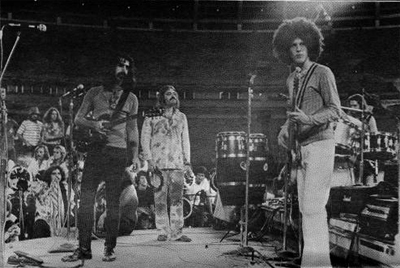
Frank Zappa and the
Mothers of Invention on the other hand, “really made the
day”.
Traffic did some
good stuff, but the volume was so low that most of the music
sounded like it was coming out of a transistor radio in the
apartment next door ! The Allman Brothers Band, especially
suffered from this ridiculously low volume.
When Frank Zappa and
the Mothers began playing however, a speaker come on that
hadn’t been on before, so their set was at least a third
louder than anything else. This was just in time too,
because the Mothers did a terrific set that was built around
their recorded work, and Frank’s charisma was intact. Worth
honourable mention here, was the two lead singers in Franks
band, Flo and Eddie from the Turtles. Frank, was seen and
heard rapping after the show with the kids.
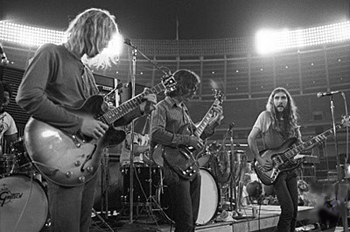
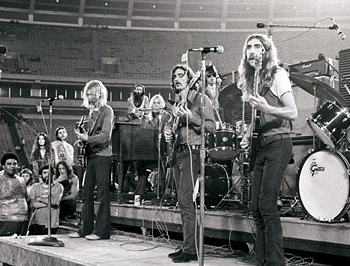
When the loud
speaker finally kicked in, it was the Allman Brothers Band
who rightly benefited from the volume boost. They have the
sound we love, and the volume / sound we needed in order to
say, fuck-it to the city of Atlanta. As we headed towards
the stage, Duane Allman told us to go back to our seats,
and we reluctantly / sheepishly did as we were asked, out of
respect for Duane. We also didn’t want to be seen as leaders
or the inciters of trouble and risk our arrest. In fact, we
have our own street patrol called “S.T.P.” – meaning “Stop
The Pigs” and “Serve The People” !!!
We dug the final
rush onto the ball field, just to hear Mountain do a little
bit of their Hard and Heavy Rock and Roll.
Two Rip Off ‘s:
The first being, all
the people who bought $7.00 tickets were in for a big shock
when they saw the size of the crowd, and also when they
viewed people who bought $3.00 tickets getting the best
seats in the house. So, it was only a matter of time before
we got up off our asses and eliminated the distance between
us and the music.
Secondly, funny
thing about all the music that was promised to be played
here too. It wasn’t at all funny when it wasn’t there. But
the bands were ready to perform, and never got their chance.
The band “Love” didn’t show at all, but Ten Years After,
Sweetwater and Albert King were at the stadium, sort of on
stand-by it would seem. The problem was, that bands /
artists were scheduled to start playing after midnight, all
well and good, but there was also a noise ordinance in place
for that community that precluded music, or any noise after
the midnight hour. That is why, audience and all the talent
their screamed foul and rip-off.
As I said, Ten Years
After were there but never got to perform, that’s the sad
fact of the matter.
The Band List: Ten
Years After, Traffic, (with Steve Winwood) The Mothers of
Invention, (Frank Zappa) Ike and Tina Turner, It’s A
Beautiful Day, (with David LeFlame) The Allman Brothers
Band, Mountain, (Leslie West) Albert King, Sweetwater, Love,
Majester Ludi,
Sun Country, Third Rail, Baby, Isaacs Shelly, Fat Jessie,
and Sabudi.
|
| HIT PARADER MAGAZINE FROM JUNE
OF 1970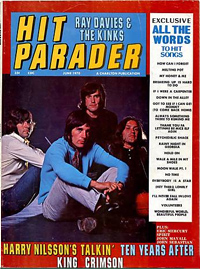
TEN YEARS AFTER WANT A HIT SINGLE!
Mention singles to a progressive or underground
group and you stand a good chance of hearing a snort
of derision and a tale that albums are the thing.
The latter may well be true, especially in the face
of recent sales figures, but both Jethro Tull and
Fleetwood Mac have had singles in England, and
possibly, the day of the progressive 45 is upon us.
Now Ten Years After have had a change of heart
and are trying for success in the singles chart. Ten
Years After has built a huge reputation in Britain,
America and Europe, but mainly through concerts and
albums.
At the end of last year, their first single, the
exceptionally good "I'm Going Home" was
released in England and did nothing. Since then,
strict silence has been maintained until now. "We
were supposed to have recorded one during the last
American tour for release over hear and there, but
with one thing and another there just wasn't
time", Ten Years After's drummer Ric Lee told
me. "I'm Going Home" was released in
America as a trailer for the album "Undead"
and somehow it got released here. But we weren't
available to promote it. I think the original idea
was to release it three months later here." Ric
and I were speaking in a West End recording studio
in London where the main thoughts of the group were
on the next album, though "Ssssh" had only
recently been released.
With Jethro Tull's "Sweet Dream"
climbing the charts in England, the management
decided the time was right for a Ten Years After
single. It should be added that both Jethro Tull and
Ten Years After have the same management. Recording
the single took place towards the end of the last
week and the finished product was planned to be out
in a couple of weeks. How about "Ssssh"
though? "We're very happy with it and I can't
think of anything we'd like to change", Ric
told me. "We don't record more than we need for
any one album and if anything is left over we scrap
it." Most of the tracks on "Ssssh"
are Alvin's compositions but there are a couple of
exceptions. "Good Morning Little School
Girl" is one and a prominent New York radio
station banned it because of one word.
("Ball" the line is "I want to ball
you"). Perhaps as a result of this, the album
shot up the U.S. charts.
I mentioned to Ric that Ten Years After are still
playing a lot of numbers that have been associated
with them for a long time and he explained that this
was entirely due to public demand. "We want to
get on with some new stuff obviously, but when we go
on stage we find people calling for old numbers,"
he said "I agree this can be a bit frustrating
night after night, but then we can usually manage to
fit odd new things in. "There will be a subtle
change in our material, but it's going to take a bit
of time. Maybe we'll try one or two numbers a night
and build up from there. We won't change the general
feel of what we do, but after the Continental tour
this month I think you'll notice a bit of difference."
Ric expanded on the American audiences, saying,
"They take the new stuff well and are
enthusiastic, but when we go into one of the old
numbers they go wild. That may sound a bit like
bragging, but it's not. "At the Fillmore East
we couldn't get off and when we did we were soaked
and exhausted. America's such a big place that you
can do five of six tours there and still reach only
half the people."
When Ten Years After return from America, they
plan to do a few selected concerts where as many
people as possible can listen to them. But the new
single should already have been in the charts and
perhaps more people will be clamouring to hear what
I rate as one of the very best progressive groups
around today.
Written by Richard Green, London
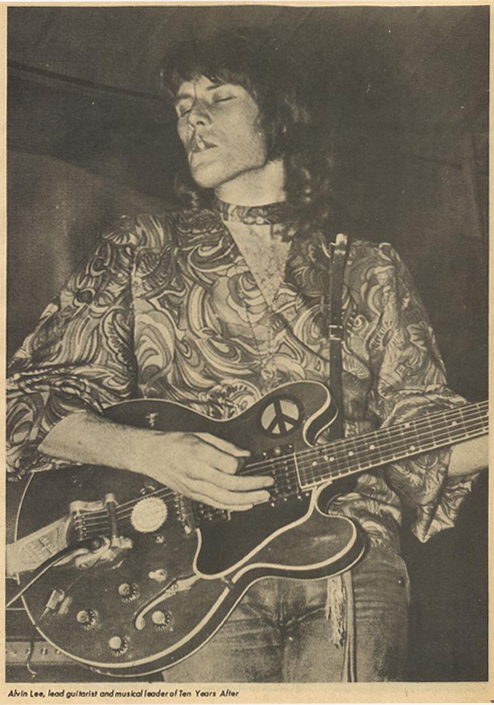 |
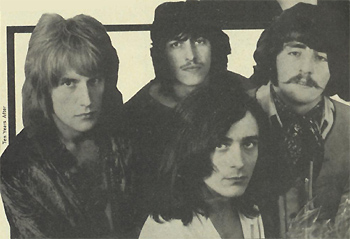
|
New Musical Express – June 20, 1970
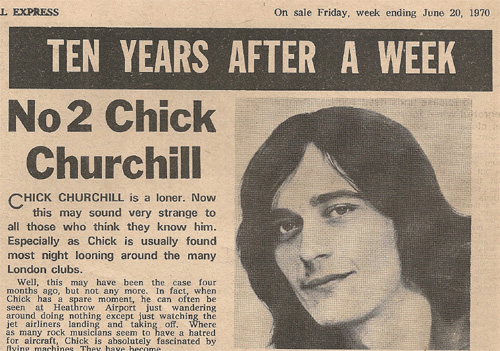
Chick
Churchill is a loner. Now this may sound very strange to
all those who think they know him. Especially as Chick
is usually found most nights looning around the many
London clubs.
Well,
this may have been the case four months ago, but not any
more. In fact, when Chick has a spare moment, he can
often be seen at Heathrow Airport just wandering around
doing nothing except just watching the jet airliners
landing and taking off. Where as many rock musicians
seem to have a hatred for aircraft, Chick is absolutely
fascinated by flying machines. They have become his
hobby.
The
actual physical effort of such a solid object defying
gravity and then returning to the earth, is a continuing
source of utter amazement to him.
Success
affects different people in many different ways. At
first it doesn’t usually change the actual person
concerned, only other people’s reactions towards them.
Unfortunately, and without realising it, this process
can become mirrored, resulting in a vicious circle.
Ten
Years After’s organist has found this out to his
bitter disappointment.
“Before
I was even in a group I had lots of friends, but as we
got more successful, I found that I had very few genuine
ones. This has really hung me up for the last year or
so.
”It’s not that I don’t want success, it’s just
that people won’t let you be your true self.
For the last four years I have spent most of my free
evenings in the clubs, surrounded by people. And I have
found that so many of them are far more interested in my
job, because that’s what it is, than Chick Churchill
as a person. “To be quite truthful, when a girl comes
up and talks to me, I really don’t know anymore if she
likes me as just a guy that she’s met, or caught up in
this very strange aura that surrounds fellows in groups.”
Apart
from Alvin Lee, Leo Lyons, and Ric Lee of Ten Years
After, he feels that there are very few people that he
can put any trust in. Now he’s even suspicious of
members from other groups. It’s the same with places.
When the group visit the States they appear quite a
great deal in New York, Detroit and Chicago. Most of the
time he is content to stay in his hotel room. Though he
admits, he finds San Francisco very nice. In his recent
quest for solitude, he visited Sequoia National Park and
drove into the notorious Death Valley.
“The
quietness is really unbelievable. If you really want to
get away from civilization, this is the place. “There
isn’t anywhere in Europe where you can really
experience the same sensations. “Zabriski Point
captured most of it, but the only conclusion that I got
from it, was that Antonioni wanted to blow the world up
and start all over again.”
Chick
feels that if the world annoys you, then just put
yourself on a higher mental plain. However,
it does annoy him personally, that people won’t let
him be absolutely free to do what he wants to do. Chick
is small, quiet and introverted. He is a person who
could easily get lost in a crowd.
This
tendency of not pushing himself forward has caused
people to complain, that he can’t be heard when the
group is playing on stage. He is aware but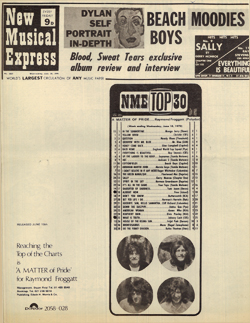 not unhappy
about this situation. “We play hard-rock, and it’s
very difficult to work an organ into it. Especially when
playing with someone as good as Alvin Lee. “The sound
that I like is more mellow, and
unfortunately that doesn’t come over too well on stage.
I’ve just bought a R.M.I. electric piano which I hope
to incorporate. If the organ was taken out, there would
be a very big hole in the group’s sound.” not unhappy
about this situation. “We play hard-rock, and it’s
very difficult to work an organ into it. Especially when
playing with someone as good as Alvin Lee. “The sound
that I like is more mellow, and
unfortunately that doesn’t come over too well on stage.
I’ve just bought a R.M.I. electric piano which I hope
to incorporate. If the organ was taken out, there would
be a very big hole in the group’s sound.”
Chick,
has very positive ideas about evolving a more personal
style of playing the electric organ within the context
of a rock group. “The organ isn’t being used to its
fullest. Keith Emerson tried it, but he got lost on the
way, he went too classical instead of rock. But I want
it to be known that I respect him as a good organist.
“As far as the organ is concerned, nobody has evolved
a style that really fits into rock and roll. “I’m
getting to the point where I am now playing the organ
like a drum. I do this by playing rhythms and using the
stops to get the same sound and volume on both manuals.
I pay close attention to what Ric plays and follow him.”
Article
written by Roy Carr
|
Daily News – Chicago, Illinois - June 20,
1970
Ten Years After featuring lead vocalist
Alvin Lee headlines the rock program Friday
and next Saturday in the
Aragon Ballroom – June 26, 1970 –
also on the bill are
B.B. King and Mott The Hoo
|
|
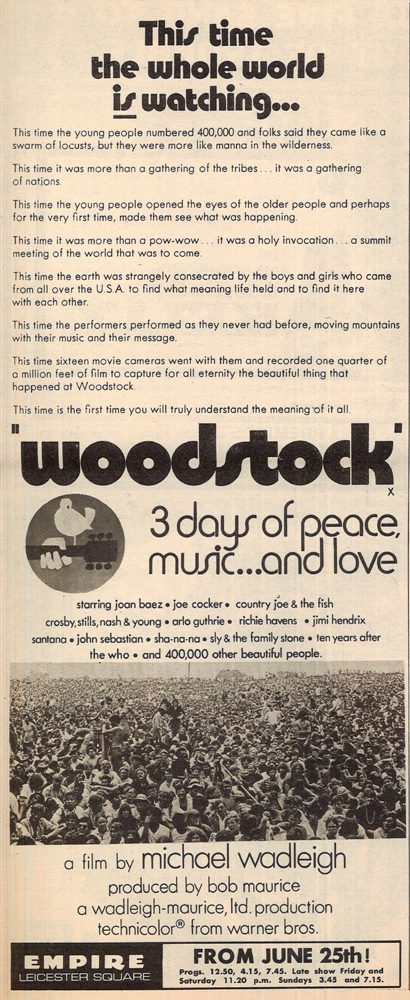 |
NME
June 20, 1970
TEN YEARS
AFTER perform at Sheffield University
June 27, 1970
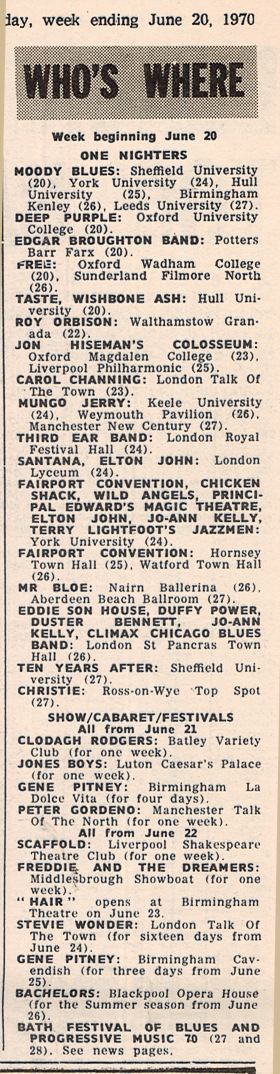
|
|
Bill Graham's Fillmore East, New
York City
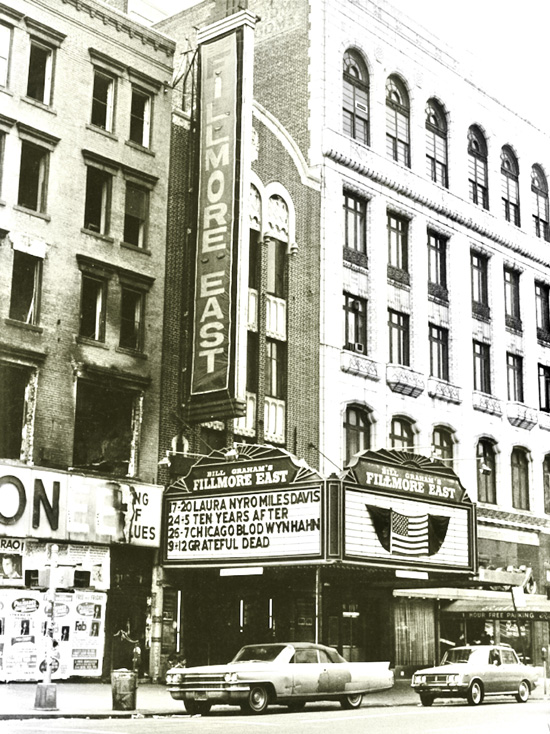
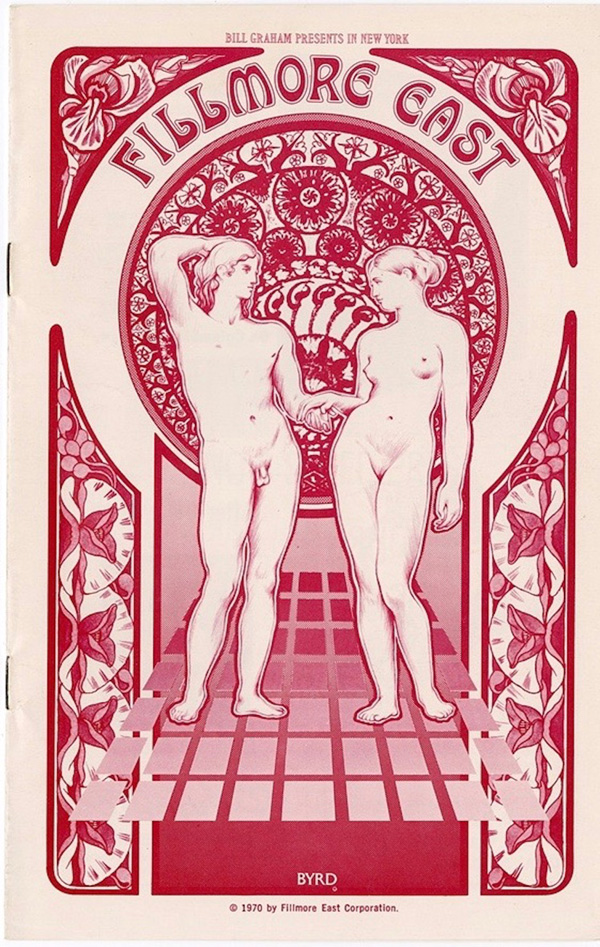
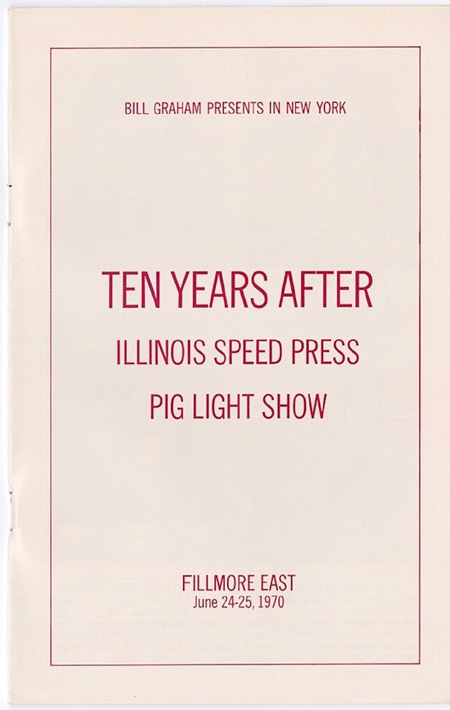
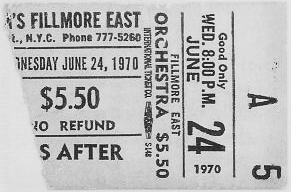
1970, June 24 - Fillmore East
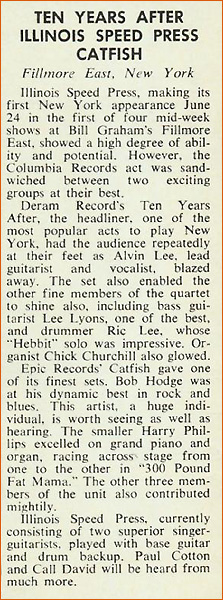 |
Concert Review
Variety Magazine, New York
published July 1, 1970
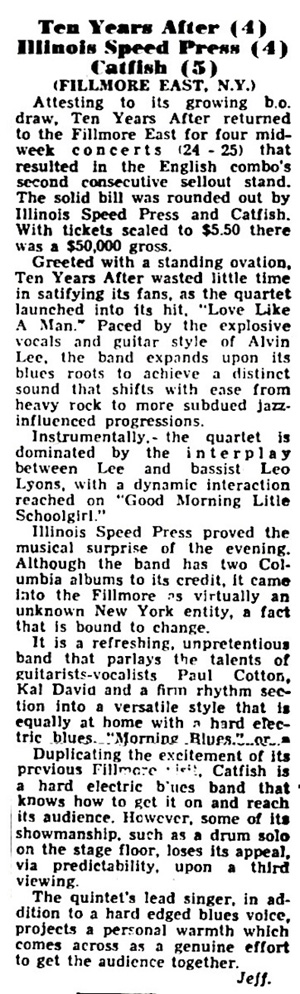
|
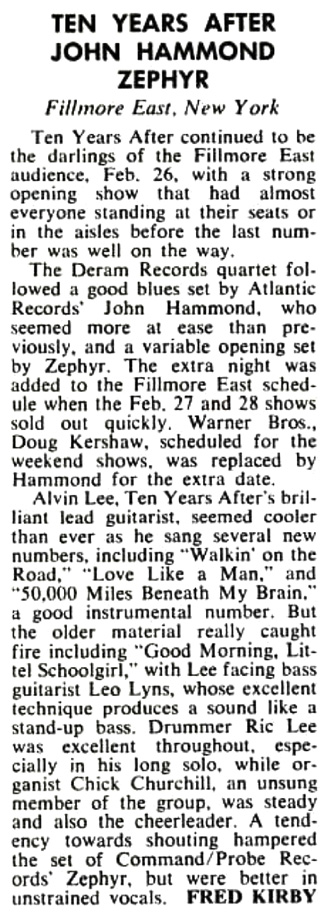
February 26, 1970 -Fillmore East, New
York City - Concert Review
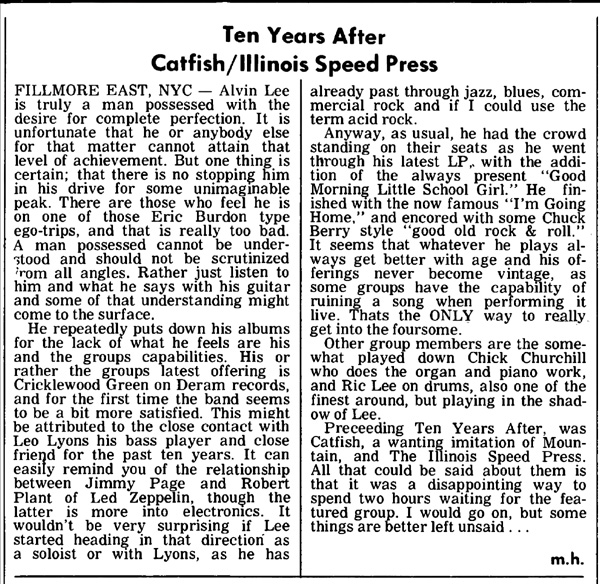
Fillmore East, New York City -
Concert Review, June 24 & 25, 1970
|
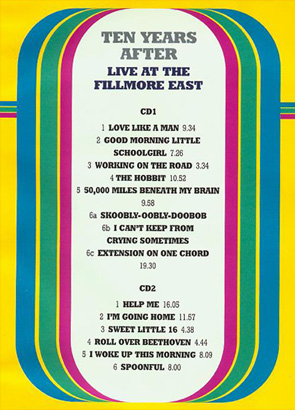
|
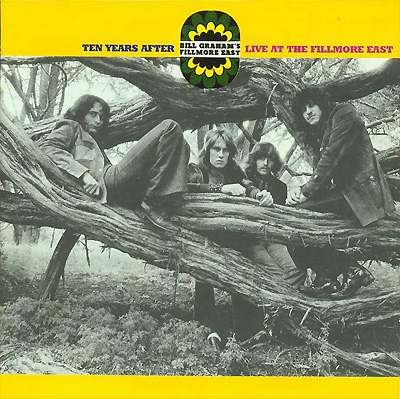 |
|
New Musical Express June 27, 1970
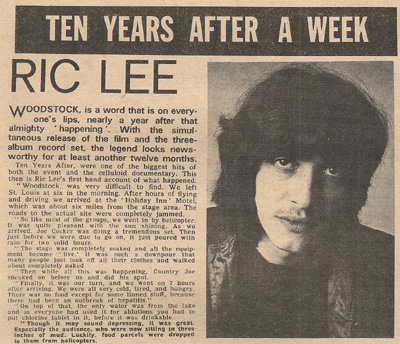
Ten Years After A Week – Ric Lee
By Roy Carr
Woodstock, is a word that is on
everyone’s lips, nearly a year after that almighty
“happening”. With the simultaneous release of the film and
the three album record set, the legend looks news-worthy for
at least another twelve months.
Ten Years After, were one of the biggest
hits of both the event and the celluloid documentary. This
then is Ric Lee’s first hand account of what happened.
“Woodstock , was very difficult to find.
We left St. Louis at six in the morning. After hours of
flying and driving we arrived at the “Holiday Inn” Motel,
which was about six miles from the stage area. The roads to
the actual site were completely jammed.
“So like most of the groups, we went in
by helicopter. It was quite pleasant with the sun shinning.
As we arrived, Joe Cocker was doing a tremendous set. Then
just before we were due to go on, it just poured with rain
for two solid hours. “The stage was completely soaked and
all the equipment became “live”. It was such a downpour that
many people just took off all their clothes and walked about
completely naked. “Then while all this was happening,
Country Joe and The Fish, sneaked up before us and did his
spot. “Finally, it was our turn, and we went on seven hours
after arriving. We were all very cold, tired, and hungry.
There was no food except for some tinned / can goods stuff,
because there had been an out-break of hepatitis”. “On top
of that, the only water was from the lake and as everyone
had used it for ablutions you had to put a chlorine tablet
in it, before it was drinkable. “Though it may sound
depressing, it was great. Especially the audience, who were
now sitting in three inches of mud. Luckily, food parcels
were dropped to them from helicopters. “The wet weather
played havoc with our instruments for we had to start, “Good
Morning Little School Girl,” no less than four times, but
they didn’t seem to mind. “It was much easier for us to get
out of the place, as we followed a New York State Police
Car, all the way to the local diner for a Chinese meal. It
was now 10:30 p.m. and we were absolutely starving. “Arlo
Guthrie summed it all up by saying that it was a town. I
feel that the film captures it all. It’s totally unbiased.
Just a documented diary of those three unforgettable days”.
Seeing Ten Years After now, it’s hard to
believe that they were originally the Blues-yard…..a run of
the mill soul band. (for one gig only). When they weren’t
bashing out numbers like – “In The Midnight Hour,” they were
backing “The Ivy League,” for a tenner-each-a-week, with
Chick acting as their roadie. Finally, they decided to go it
alone. At that time a friend of Leo’s was booking the acts
at the Speakeasy. After weeks of nagging, Leo finally
persuaded his mate to give them a gig. He liked what he
heard, but said he couldn’t be bothered to book a blues
band. Then they met Chris Wright, and did a ten quid plus a
meal audition. He liked us, and we set about choosing a new
name and a more personal style.
Though Ric quite enjoys the group’s trips to the States, he
readily admits to being a home person. Home for him being a
200 year old thatched cottage in Bedforshire, in which he
dwells with his wife Ruthann and their Alsatian. Apart from
slowly doing up the cottage. He divides his leisure time
between leather tooling, photography, collecting antiques
and brassware, as well as renovating vintage cars. His
intention is to own a garage with some friends for this sole
purpose. And as if this wasn’t enough, he is now converting
a shed into a mini-studio so that he can learn to play vibes
and write music. “At the moment I feel a little stagnant and
I’m desperately trying to find new ideas. I’m practising
hard to get a feeling, for there is no movement. “If I was
going downhill I’d worry, but it’s just that I am at a
standstill for the time being. All musicians go through it,
at one time or another. “I’m working on trying to use a jazz
style and blend it with the basic style of the band”.
|
|
The Crawdaddy Interview –
With Alvin Lee of Ten Years After
 Year 1970 – Volume 4
– Number 1 Year 1970 – Volume 4
– Number 1
Photographs by Victor Pilosof
Alvin:
I can only judge America from the outside, you understand,
me being English. I’m not involved, I’m not responsible for
what you do here.
C.Daddy:
Neither are we!
Alvin:
They were very brave when they set off from England to find
a new land, and they’re still getting it together. Or are
they? I saw “Easy Rider” a couple of nights ago, and that’s
a big downer. Have you seen it? A mind-blowing ending. It’s
a good film, but I came out wishing I hadn’t seen it, or
that I’d never heard of its existence, you know! A bit too
much for me to handle.
C.Daddy:
Someone I know, came out and immediately had their hair cut.
Alvin:
I can
understand it. I found myself doing a bit of the old, like
you come out and like people are looking at you, and you’re
aware you’ve got long hair and, there’s no two ways about
it. To try and not be aware of it, is the coolest thing, but
after that film…
C.Daddy: I
don’t think it blew my mind, because I’d been out west and
travelled and…
Alvin: Not
out west, have you been to Carolina? After seeing that film.
I think we were just lucky in Carolina.
C.Daddy:
Well that happens out west too…
Alvin: Yeah? It’s
so heavy, especially if you’re from England. Like the police
don’t have guns even, and the worst policeman can do, a
really nasty policeman, is to shout at you, that’s about it.
And to think about getting in a fight in England, the worst
you can do is get a black eye or a broken nose, at the very
worst you know. I mean, that’s like an all-time thing.
C.Daddy: Here they
say we’ve got something like 200 million guns…
Alvin: Yes I know…
C.Daddy: What’s
weird about it is, that the gun freaks that I’ve known, to
be gun freaks, were straight Bircher-types. But like I’ve
found out, being in California, is that even long-hairs, you
know, who are supposed to be very peaceful, sometimes are
gun freaks too.
Alvin: I can
understand anybody digging a gun. There are people obviously
over here, that don’t like them, but carry them around
because if they ever get in danger, or a situation they
can’t handle, it’s always, you know, there. But like there
must be people with guns who aren’t perfect, who can loose
their temper, you know! Like, if you want to kill somebody,
for three seconds, if you’ve got a gun you can do it, and
you can’t change your mind.
C.Daddy: Even with
a knife, you can yell – duck.
Alvin: That’s what
happens in this film, it’s so mind-blowing. These guys are
going through all these hassles, they get into hassles and
you think this is incredible, you know, and you’re somehow
waiting for, like the guys are really groovy in a way, and
you dig them. They’re free, you know, and they pull up and
sleep on the road since they can’t go to hotels and
things…and everybody’s hassling them, and you know
something’s going to come out of it. They’re driving
along on the big old, what do you call it?
C.Daddy:
Choppers
Alvin: Yeah,
choppers, fantastic machine, sitting like this with his feet
on the thing, and a truck pulls up and one of these horrible
kind of, you know, horrible country guys, pulls up and says,
“Let’s give them a scare”. Pulls the gun out and, “Agghh,
long hair freak,” and he goes like that to him, (chopper man
gives him the finger) and the guy in the truck shoots him.
(right off of his chopper) It’s so mind-blowing! You know,
if it ever gets to that, come to England. I really dig being
stopped by English policemen now, after what I’ve seen here,
you know. It’s beautiful, it really is.
C.Daddy:
Do you
like California, do you like the west?
Alvin: I like the
country, the people not necessarily. Some are great, but the
opposites, there are such opposites. In England, I would say
everybody is trying to be, seem to be more toned down.
There’s nothing against long-hairs, very little racial
prejudice, and what there is, isn’t really violent.
C.Daddy: It’s hard
to believe…
Alvin: You can go
anywhere in London and not fear to walk anywhere. Which you
can’t even do in San Francisco or New York…and you know,
reasonably it’s cool all over. The policemen won’t bother
you that much, nothing really, and it’s all kind of nice and
medium.
Like you don’t get
beautiful people camping out and living idealistic lives,
but you don’t get people going around shooting other people
either. Course, there are one or two somewhere, but you
know, there are some great things around here, some very
fantastic people, who are trying to get something together,
and are really doing the thing, but like there’s an opposite
end to that. You know, complete opposites. And, there are
also people in the middle as well..
Right, there are
those opposites, people go towards one or the other, sooner
or later and I find it getting difficult to associate with
straight people because you tend to become paranoid of what
they think of you. It’s a natural tendency really. You know,
that it shouldn’t be, and yet you know that sooner or later,
something’s going to arise, which is going to make you say,
“All right, well I’m
not coming around here”. And you’re either going to entirely
ignore it for so long, but soon you’re going to have to
stand up for yourself or deprive yourself of the right to
stand up for yourself. It’s almost like that. Heavy and
action: America. So you know I try to stay void, if I can.
It’s going to be impossible one day.
C.Daddy: Any
thoughts about Nixon or Harold Wilson?
Alvin:
I’d never be
a politician. And anyone who wants to spend their life being
one is quite welcome to try. I’ve got no alternative to
offer, so might as well go with them. Recently, I’ve been
working on some long term ideas, like what I’ll be doing two
and a half years, when me contract’s run out. I’m not really
sure, but got some vague ideas. A new producer, I want me
own studio, and things like that. The question is, if I can
get the bread together. Cost us a lot nowadays to compete. I
really want me own studio, just to make albums with other
people.
In me own time. And
not like create them for any market, and I’m pretty sure
that if you can do them for free, you know, you can make a
living. Right? Which is really all I want. It’s the own time
thing that is important. If I’ve only got time to, if it’s
going to take me a year to do three albums, which I really
think are good, I want to be in a position where I can say,
“well, that’s all I’m going to do”. Like it’s slightly
rebellious. Somehow, all this business of this and that
comes through; you feel like a robot sometimes. I should
have been up at ten this morning, and here at eleven, and I
woke up at twelve, you know, oh well, I’m here and fuck it.
I got told off. She said: “If you’re going to hang anybody
up in the underground, not this time!
C.Daddy: They put
you through quite a bit of that?
Alvin: Yeah, it
comes in lumps. Like you take it for so long and it’s
groovy, you’re just going to come along and have a little
giggle. But one day you get up and it was a late night, the
night before, and you’re not ready for it, and somehow it
doesn’t seem a giggle anymore. We’ve been on the road for
six weeks, and somehow it can get to you.
C.Daddy: You’ve
been in the east six weeks?
Alvin: No, we’ve
done Frisco, well, if my memory serves me right, to get a
rough idea of what we’ve done, we started with New York, we
did the Singer Bowl and a Central Park thing. The Central
Park thing was really good. I really dug that.
C.Daddy: With Three
Dog Night?
Alvin: No, they
didn’t make it. Spencer Davis was on, but like New York it
was really great. Then we did Detroit.
Oh, we started at Newport, (Jazz Festival) which didn’t
really work out, to say the least. I don’t want to go into
details, just didn’t happen. Shall we say sometimes, you get
those days, when you shouldn’t have got up, and that was one
of them. The amps broke down, the P.A. was crummy, we
couldn’t find the dressing rooms, getting hassled getting
in. You find yourself standing on the stage, and when you
finally get all plugged in, everything’s going arrrrr…..and
you’re supposed to create music at that point, you know.
We did three
numbers, and the guy who was worried about the fences, came
on after the third number, and he said, “there will now be a
fifteen minute intermission” and we had only just warmed up.
Can’t win èm all.
Detroit was put on
by the same guy, and it was similar but was a bit cooler. I
got into that and enjoyed it for what it was. There was a
revolving stage, and the audience sat all around. There were
four P.A. cabinets around this revolving thing, and like we
go on and start and like you’re singing, man, it’s weird,
like you look and see somebody and you play and you look and
it’s somebody else and like the room has got longer and the
vocals and the P.A keep getting louder and then
disappearing. In a way I enjoyed it, it was a mind-blowing
experience.
A lot of people got
a bit uptight over it, right, getting that one together. It
didn’t hang me up to much, but I don’t think it’s the best
way to hear a band, quite honestly. A few people who talked
to me afterwards, it was great when we came around to their
part. You can imagine, you’re just getting into something
and then you’re disappearing around the corner. Then a wait
and you’re hearing noises and What’s Happening? And then we
come around again.
C.Daddy:
Are you
more creative on a tour, or does it sort of drag you?
Alvin: It can be,
it depends on what sort of circumstances you know.
Unfortunately, you can’t switch on creativity. I’ve tried.
I’ve said: “I’m going to write songs today”! and pull up a
chair up and say ”Sit down and now write, write songs, and
out comes nothing. But then you get these incredible
gold-type sequences where you’re in bed and completely tired
and at 3:00 in the morning you get an idea, that you know
you’re going to forget it in the morning, and you don’t know
if you can get up, and get your tape recorder together
before you’ve forgot it, you know. But like what I do, is
that I jot things down, little ideas, whenever I’m at home
with a few days to spare. Sleeping around on the floor you
know, it takes me a moment to get something all together. I
carry one of these cassettes around and sing odd phrases and
things that come up, so it sounds sort of like a junkyard of
noises at the end of it all. But, some of it comes out ok.
The new album is mostly like ideas received on the road, but
got together off it.
It was all done over
a loose period of about six months, from the conception
until recorded. The recording of it
took us about three or four weeks. I’m pretty pleased with
it. I’ve been hung up on every record we’ve done before,
because I’ve always dug it for a week, and then hated it.
This one I’ve already dug it for a week and hated it, and
got back on it again. That’s a sign in the right direction
you know. I think with these. That the four albums we’ve got
out now are representative overall of what we do. So I’m
looking forward now, because in the future we can start to
branch out. Anyone listening to these four albums will get a
general picture, more or less of what we do. Like there’s
some crap, but there’s other good ones, and it’s a good
opening picture. You know, not perfect.
C.Daddy: Where do
you think you’re going?
Alvin: That’s where
the fun comes in. There’s a lot of ideas, but a lot of it
depends on where your head is when the actual recording time
comes. Like you plan something and might blow it next week,
and plan something else. Every time we finish an album, and
put it on a few times, we pick up on a few things and get an
idea that if we had done this or that it would have been
great. So you think, what’s our next album? And you always
work ahead and never catch up.
C.Daddy: Do you
think getting stoned adds creativity?
Alvin:
It can do it
variously. Like if everything goes cool, it’s good. But if
your amplifiers start buzzing then you’re lost, and you get
hung up on that. Or, if something sounds out of tune and you
can’t work out what then you’re not going to get anything
together. That’s the trouble with being stoned. I’d really
gotten ripped last time at the Fillmore. Somebody said, “Here’s a super
joint”. I’d heard that before, you know, so I thought “yeah”
– and I got up on stage and I could hear a silence that went
Pppsssss - and then was like doing a number, and I’d be
playing the intro and think, I’ve been playing for ten
minutes and wondered, have I sung already and forgotten? And
like I was missing verses and forgetting to do a solo and
think, what in hell is this song? In a horrible way I kept
it together loosely and the majority of people didn’t know.
You know, it can be used, man. Like I try not to abuse it at
all. I try to stay very cool, and really, you’ve got to if
you’re trying to do something and you want your body and
your mind to work for you. You’ve got to give it a chance,
you know. Like just dropping everything in sight, that seems
very romantic to have someone come around with a pill and
then, “I wonder what these are, let’s see yippee!!” But like
not everybody can do that. That’s the kind of people that
everybody likes and then you watch them……
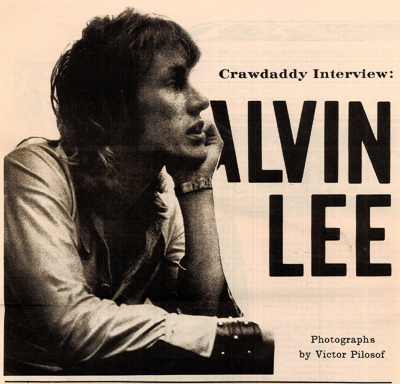
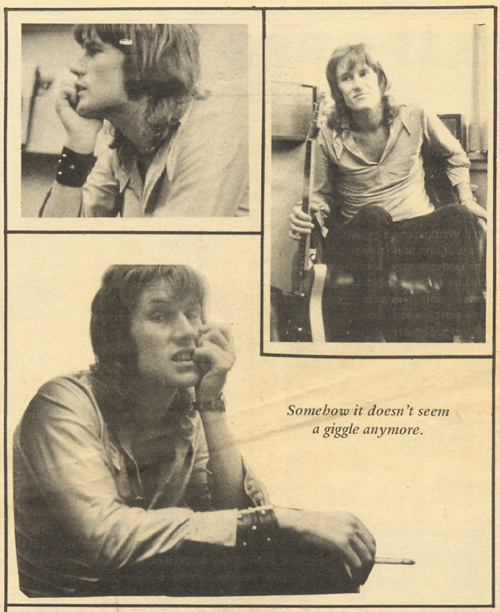
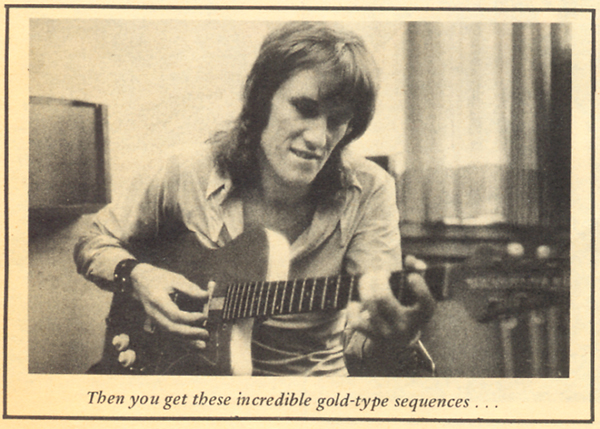
(Continued on page
47 which is missing)…….
Notes for dates,
mentioned by Alvin Lee in his interview:
June 28, 1969 – TYA
played in Bath, England
July 4, 1969 –
Newport Jazz Festival, Rhode Island, New Yorkk
July 13, 1969 –
Singer Bowl – Turntable Stage – New York City
July 12, 1969 –
Laurel, Maryland – Race Track
July 14, 1969 – The
Movie Easy Rider was released
July 16, 1969 –
Central Park - Schaefer Beer Music Festival
July 22 to 24 –
Fillmore West, California
SSShhhh was released
August of 1969.
Alvin talks about working on Ten Years After’s fifth record
album, as four have already been released. This would mean
that he and the band were working on “Cricklewood Green,”
which came out in April of 1970, and what a fantastic record
it was, and still is today. |
|
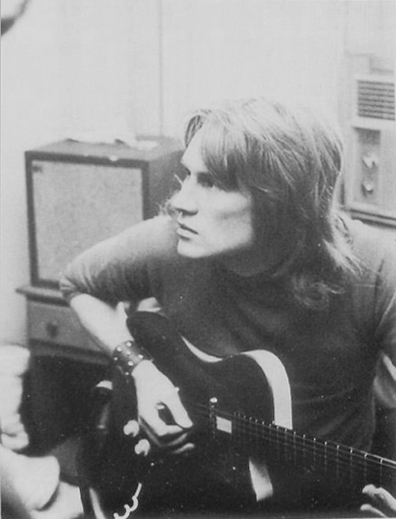
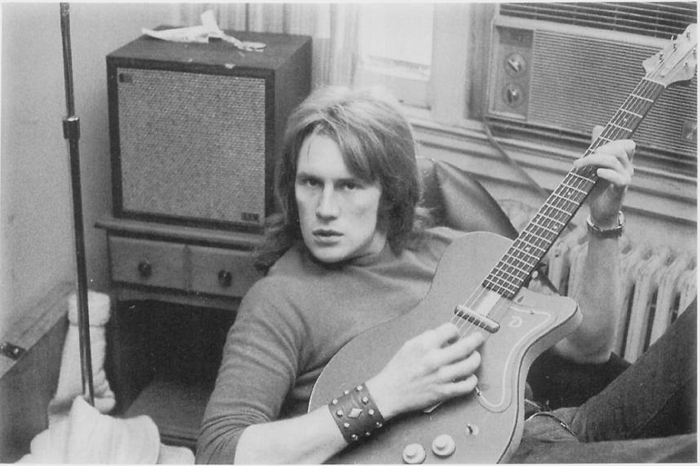
|
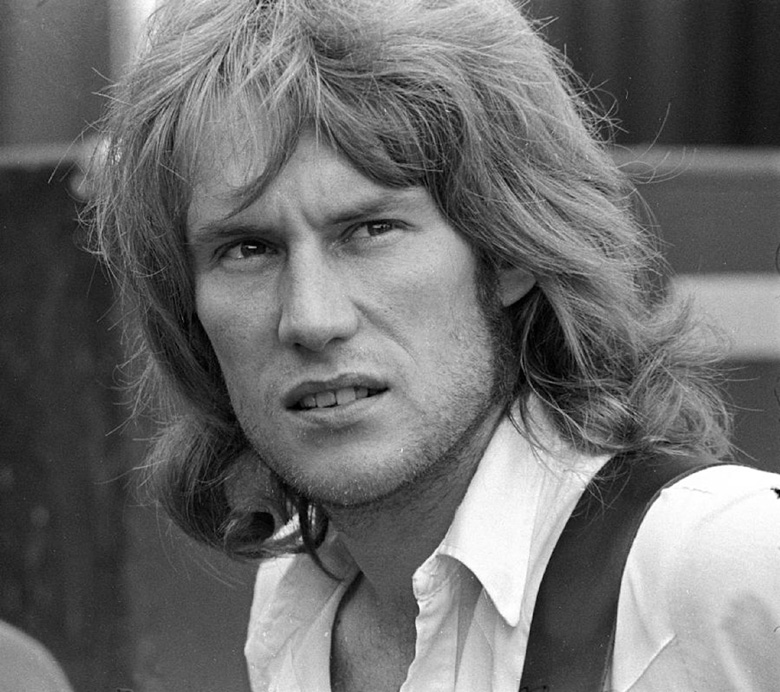
Alvin Lee - June 1970 - Photo: Tom
Copi
|
June 27 & 28, 1970
– The Famous – “Trans-Continental Pop Festival”
Later
Renamed – “The Festival Express” DVD
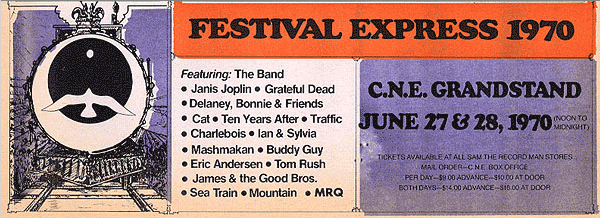
The
Movie Text:
The
Festival Express Tour, turned out to be a complete
financial disaster. The entire film project was shelved
soon afterwards, as the promoter sued the film-makers,
and then the footage mysteriously disappeared. Some of
the films reels later turned up in the garage of the
original producer Willem Poolman, where they had been
stored for decades and used at various times as goal
post for ball hockey games, played by his son Gavin.
Many other film reels were also discovered
in the Canadian National Film Archives Vault,
where they had been kept in pristine condition and
totally unknown to the world.
Today
Gavin is a London based film producer.
The
music tracks were mixed at Toronto’s Metal Works
Studios and produced by Eddie Kramer. The entire film of
this event was finally released in 2003.
Ten Years After
was filmed performing: “I Can’t Keep From Crying
Sometimes” and
“Love Like A Man” in Winnipeg and Ottawa. However, this
footage was not included in the recent release of the
Festival Express Film.
The
1970 train tour across Canada “The Rolling Rock
Festival” was taken by some of the worlds biggest rock
bands and individual stars, including the following
names:
Eric
Anderson – The Band – The Buddy Guy Blues Band –
Delany & Bonnie & Friends – The Flying Burrito
Brothers – The Grateful Dead – Ian & Sylvia
& Great Speckled Bird – Robert Charlebois –
James and the Good Brothers – The Ides Of March –
Janis Joplin – Mashmalchan (only in Toronto) –
Leslie West and Mountain – Tom Rush – Traffic
(Toronto only) – Ten Years After (didn’t ride on the
train and were also not in the movie) – Seatrain –
Sha-Na-Na…….
The
Festival Experience in this case was very unique among
Rock Festivals. Rather than flying to each city –
meaning: Montréal – Toronto – Winnipeg – Calgary
and Vancouver, the musicians would travel by a chartered
Canadian National Railway Train. The ultimate idea was
to foster an atmosphere of musical creativity and
closeness between the performers.
Thus,
the trips between cities became a mixture of “Jam
Sessions” and “Heavy Partying”, as there was no
shortage of drugs and alcohol. Thus, one Alberta
columnist wrote the following in concurrence: “The
Calgary Clambake” – The direct legacy of the so
called rock festivals, has been, murder, rape, drug
peddling, drug addiction, seduction, and in the city
proper, a tremendous increase in car thefts, hold ups
and street assaults. Name any vice listed on the
calendar of a modern decadent society, and it will
flourish into a full blown rock festival.
Another
version states – “We believe that rock music today
is the vital communication between it’s supporters”.
There was a two day and one stadium performance
in Toronto, on June 27th and 28th.
The July festival in Winnipeg Stadium, where the show is
presented by Manisphere. Then its across the prairies to
Calgary for the wind-up festival express on July 4th
and 5th. Let it be known, “that it may well
have been the final emergence of “Pop” as an important Canadian Cultural Activity”. Says the
Winnipeg Tribune.
But
the actual Festival Express series of concerts didn’t
come without its problems. The Vancouver concert was
cancelled, due to the mayor’s direct decree to prevent
them playing there in his district. The man was
“Anti-Hippie” all the way.
The
Express Tour ended in early July of 1970….and some 30
years later (2003) (now 37 years later 2010) a
“Rockumentary” of the event was produced and
released on two DVD’s.
The
film made more than $1.2 Million Dollars at the U.S.
box-office.
Many of the musicians in this film are no longer
with us, which makes this event on film a true blessing
for rock fans, blues fans and music fans in general.
Janis Joplin died October 4, 1970….this film should be
dedicated to her.
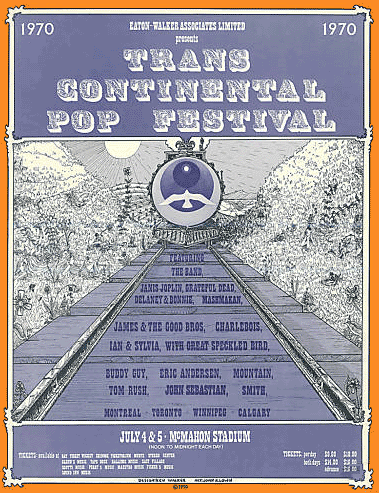
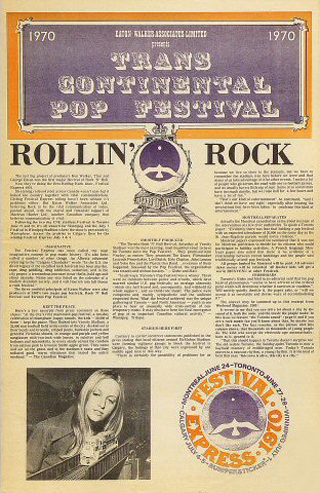
|
|
BRAVO - June 29, 1970
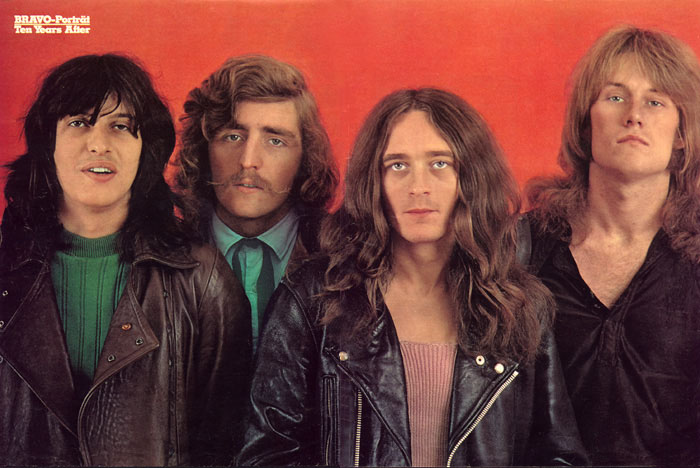
|
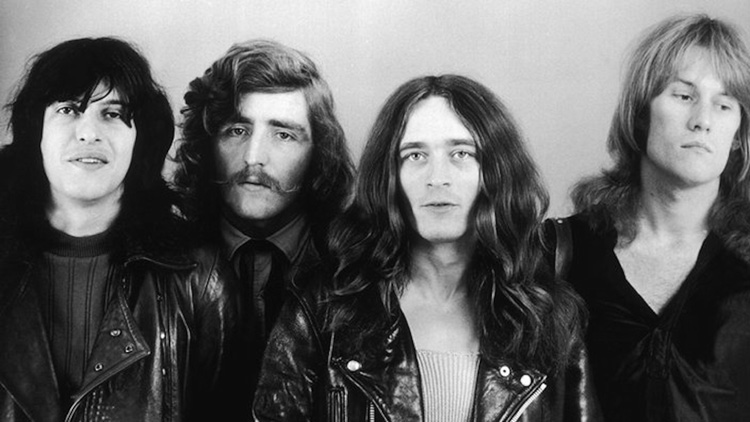
Excellent Photos!
Many Thanks
to Christoph Müller for these great Contributions
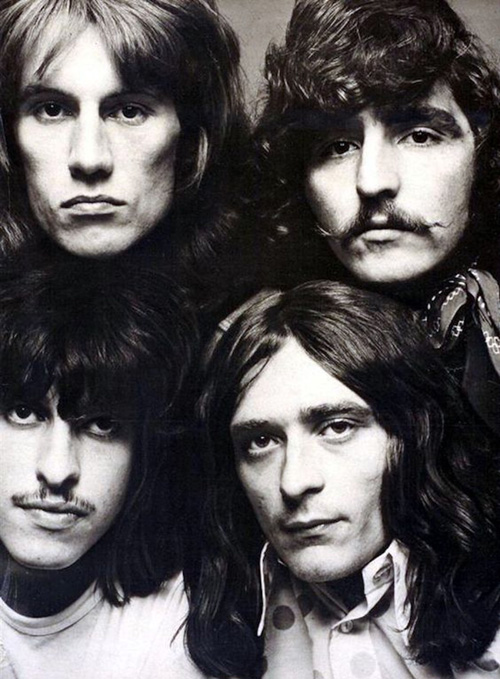
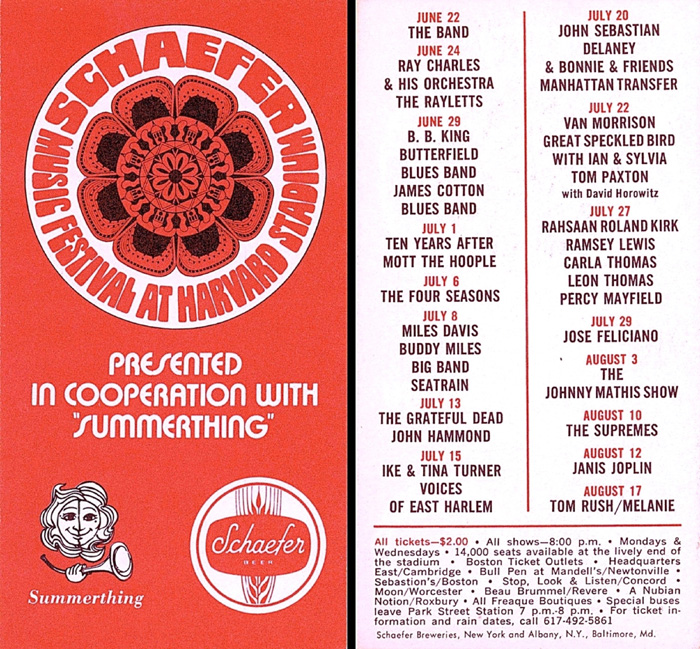
July 1, 1970 - Music Festival Harvard
Stadium, Boston
New
Musical Express – July 4, 1970
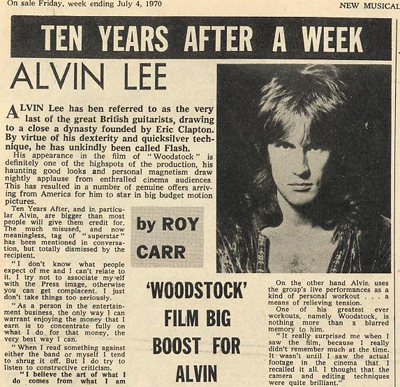
Ten
Years After A Week – By Roy Carr
Alvin
Lee – “Woodstock Film Big Boost For Alvin”.
Alvin
Lee, has been referred to as the very last of the great
British guitarist, drawing to a close a dynasty founded by
Eric Clapton. By virtue of his dexterity and quicksilver
technique, he has unkindly been called “Flash”.
His
appearance in the film of “Woodstock” 1969 – is
definitely one of the high spots of the production, his
haunting good looks and personal magnetism draw nightly
applause from enthralled cinema audiences. This has
resulted in a number of genuine offers arriving from
America for him to star in big budget motion pictures.
Ten
Years After, and in particular Alvin, are bigger than most
people will give them credit for. The much misused, and
now meaningless tag of “Superstar” has been mentioned
in conversation but totally dismissed by the recipient.
“I don’t know what people expect of me and I can’t
relate to it. I try not to associate myself with the Press
image, otherwise you can get complacent. I just don’t
take things too seriously. “As a person in the
entertainment business, the only way I can warrant
enjoying the money that I earn, is to concentrate fully on
what I do, for that money, the very best way I can.
“When I read something against either the band or myself,
I tend to shrug it off. But I do try to listen to
constructive criticism. “I believe the art of what I do
comes from what I am spiritually. If the criticism is
constructive and good, I learn from it. For it can further
what I wish to achieve. “I’ve never been discouraged
by anything or anyone”. Alvin has always been surrounded
by music, for there was always a guitar to be found lying
around the Lee household. As he admits, he use to plonk on
it, but never got far. His interest was renewed when his
sister’s boyfriend started playing. It was just a matter
of time before he took a more concentrated interest. Today
he is approaching the pinnacle of acceptance. Despite the
pressures that go with successful achievement, he is
trying to present both purpose and entertainment in his
work. “I find U.S. tours very strenuous. I must admit I
don’t look forward to them, but I usually end up liking
them. “I’m trying to run happy music and deep mind
music on a parallel. With the latest album “Cricklewood
Green”, it’s entertaining music but if you want you
can go deeper. “I don’t look too far ahead. I feel an
album should be representative of that particular time”.
On the other hand Alvin uses the group’s live
performances as a kind of personal workout, a means of
relieving tension.
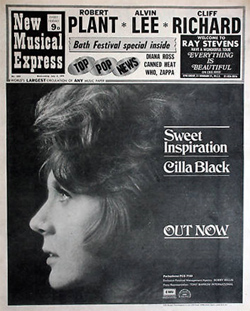
One
of his greatest ever workouts, namely Woodstock, is
nothing more than a blurred memory to him. “It really
surprised me when I saw the film, because I really don’t
remember much at the time. It wasn’t until I saw the
actual footage in the cinema that I recalled it all. I
thought that the camera and editing techniques were quite
brilliant.
One of the unavoidable hang-ups that Alvin
encounters, is that you didn’t always get to meet
certain people that you’d like to, simply because
you’ve sometimes formed a pre-conceived opinion of them,
and visa versa. However, he did meet one person who has
since had the biggest influence on his career.
Unfortunately, he was too young to recall meeting the
legendary “Big Bill Broonzy”. “My folks actually
knew Big Bill quite well”, he told me. “I met him once,
but just can’t remember it. But I still have his
autograph to prove it happened!”.
|
July 3, 1970 - Stony Brook University, Long Island, NY
Ten
Years After together with MC5 on the same bill
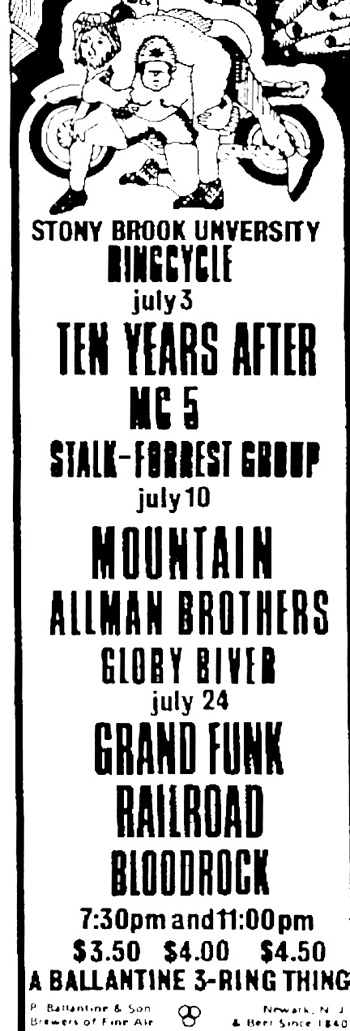
July 4, 1970 -
Convention Hall, Asbury Park, New Jersey
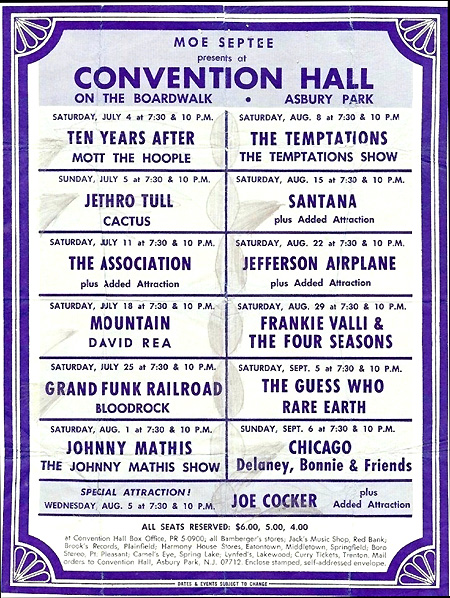
July 3 - 5, 1970
- Atlanta International Pop Festival
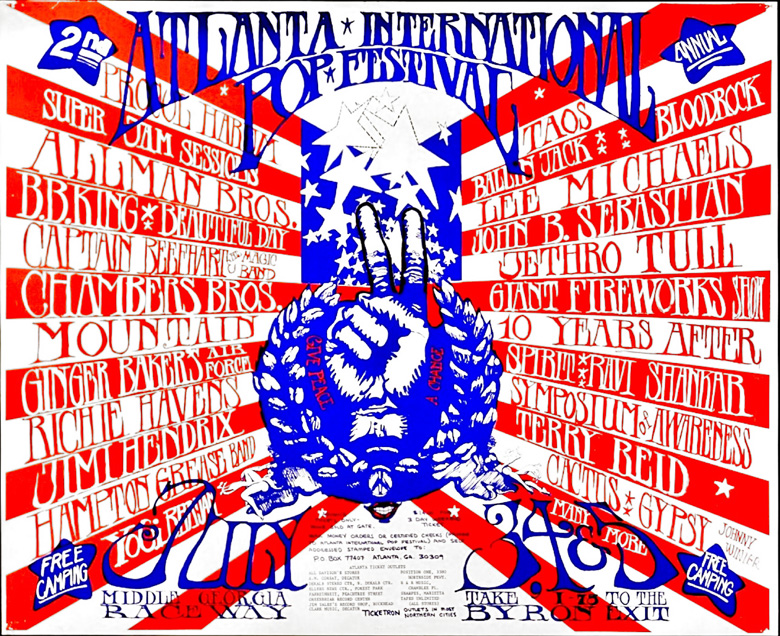
Concert Poster
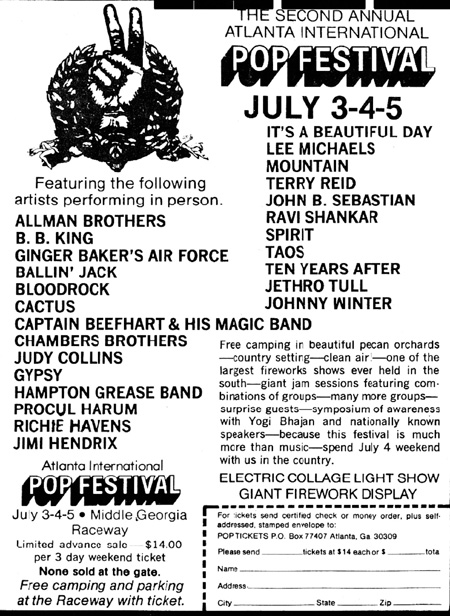
Advertisement
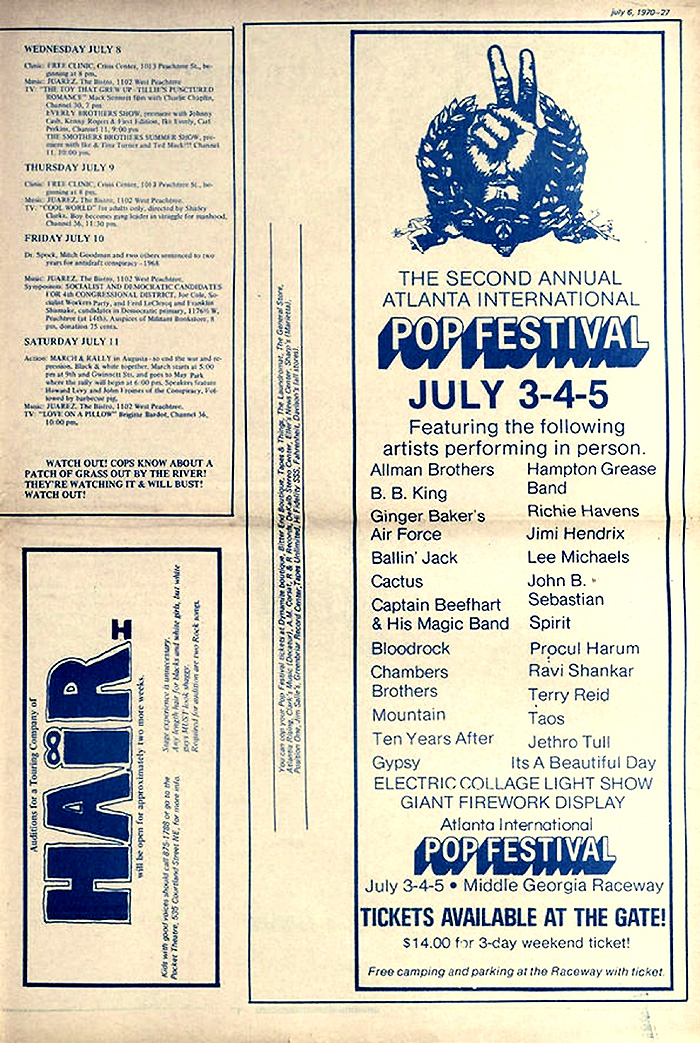
Great Speckled - The Bird, Vol. 3,
Issue 27 of July 6, 1970 - Advertisement
"Watch out! Cops know about a patch
of Grass out by the River!
They're watching it and will bust!
Watch out!"
July 5th 1970,
Atlanta Pop Festival
with TEN YEARS AFTER
The Atlanta Pop Festival 1970 – “Woodstock of the South”
The second Atlanta
Pop Festival took place one year later on the same fourth of
July weekend. It took place at the Middle Georgia Raceway in
Byron, Georgia, which is about ninety miles due south of
Atlanta, Georgia. Estimates range from 300,000 to 600,000
people attended this festival. The following acts appeared
on that 92 degree weekend:
Ten Years After –
Mountain The Allman Brothers Band – Poco – Gypsy – John
Sebastian The Chambers Brothers – Mott The Hoople – Grand
Funk Railroad – Richie Havens B.B.King – Rare Earth –
Richie Havens – Procol Harum – Terry Reid – Lee Michaels -
Ginger Bakers Air Force – Taos - The Hampton Grease Band –
Cactus The Bob Seger System – Spirit – Bloodrock Ravi
Shankar and Jimi Hendrix, in his last performance in the
United States, and playing to the largest audience of his
career.
The actual festival
took place in a soybean field that was adjacent to the (now
defunct) Middle Georgia Raceway. It was originally
scheduled for July 3, 1970 to July 5, 1970. But in fact, it
never finished until near dawn on July 6, 1970. The festival
was promoted by Alex Cooley, who also promoted the Texas
International Pop Festival, which took place a month after
Woodstock. Ticket price was $14.00, but just like Woodstock,
it was destined to become an “Open Air Free Event”. This
happened when the concert promoter threw open the gates,
after the crowds outside began tearing down the plywood
fences that had been erected around the festival site.
Jethro Tull were scheduled to perform, but had to cancel due
to Ian Anderson’s having laryngitis. Captain Beefheart also
cancelled, as did Chuck Berry, who was advertised to appear
but never showed up.
From Jose
Sinclair: “Love Alvin Lee! Get this: On
Blues Night, at the second Atlanta International Pop
Festival, I worked the band stage, for Lee Michaels, Johnny
Winter, B.B. King, The Allman Brothers Band ……. Then, all
the other guitarist, including: Alvin Lee, B.B.King and
Johnny Winter jammed with the Allman Brothers Band – for
about two hours more!! It was about eight hours of the type
concert where, “Kill Me Now” is all you can say afterwards.
(It doesn’t get any better than this, I can now die happy!)
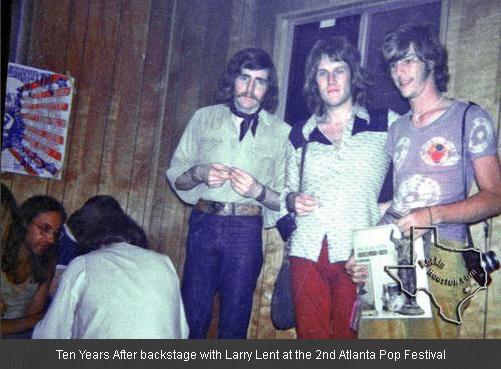
Leo, Alvin and Larry Lent - with
thanks to Bruce Kessler / www.rockinhouston.com
Yes, it’s true that
the Atlanta Pop Festival is rarely, if ever mentioned in a
passing conversation about greatest rock festivals of the
late 1960’s and early 1970’s. Only the serious minded, die
hard music fan remembers that event way back when. To me and
others, it’s an unfortunate oversight on the verge of
travesty, and I’m just being diplomatic. It’s simply
unforgivable to forget about its importance in the history
of rock music. I never heard any negative reports about that
three day – turned four day festival. The main complaint and
discomfort was the unbearable heat factor, 92F degrees in
American measure, and about 42C in European terms. Dealing
with the Atlanta Festival seemed to be no big affair. The
local folks adjusted just fine, the local politicians were
more than willing to be supportive, and the people in
attendance all came out to have a great time. In fact, the
local fire department hosed the audience down with their
water hoses, offering a cold shower of water to the
overheated crowd at large.
Now, after writing
the above paragraph, I found that Ric Lee of the band Ten
Years After, has a much different, first hand account and
perspective. From his interview in Disc and Music Echo
Magazine: Ric says, “Our recent three week American stint
was not so enjoyable. We played to 3000,000 at a festival in
Atlanta and there were really bad vibrations. About a third
of the crowd paid and the other two-thirds just broke in.
They think that things like that should be free. Free
concerts are great at the right time and place, but the
trouble in America is the kids don’t have any respect for
the slightest authority. There’s a real revolutionary
feeling over there. We played at a sport stadium at Harvard
and it was really violent with people crashing the barriers
and that sort of thing”.
The following is
from an excerpt in Herb Staehr's book: Gainesville,
Georgia, the second Atlanta Pop Festival, Ten Years After
performs on Sunday, which is the third day of the festival.
That day also featured the following artists: The Bob Seger
System, Spirit, Terry Reid, Johnny Winter, Grand Funk
Railroad, Richie Havens and the Allman Brothers Band playing
for their second time at this event.
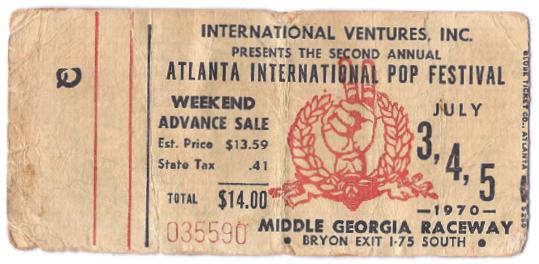
The festival ends at
dawn on Monday with the Memphis State University cast of
“Hair” leading the audience in a sing-along of “Aquarius and
Let The Sunshine In”. A film crew apparently shot many of
the musical performances, but due to lawsuits and legal
entanglements that followed, the negative film is rumoured
to still be sitting in a lawyer’s vault in Nashville,
Tennessee. The only concert released to date, is of Jimi
Hendrix, and released on the “Atlanta Pop” home video.
Welcome to the legal quagmire, where the music fans always
seem to be the losers.
Doctor Hertell, who
was in charge of the medical unit points out, that Byron,
Georgia was probably the safest place in America on July 4,
1970. Despite the crowd that made Byron the second largest
city in the state, there was no major violence, no deaths
and only about thirty persons out of 200 to 400 thousand
required hospitalisation. The toilets did over flow, there
were not enough on hand to begin with, and they were never
emptied during the entire festival. Occasionally, there were
temporary shortages of water, but they were only temporary.
The fact is, 80% to
90% of the people gathered didn’t have tickets and had no
intention of buying them at the gate. Either because they
couldn’t afford them, or because they figured that sooner or
later, they could force the concert promoters to proclaim it
a “Free Festival”. The heat, it was so goddamn hot, that it
was difficult to get beyond one’s personal survival, let
alone get juiced up about storming the gate or guarding it.
Many people were passing out from the heat.
The Woodstock
generation was alive and well, and would survive to live
another day, smiling all the way. Fortunately, Byron was not
a second Altamont, it was the second Atlanta Pop Festival,
for there will never be a third.
Ten Years After
killed! They recreated their Woodstock set, I’m Goin´ Home,
and people seem to forget now, that they were the biggest
breakout band at that time.
The Jimi Hendrix
set, had to be one of the greatest of all time. Fireworks
going off and heat lightning, while he played The Star
Spangled Banner and Purple Haze.
The Chambers
Brothers did their big hit of the day, “Time” has come
today.
Procol Harum, also
did their hit, “A Whiter Shade of Pale”.
The power of Felix
Papalardi and Leslie West of “Mountain” so exciting and
impressive.
Light show was by,
Frank Hughes and Steve Cheatam’s.
Hell’s Angeles were
at the gate with pistols on their sides. But, from another
source, they were not Hell’s Angeles at all, they may have
come from New Orleans and were a motorcycle club called,
“The Galloping Gooses”.
Jimi Hendrix’s
record “War Heroes” was released after his death. The
original title was to be, “War Heroes and Lovers” but was
shortened to just “War Heroes”.
Grand Funk Railroad
could be heard twenty miles away from the festival site, and
is it any wonder, when their amplifiers were stacked fifteen
feet high behind them.
Johnny Rivers, made
a surprise late night entrance. His band started playing,
the spot light started crossing the sky, and in he came,
guitar around his neck, dangling from a helicopter ladder
and lowered onto the stage!
Rumour has it, that
there was no ice to be found in a four county area for three
days.
It was a 24 hour
Circus.
The band “Savage
Grace” played there in 1970.
The band “Rare
Earth” played for over two hours, including a thirty minute
drum solo in the middle of their epic hit song “Get Ready”
extended live.
The Cops were cool
during the festival, but they got really nasty out on the
Interstate Highway, when we were trying to leave.
The Allman Brothers
Band, got so high that they had to stop playing for an hour,
so they could sober up to play.
I remember people
selling pot off the back of Police cars. Very surreal.
Better than Woodstock. This was the best time ever.
I understand that the company Alex Cooley hired to document
the festival went bankrupt a week after filming it and that
the film is in a vault in Philadelphia, Pennsylvania..
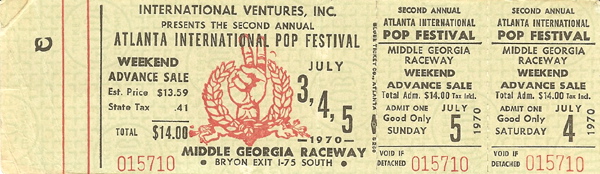
Brief History: The Atlanta Pop Festival 1969
The very first
Atlanta Pop Festival was held a month before the Woodstock
Festival in 1969, and ended with the most rave reviews
imaginable. It was held over the fourth of July weekend in
1969 in Hampton, Georgia. Featured artists were: Janis
Joplin, Johnny Winter, Blood Sweat and Tears, Spirit, Johnny
Rivers (Friday power outage during his performance), Ten
Wheel Drive, Canned Heat and Joe Cocker ended the first day.
Saturday: Creedence Clearwater Revival, Sweetwater, Al
Kooper with “Big Band” sound, Paul Butterfield Blues Band,
Pacific Gas and Electric, Dave Brubeck, Delaney and Bonnie
Bramlett, Led Zeppelin… a very early appearance of Grand
Funk Railroad, who appeared even though they had yet to sign
a record contract. Also, Chicago Transit Authority, before
changing their name to just “Chicago”. The temperatures
were nearing one hundred degrees. There were a few minor
problems (if any) mostly heat related. It all ended on a
very high note, Woodstock followed its template a month
later, and tried to accommodate the audiences needs. As we
all know, “Woodstock was unavoidably overwhelmed” and became
a national disaster area in the process. Both festivals were
blue ribbon winners!
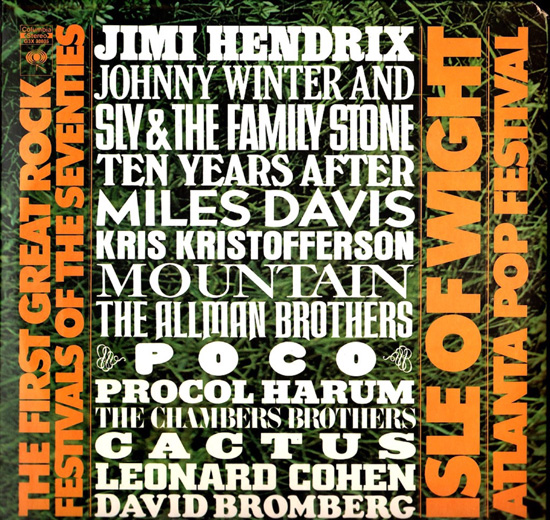
Isle Of Wight / Atlanta Pop Festival
1970 - Album Cover |
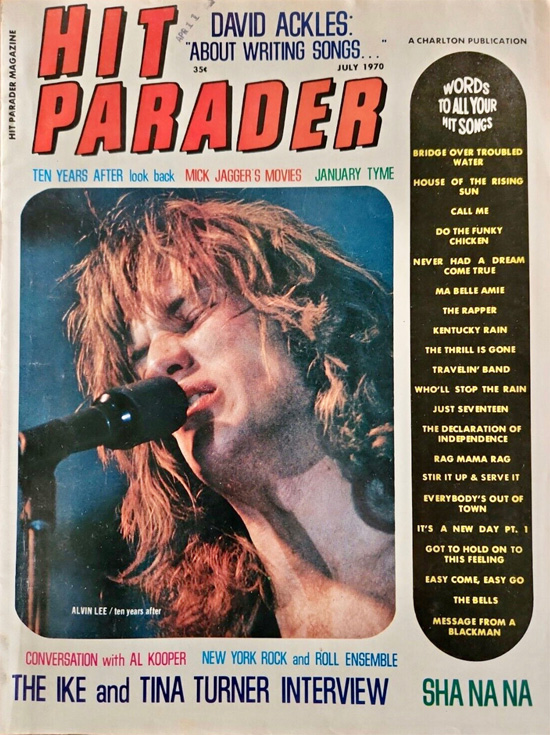
|
Hit
Parader Magazine
From
July of 1970
Thirty
Five Cents
Ten
Years After – Look Back – A Long Look 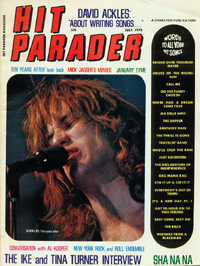
As
there are many kinds of people, there are many kinds of
superstars. Many have been created by media, many by music.
Several owe it all to looks, and a few to backers. Regardless
of the means by which a superstar is created, the end
inevitably results in a different person. For Alvin Lee, who
has been out front of his group Ten Years After since their
first American tour in 1968, the role of superstardom is one
which he is assuming only with reluctance, only in a secondary
vein, and very much to avoid
hassles. “In my early days as a teenybopper, I was a
great fan of Elvis, I joined his fan club as well. I just
can’t imagine anyone thinking of me as I thought of Elvis
Presley.” “If
people want to see me that way,” he shrugs disaffectedly,
“well, that’s OK, but I can’t relate to it, because I
don’t think it has anything to do with music.” With those
italics lies the distinction between the world of musicians
and the world of entertainers. The distinction is one about
which Lee has mixed feelings, for primarily he is a musician
trying to effect changes in the moods of his audiences through
the medium of sound, whether it be live or on record.
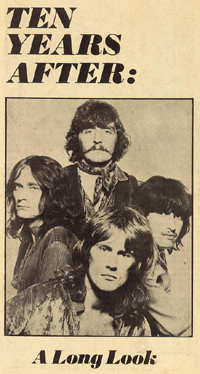
Alvin,
along with Ten Years After bassist Leo Lyons certainly had a
crack at entertainment back in 1964, when they led a raunchy
rock group in Hamburg, Germany. At that time they were very
much into the popular affectations of rolling around on the
floor and screaming after the third bridge of each song. But
it soon became apparent to them that the purely visual
affectations couldn’t generate the same communicable
excitement as could heated musical interchanges. “The good
thing,” says Lee, “is that people react physically to
music-that the audience participates – and that you can play
for the people and build around their reactions with your
music. This is what’s important to us…the feeling we get
fed back from the people.” “I used to wonder if I should
go out and entertain, or just go out and play…and then I
wondered, should I go out and play for the audience….or for
myself. I used to be quite paranoid about things like that.
But I found that it’s all the same thing if it is working.
We and the audience react the same ways to the same things if
we’re in tough, And if we’re not in touch, there’s no
way to make it work.” “I’m always grateful when people
listen. For a long time that didn’t happen, and there was no
way for us to relate to the going-on, at that time we played
for ourselves as a consolation. Today we realize that no
sincere musician can honestly say that he plays the music for
himself. If that were the case, the speakers should be turned
around, facing him and not the audience.”
Alvin’s
own musical background stems from his parent’s collection of
“traditional jazz” – 30’s and 40’s American Dixie
and Chicago style jazz that was sweeping through England in
the early 50’s. Music freaks themselves, Alvin’s parents
had “the box” plugged into the wall for the best part of
every evening, and Alvin listened. His first instrument was a
clarinet, (“Woodchoppers Ball” remaining one of his
favourite pieces today, sounds a little different in
pop-rock-blues-style). It was after Alvin became proficient on
clarinet that the mode of
the music changed and Elvis began to shake.
Alvin
then ten years old got very heavily into the Elvis thing and
precociously went back to the roots to find himself submerged
under stacks of discs of the same people who drew their marks
on Elvis. For several years he was fascinated by the
techniques of black R & B artists whose records by that
time, were over twenty years old. By the time Alvin was
fifteen he was sitting in with black musicians who blew it up
around a Jamaican refugee section of Nottingham, England. That
stage of Alvin’s life remains the one in which he went
through the greatest changes. Both personally and musically.
“I once wished I was black, I used to go to a club where the
black musicians sat about. The music was great. The singers
and the fans…no one had inhibitions, and I wanted to get
into that. I wanted very much to loose that part of my white
heritage that made me more inhibited than the blacks. Then I
started getting paranoid about being what my friends, who
didn’t like it, called Negro lover. I really dug black
people because they were so free. There came a point when I
almost had to choose between my white friends and my black
friends. It was a very heavy stage in my life. Fortunately or
unfortunately, soon I began playing with Leo Lyons and
eventually we went to Hamburg where we simulated soul before gaining real soul of our own.”
Ten
Years After became the name of the group Alvin and Leo formed,
along with Chick Churchill (organ and piano) and Ric Lee (drums
– and no relation to Alvin). The music of the group in the
beginning was more inter-woven with jazz than it is now, but
at the time there was no identifiable form. A fusion music,
the boys felt that the name “Ten Years After” would
suggest roots going back ten years before as well as
inclinations toward the future.
The
history of the group’s American reception is unique in
itself. Ten Years After has been through four American tours
in less than two years, with not one supported by a hit single
record. Four albums: Ten Years After – Undead –
Stonedhenge – and SSSssshhh all on Deram Records, have met
with exciting chart reception. A fifth album and a fifth tour
are due for the first half of 1970.
An
undoubtedly beneficial residual of superstardom for Ten Years
After will be the groups allowance in the studio for recording.
Where as, with most up and coming, but not as yet not there
groups, the beginning economics of the record business
precludes limitless studio time.
As
Alvin put it down, “I’d like to spend enough time in the
studio to put down a hundred tracks of tape. We can now afford
to do this without necessarily releasing an album. Before it
was a matter of just doing it and hoping it sounded good,
because we had no choice but to release it.”
For
Lee, his elevation as a more than musical pop personality has
left him unaffected by celebrity status and his head still is
preoccupied with thoughts of making better music, and on the
verge of his fifth trip to America, he’s still projecting
outward, with his speakers turned toward the audience, picking
his axe and reading a response. People react physically to
music.
It’s
good that way.
Article written by Connie and Phil.
|
|
July 11, 1970 – New
Musical Express

The single hit that Ten Years After
always insisted they never really cared about, has come to
be, A shortened version of “Love Like A Man” from the
best-selling “Cricklewood Green” album has entered the New
Musical Express Chart this week.
But the full seven-minute version is on the
“B” side which plays at thirty three and a third RPM! Alvin
Lee suggested to Decca, who release Ten Years After records
via Deram, that the version recorded “Live” at New York’s
Fillmore East could be on the flip side and the company
agreed. “We feel it’s far better to do an album, there’s not a
lot you can do in three minutes,” Ric Lee told me recently.
But America decided to issue the short version of “Love Like A
Man” for plugging the new album on AM radio stations only, so
Britain followed suit, but for playing on the BBC and Radio
Luxembourg. “People here feel cheated if they buy the album
and find the single on it, but in America it’s the other way
around – they expect it,” Alvin commented.
Nevertheless, Ten Years After repented and allowed the single
to be released after all. Lots of people have bought the album
and that doesn’t seem to have deterred them and maybe others
from also getting the single. Maybe it’s not such a bad thing
after all.
|
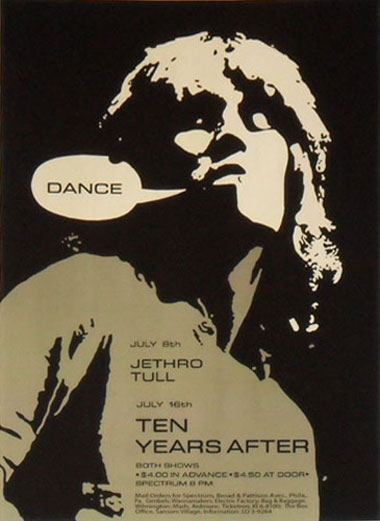
16 July 1970
July
17 - 19, 1970 - New York Pop Festival
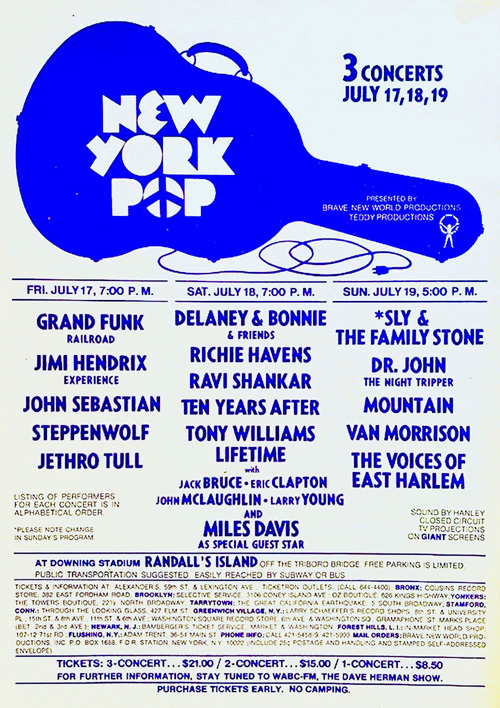
Concert Poster
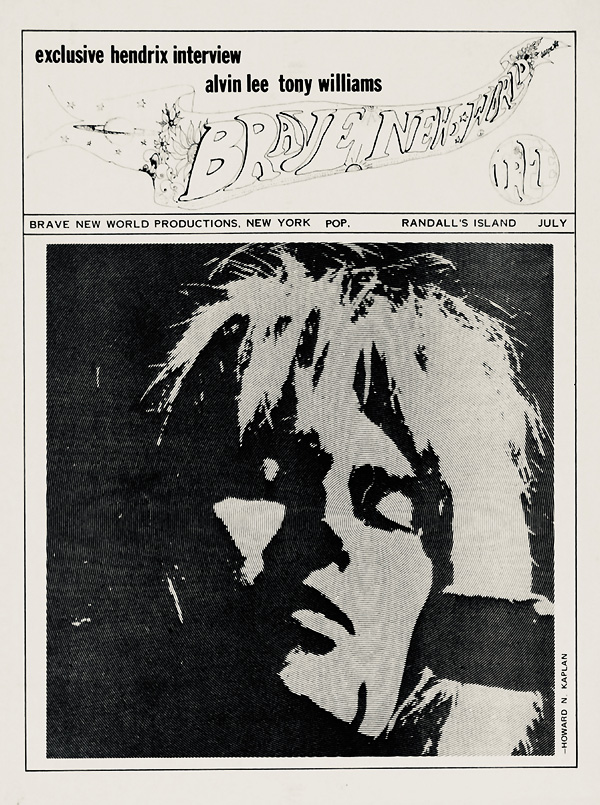
July 17, 1970 - New York Pop Festival,
Randall's Island, Downing Stadium
Program Booklet
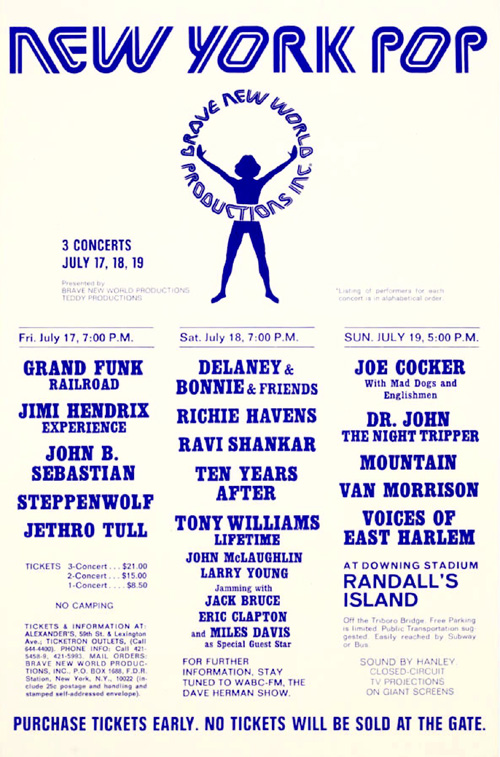
handbill
|
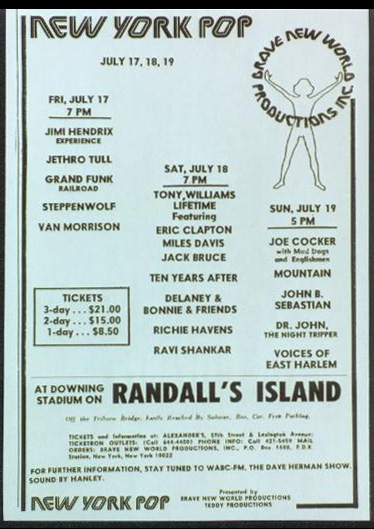
The
New York Pop Festival – Randall’s Island:
July
17 - 18 - 19, 1970
The
Day The Music Died
Back
in 1970, the whole idea of a “Rock Festival” was still
such a new concept, that it was considered a radical – some
feared – revolutionary idea. Just the thought of having
200,000 hairy people in a field, listening to rock `n´ roll
was genuinely a cause for concern for some authorities. Their
fears were definitely misplaced. Few were plotting a social
revolution, most everyone just wanted to get laid, some good
dope to smoke and great musicians to listen to while doing it.
But as Bob Dylan so aptly stated it, “the times they were a
changing”, and no one knew where rock `n´ roll was heading.
One thing was for sure, some of the best bands of the era
played, and the peace and love mantra died a quick death, as
the echo lingered on for years to come.
One
of these important events
took place, about a year after the “Woodstock
Festival” of 1969. It took place on New York’s Randall’s
Island, also known as the “New York Pop Festival”. Unlike
Woodstock, this event was set up very differently right from
the start.
It
was to be held in Downing Stadium, and there was to be no
camping allowed. It was also billed as a series of concerts
rather than a “Traditional Rock Festival”. However, this
being said, three weeks before the event even saw the light of
day, an under-current of trouble was raising its ugly head.
Enter, “The Black Panthers”, “The Yippies”, and “The
Free Rangers”, presenting themselves as a self styled
“RIP-OFF – COLLECTIVE” to the concert promoters.
These
groups had demands, and the promoters felt that it was in
their best interest to meet those demands, in order to avoid
any retaliation. Although the demands were outrageously,
ridiculous.
The
Demands Were:
- They
wanted ten hand picked bands to play at $5,000 per group
plus expenses.
- They
wanted 10,000 free tickets, for them to hand out.
- Bail
Funds, for anyone arrested at the festival.
- A
percentage of the profits from any film of the gigs.
In
return for compliance, the RIP-OFF COLLECTIVE – would
promote the festival in their communities and also provide
“TROOPS” to act as security and public relations men!!!
If
the promoters didn’t agree, there would be violence and they
would call it a free peoples event, and no one would buy
tickets.
The
promoters, no doubt were feeling a bit sick at this kind of
blackmail, but agreed to negotiate. This in turn got the local
“Young Lords” a bit cross. They also wanted a piece of the
action and some of their demands were agreed upon by the
promoters.
By
the time people started arriving for the Friday Show, 8,000
out of the 25,000 did not pay, as the so-called security
looked the other way, collecting no money at all.
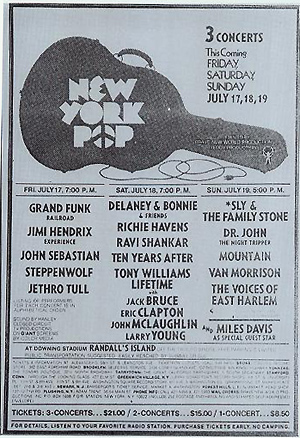
Jimi
Hendrix, Grand Funk Railroad, John Sebastian, Steppenwolf, and
Jethro Tull all played on Friday as scheduled. But, by
Saturday, the bands started to realize that they wouldn’t be
getting paid for their services. Due to so much gate-crashing,
the band managers demanded to be paid up front before the
bands even took the stage.
In
fact, Ravi Shanker refused to go on, Delaney and Bonnie, Miles
Davis, Richie Havens and Tony Williams Lifetime didn’t even
bother to show up at all.
By
Sunday, the promoters gave up fighting and they called it a
free concert – although in reality, it always was a free
concert right from the get-go! 30,000 had gate-crashed it!
“Ten
Years After” and “Cactus” both played without being paid.
The same was true of “The New York Rock `N´ Roll
Ensemble”, “Doctor John”, “Leslie West Mountain” and
“Little Richard” followed suit, but most bands were a
no-show!
A
reporter asked promoter Don Friedman what he thought about the
situation. His reply, “The Festival Spirit Is Dead, and it
happened very quickly. I don’t know the exact reason why.
Greed on everyone’s part I guess. The love and peace thing
of Woodstock is out and Anarchy is in. Complete and total
anarchy, that’s what’s replaced it”. It was a financial
disaster.
No
money was paid to the collective, the bail fund collapsed and
most performers were never paid their wage.
It
was disintegrating the entire counter-culture movement in
1970, right along with a bourgeoning rock and roll industry.
But above all else, there was some blistering good music
played at this, and other festivals of the late 1960’s and
early 1970’s. The music is really what matters at the end of
the day, then and now.
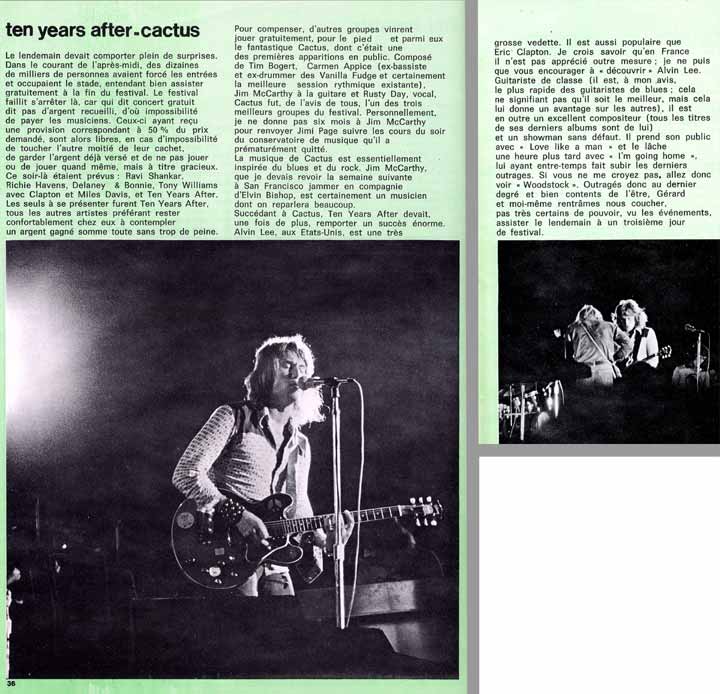
French Review
|
Disc and Music Echo – July 18, 1970
For TYA, all singles are "misses"
“Love Like A Man,”
the single from Ten Years After, has not exactly smashed the
charts, despite a lot of air-play. Not that the group has
been around to promote it….they’ve been touring in America
since the record came out.
And it may come as no surprise
that none of them really like it very much. TYA
were back home last week, for a ten day break before doing a
five-week stint back on the other side of the Atlantic. And
drummer Ric Lee gave his views on the 45-RPM and 33-RPM
single. “It was sneaked out just before we left, about a
month ago. We’ve never been too keen on releasing a single,
but Decca wanted to put it out. I don’t personally like the
edited side, and I hope people are buying it for the “live”
side. The thing about the edited side is that when something
is chopped like that, it doesn’t really mean a lot. We play
“Love Like A Man” for the improvised section in the middle.
So when that is cut out it loses its context and continuity.
“Quite honestly, I am surprised that it’s doing well. It
seems to be happening in the States now – it’s quite a hit
in New York State.
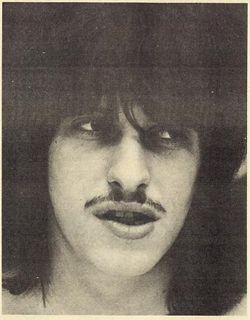 “But we still have
mixed feelings. None of us feel we can do anything in two
minutes, or however long singles have to be, to make them
worthwhile.” But Ric, chatting in a London pub with his
attractive wife Ruth, is pleased with the success of the
latest album, “Cricklewood Green,” despite being
disappointed with the drum sound. “I slightly prefer how my
drumming sounded on “Shush” but that wasn’t what I am
ultimately aiming for. “As far as the new album is
concerned, there is only myself to blame – and the engineer.
I’m fed up with dull bass drums and crisp snare drums that
sound like someone tapping silver paper. I want the natural
drum sound, the acoustic sound, like Eddie Kramer got on the
“Live” side of the single. “I feel very strongly about this
because most engineers say it can’t be done. They want to
pad your bass drums with cushions and tie cigarette packets
to your snare. They always say, you can’t record it
naturally – but now Eddie’s done it!” Ric is quick to point
out that he doesn’t mean to give the impression that he’s
condemning “Cricklewood Green.” He is not sure whether it is
Ten Years After’s best LP, although a lot of people feel it
is, but he thinks the material is better than before.
“Alvin’s writing is getting better all the time.” Talking of
Alvin Lee: do the rest of Ten Years After like playing in
the shadow of such a guitar giant? “But we still have
mixed feelings. None of us feel we can do anything in two
minutes, or however long singles have to be, to make them
worthwhile.” But Ric, chatting in a London pub with his
attractive wife Ruth, is pleased with the success of the
latest album, “Cricklewood Green,” despite being
disappointed with the drum sound. “I slightly prefer how my
drumming sounded on “Shush” but that wasn’t what I am
ultimately aiming for. “As far as the new album is
concerned, there is only myself to blame – and the engineer.
I’m fed up with dull bass drums and crisp snare drums that
sound like someone tapping silver paper. I want the natural
drum sound, the acoustic sound, like Eddie Kramer got on the
“Live” side of the single. “I feel very strongly about this
because most engineers say it can’t be done. They want to
pad your bass drums with cushions and tie cigarette packets
to your snare. They always say, you can’t record it
naturally – but now Eddie’s done it!” Ric is quick to point
out that he doesn’t mean to give the impression that he’s
condemning “Cricklewood Green.” He is not sure whether it is
Ten Years After’s best LP, although a lot of people feel it
is, but he thinks the material is better than before.
“Alvin’s writing is getting better all the time.” Talking of
Alvin Lee: do the rest of Ten Years After like playing in
the shadow of such a guitar giant?
“There was a big
upset when it was decided that Alvin was to take the
forefront,” reveals Ric. ”But the reason for that was that
we read it in the newspapers without even knowing about it.
We read in the
States that it was to be “Alvin Lee and Company” which was
very wrong.
I personally got
very irate. “But it’s for the good of the band, and we all
agree to it.
“About six months
ago Chick was hardly doing any solos. But that was his own
fault. Since we’ve been in the States he’s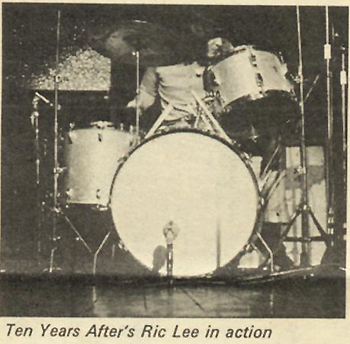 come more to the
fore. You couldn’t say Chick is in the background. We’re
doing “No Title” from Stonedhenge on stage now and that
features a lengthy organ solo thing which has been getting
standing ovations in the States – in the middle of it ! “We
change around a lot. Alvin is just the image of the group as
far as the Press is concerned. Being a virtuoso guitarist,
he finds it difficult to blend with another melody
instrument, but it’s just beginning to happen. We’re getting
more of a balanced sound on stage now, and more continuity
within the band.” Ric himself feels that his playing has not
been developing lately. “The last few gigs I’ve been getting
some new ideas; I’ve had a couple of little brainstorms, but
my playing seems to reach a plateau. If I sit down and
practice for a week I find that, for the first three gigs, I
go downhill, then things start to get a new feeling. come more to the
fore. You couldn’t say Chick is in the background. We’re
doing “No Title” from Stonedhenge on stage now and that
features a lengthy organ solo thing which has been getting
standing ovations in the States – in the middle of it ! “We
change around a lot. Alvin is just the image of the group as
far as the Press is concerned. Being a virtuoso guitarist,
he finds it difficult to blend with another melody
instrument, but it’s just beginning to happen. We’re getting
more of a balanced sound on stage now, and more continuity
within the band.” Ric himself feels that his playing has not
been developing lately. “The last few gigs I’ve been getting
some new ideas; I’ve had a couple of little brainstorms, but
my playing seems to reach a plateau. If I sit down and
practice for a week I find that, for the first three gigs, I
go downhill, then things start to get a new feeling.
It helps me to go
and see other bands, particularly good jazz artists. I go
down to Ronnie Scott’s and see Kenny Clare, Kenny Clark, or
Buddy Rich, when I can.”
Ten Years After flew back to America yesterday (Wednesday)
to do four or five gigs a week, for five weeks. Then they go
to Tokyo for Expo 70 for five days. Then they have a free
week before recording in September. October takes them on a
Scandinavian tour, and possibility their first trip behind
the Iron Curtain, to Poland and Czechoslovakia. They spend
November back in America. It’s a pretty tight schedule, so
they are not getting that many breathing spaces yet. Their
recent three-week American stint was not too enjoyable
either. They played to a 5,000 crowd at (in) New Jersey that
contained a lot of teeny-boppers. All these kids were
leaping about at the front and the people who had come to
listen were at the back, and couldn’t see or hear us. We
wrapped it up after three numbers, and it’s the first time
we’ve ever done anything like that.” Ten Years After also
played to 300,000 at a festival at Atlanta, and Ric says,
there were really bad vibrations.” “About a third of the
crowd paid, and the other two-thirds just broke in. They
think that things like that should be free. But it’s my
living! Free concerts are great, at the right time and
place, but the trouble in America is that the kids don’t
have any respect for the slightest bit of authority. There’s
a real revolutionary feeling there. We played at a sports
stadium at Harvard and it was really violent with people
crashing the barriers and that sort of thing. “We don’t like
America. I can enjoy going there but eight weeks at a time
is long enough. Three or four weeks tour, would be fine. The
trouble is, it’s so tiring, especially the travelling. It’s
also difficult to adjust to the cost of living. If you’re
not careful, you can blow a big hole in your money. ”When we
used American roadies, they used to go a bit wild with the
money. On one tour we spent one thousand pounds – just on
tips!”
|
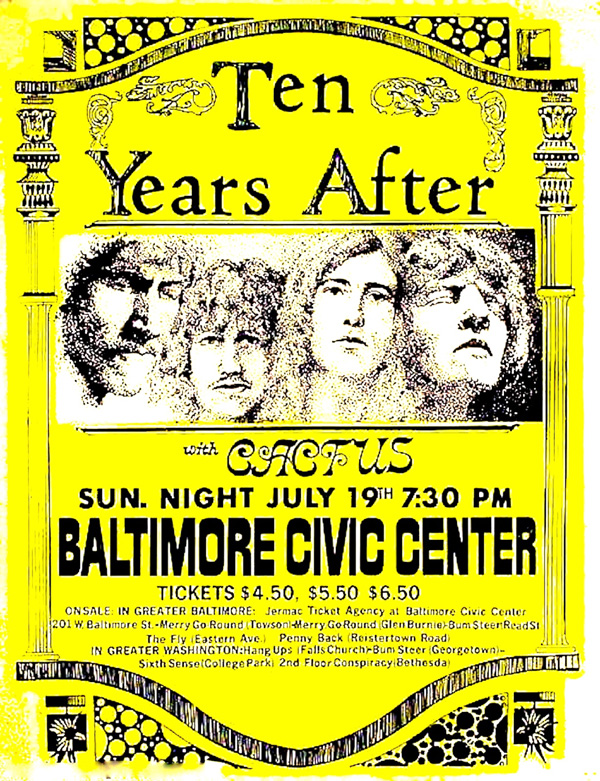
July 19, 1970 -
Baltimore Civic Center - Concert Poster
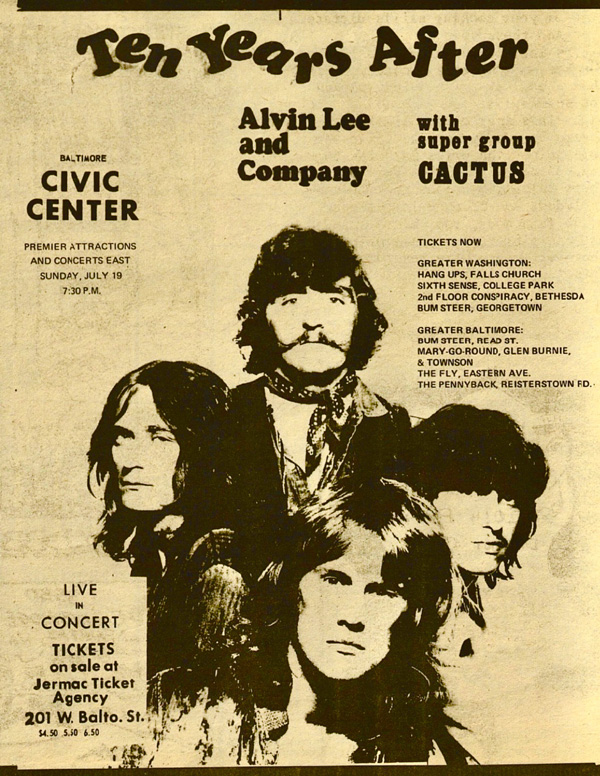
July 19, 1970 - Civic Center, Baltimore
- Quicksilver Times
|
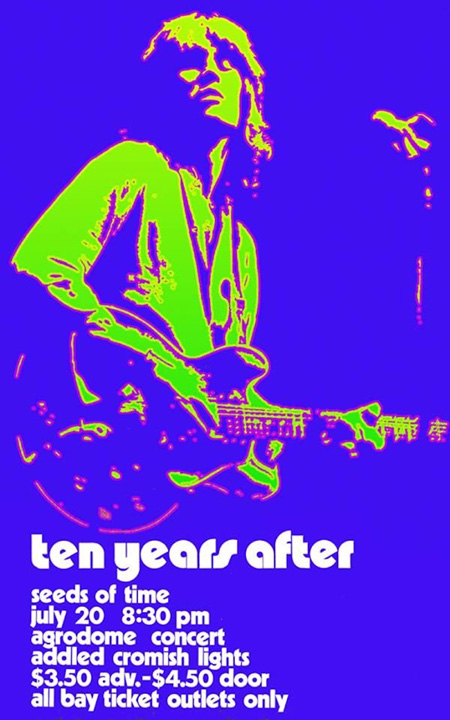
July 20, 1970 - "The
Agrodome", Vancouver, Canada
|
| July 21,
1970
The Red Rocks Amphitheatre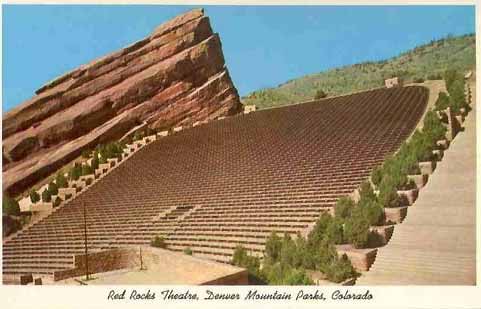
Is owned and
operated by the Colorado State Parks System, and located
near Morrison Colorado. It’s a beautiful natural setting
that seats up to 9,450 people, with acoustics made in
heaven. Private and public performances have been given
there, for well over one hundred years.
On July 21, 1970 -
Grand Funk Railroad opened the show there for Ten Years
After, during a summer’s night concert. It remains some what
of a little known concert, but it really did happen
according to one loyal fan who wrote the following: “I went
to summer school in 1970 in Golden, not far from Red Rocks.
I was fortunate to see Grand Funk Railroad open for Ten
Years After. What an amazing experience!
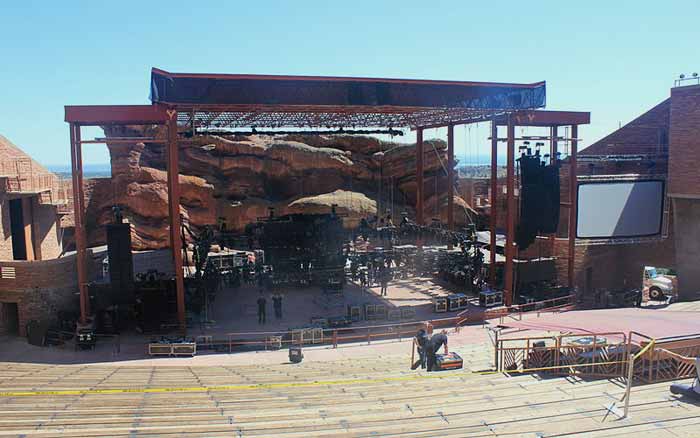
Riot At Red Rocks:
This involved the
band Jethro Tull, who played there on June 10, 1971.
Apparently, a horde of devoted Jethro Tull fans showed up at
the concert, without tickets, and expected to get in for
free. The police / security there were kind enough to offer
these non paying fans, a place behind the rocks where they
could listen to the band – but couldn’t see them perform.
After awhile, these
fans weren’t at all content with that arrangement and
decided to rush the security and crash through their lines,
throwing rocks and stones at the guards. The police
retaliated by lobbing canisters of tear gas back at the
intruders. When all was said and done, it earned the venue a
five year ban on rock bands playing there. The only
musicians that were allowed to perform there were the
following: Pat Boone, Sony and Cher, Seals and Crofts, Carol
King, James Taylor, The Carpenters and John Denver.
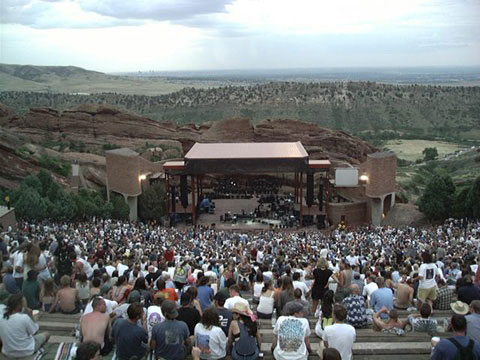
Rock Ban Finally
Lifted:
The extended ban on
rock and roll at the Red Rocks venue, was finally lifted,
but not without a legal fight. The Denver court reversed its
initial decision, when concert promoter Barry Fey, pursued
the issue while trying to book the band America there in
1975. Jethro Tull did
return there to play on August 12, 2008 and again on June 8,
2011. U2 played there in June of 1983. The Grateful Dead
made the place a traditional stop on their tours. 1978 was one of
their dates there.
Many Famous Bands
and People:
The Beatles
performed at Red Rocks on August 26, 1964. It was the only
concert on their American tour that didn’t sell out! Jimi
Hendrix played there on September 1, 1968 and loved it,
along with Vanilla Fudge and Soft Machine. Geddy Lee of
“Rush” said, “It’s an amazing location, one of the most
beautiful concert venues in America, or anywhere for that
matter” (2007 – 2010) Lynyrd Skynyrd 1987 Santana, James
Taylor and Allman Brothers Band, July 4, 1992. The
Foo Fighters 2008. Tool August 3, 2002.
ZZ-TOP - Pat Benatar
- Billy Squire – Jackson Browne – Jimmy Buffett – Stevie Ray
Vaughn – Social Distortion – Carole King – Neil Diamond –
Chuck Mangione – Stevie Nicks - Willie Nelson –
Boston – Dan Fogelberg – Tom Petty – Blues Travelier – Cold
Play – Crosby-Stills-Nash
and Young – Paul Simon – Linda Ronstandt – Moody Blues – The
Eagles – The Charlie Daniels Band – Percy Sledge - .38
Special – Sha-Na-Na – Poison – Journey Peter Frampton –
Molly Hatchet – Night Ranger and of course Grand Funk
Railroad and
Ten Years After.
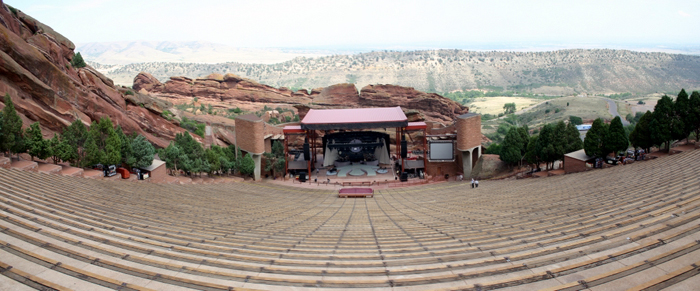
|
| 22 July
1970 - Forum Inglewood, Los Angeles
Fan's First Hand Review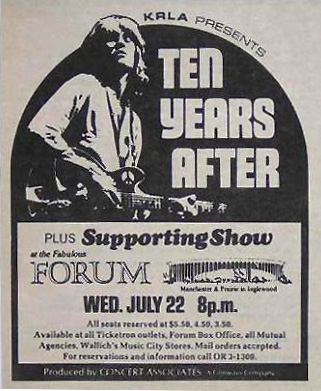
At The Forum
features Pacific Gas and Electric – Grand Funk Railroad and
Ten Years After. Wednesday July 22, 1970 – with a seating
capacity of 17,000
The group of people
that I ran around with back in the day, were all big Ten
Years After fans, from the bands very first album, on up
through “Undead” and “Stonedhenge” and now with the release
of “Ssssh” we really had another good reason to celebrate.
This LP was destined to stand out and it got heavy rotation
at my house and every party I attended. There’s nothing
better than just kicking back with your closest friends all
listening to Stonedhenge.
At The Concert:
Ten Years After,
sensing the crowds reaction, now had a mission before them.
They not only had to top Grand Funk, but also leave an even
bigger and lasting impression upon the audience in
attendance. They would have to pull a “better than
Woodstock” performance, in order to satisfy these music
fans, and this was worth sticking around to see.
When you examine Ten
Years After’s set list, it in no way reflects what was
really performed on stage that night. As each piece was a
super-charged version of the song. Alvin Lee’s virtuosity
guitar playing was smouldering. The tightest jamming band
that I have ever seen.
Alvin Lee, Leo
Lyons, Chick Churchill and Ric Lee were all in top form at
this gig, as they needed to be, under the circumstances.
Alvin knew that he had no choice but to leave his “boogie”
part at home. The masses of music fiends only wanted
straight ahead Rock `n´ Roll, and Ten Years After it in
spades. Every musical excursion was a certified masterpiece
and was pushed into every crevasse of the Forum, they really
managed to pull it off ! Unbelievable!
The Winner Is:
So, this evenings
winner, of the unexpected, World Class Rock `n´ Roll Battle
of the Bands contest was unequivocally Ten Years After. The
real winners were the loyal rock fans who came out to have a
great time, and witnessed history in the making first hand.
From high up in the nose-bleed section or standing right in
the front row, no one was left unaffected.
We had just
experienced the fulfilled expectation of concert going. The
ultimate goal is to catch those magical moments, just like a
surfer waiting for the perfect wave to present itself,
something we all know is out there.
Love Like A Man –
Good Morning Little Schoolgirl – No Title – Hobbit – Scat
Thing - I Can’t Keep From Crying Sometimes – I’m Going Home
– (Encore) Sweet Little Sixteen
P.S. – “Help Me”
The drug that got us hooked.
Grand Funk Railroad
– “I’m Speechless”.
Article by Art Holmes
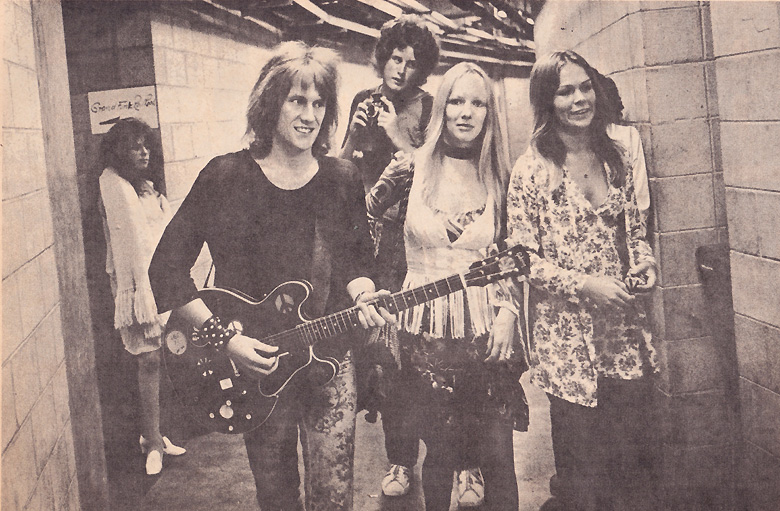
22 July 1970
- Alvin Lee and Loraine Burgon - backstage at Forum
Inglewood, Los Angeles
Photographer:
Emerson-Loew for ROCK Magazine
Contribution
by Christoph Müller
|
24 July 1970 - Dallas Memorial
Auditorium
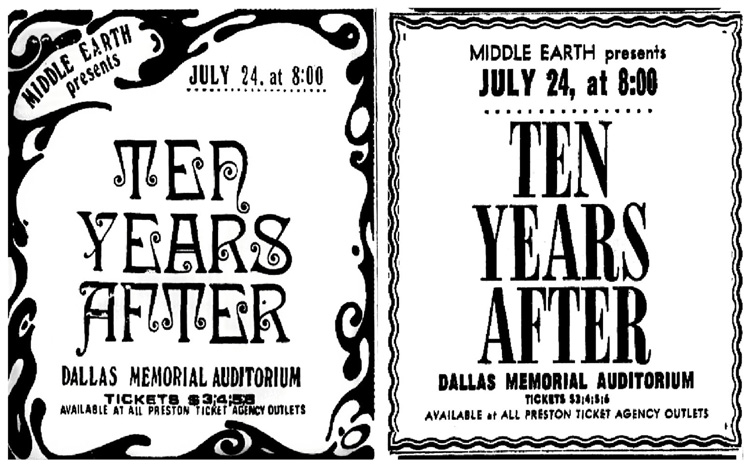
Newspaper Advertisements 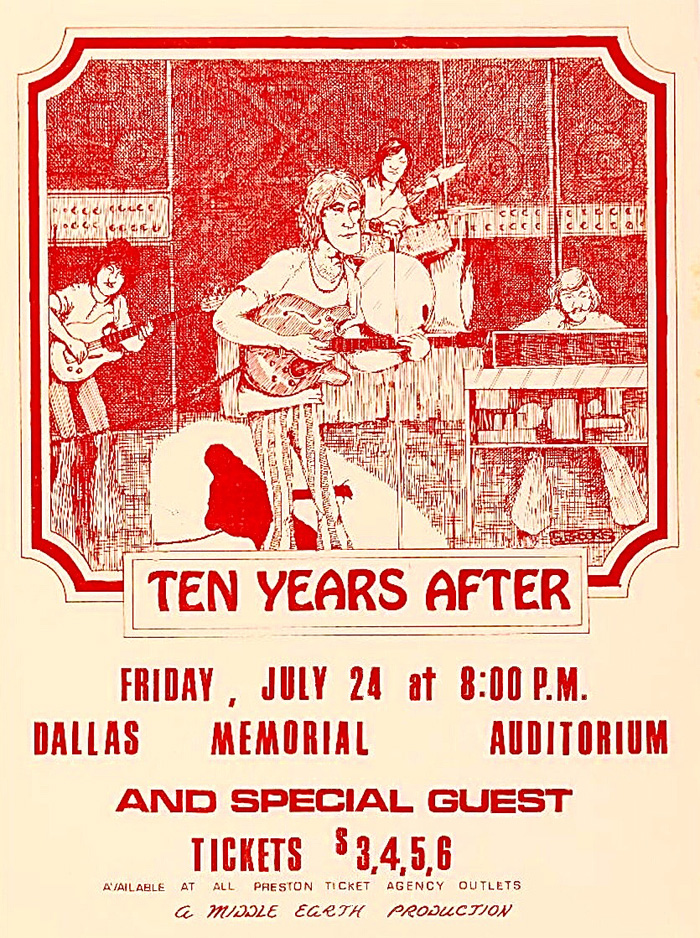
handbill
We found this flyer of interest - as the only person in the
right position is Alvin Lee. It has Ric Lee on bass, Leo Lyons
on keyboards and Chick Churchill on drums. Either this is
someone's idea of a joke, or else they know nothing about the
band. It's funny!
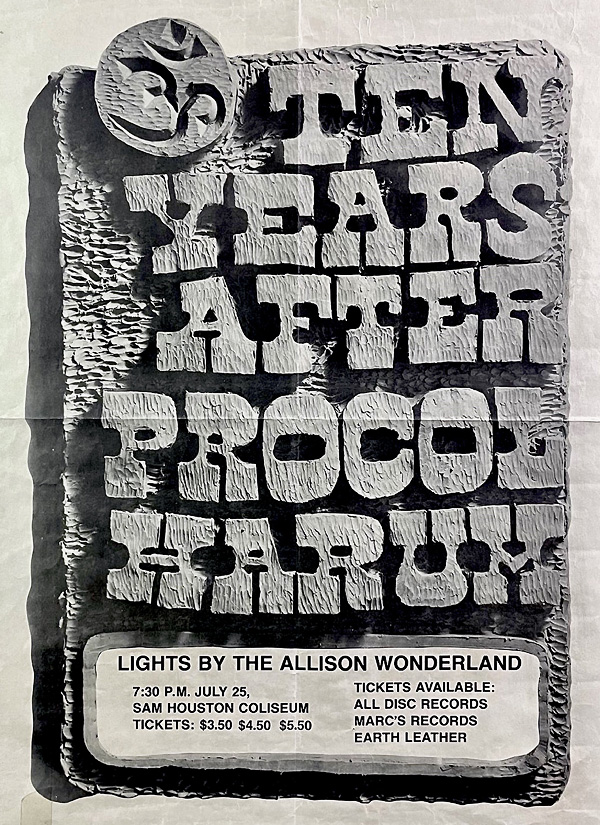
July 25, 1970 - Sam Houston Coliseum,
Houston, Texas - Concert Poster
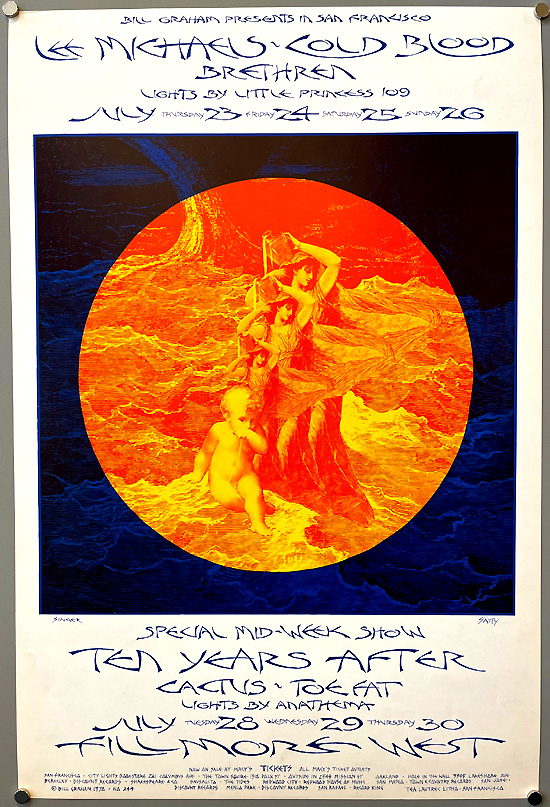
July 28 - 30, 1970 - Fillmore
West, San Francisco - Concert Poster, Artist: David Singer
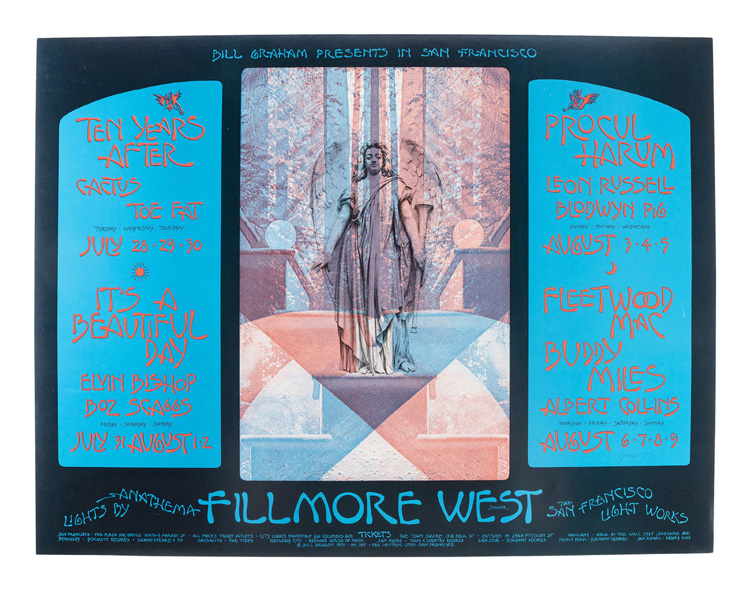
July 28 - August 9, 1970 -
Fillmore West, San Francisco - Concert Poster,
Artist: David Singer
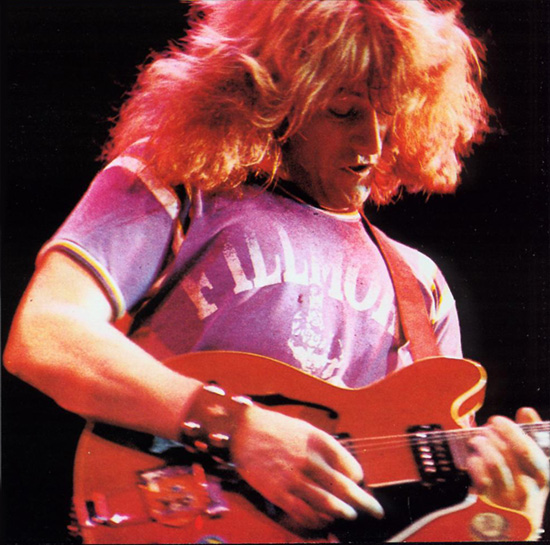 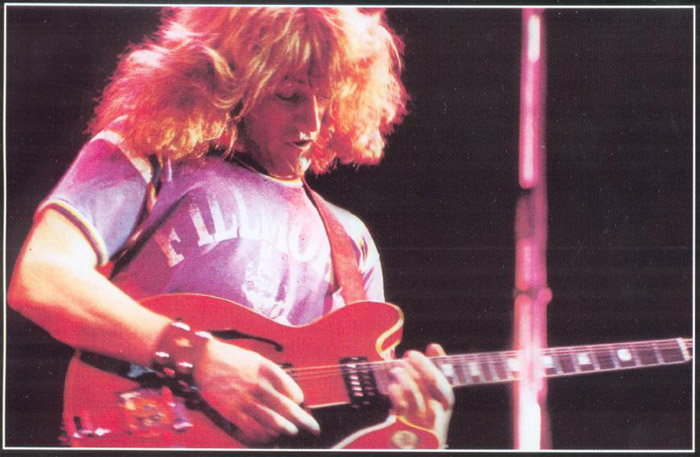
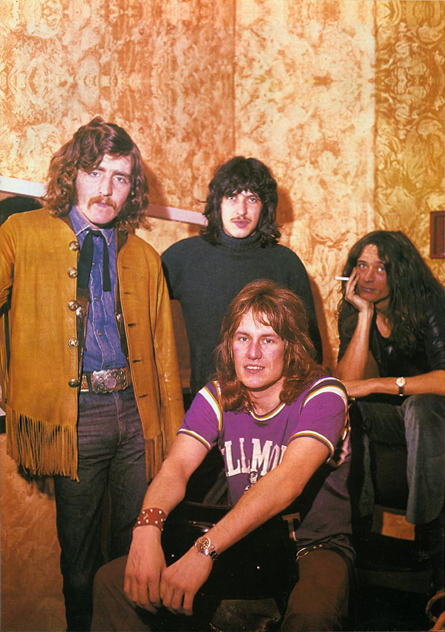
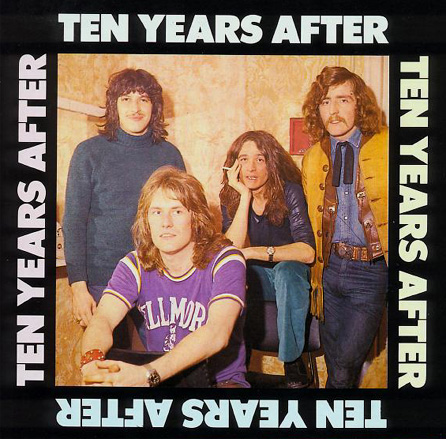
|
|